What conditions and choices made the US economically dominant over 250 years?
Built from documented writings, speeches, decisions and historical records. Council members argue from documented positions, applied to today's question.
America's dominance was built by productive markets and then locked in by institutions that made others pay to sustain it.
Roosevelt and Keynes agree that the 1944 Bretton Woods design was a choice, not an outcome: Washington rejected Keynes's symmetric clearing system and issued the world's reserve currency instead. Friedman and Schwartz anchor the domestic story in the 1929 to 1933 collapse, where the Fed let the money supply shrink by a third and destroyed productive capacity government had not yet rebuilt. Hayek adds that the continental market, where farmers and merchants decided locally from the 1780s onward, generated knowledge no central bureau could replicate or replace.
Prebisch is the dissent no one at the table refutes: free trade between unequal partners transferred income upward, and the GATT rules locked that transfer in. The dominance was real; who bore its cost was not an accident.
- 1Reject any trade framework that applies reciprocity equally between structurally unequal partners, as Prebisch's 1950 ECLAC findings demonstrate this transfers income upward.
- 2Anchor monetary policy to preventing money supply collapse; the Fed's one-third contraction between 1929 and 1933 destroyed more capacity than any market failure.
- 3Preserve decentralised market decision-making by farmers, mechanics, and merchants; no central bureau can replicate the dispersed knowledge that built continental productivity.
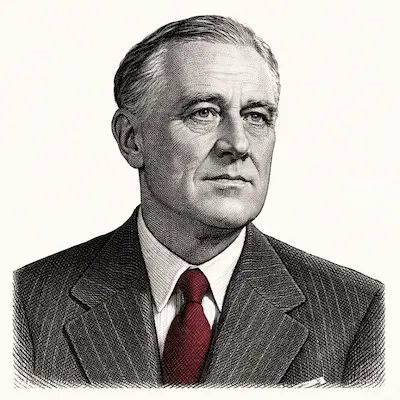
American dominance was built by government saving capitalism from itself.
Markets did not rescue themselves in March 1933. I did. The Emergency Banking Act, the Glass-Steagall reforms, the Social Security Act, Lend-Lease, and Bretton Woods were not accidents of history. They were choices. Every one of them required government to absorb risks that private capital refused to touch. The wartime mobilisation of 1941 to 1945 converted American industrial capacity into permanent geopolitical weight. No invisible hand built that. Deliberate public architecture did.
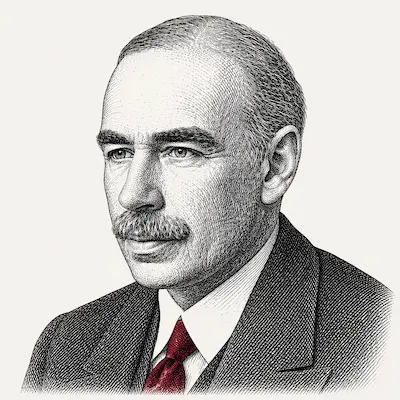
Dollar hegemony was designed, not discovered, and America chose the design.
Roosevelt is right that deliberate architecture built the dominance. But the precise mechanism matters. At Bretton Woods in July 1944, I proposed a symmetric clearing system where surplus and deficit countries shared adjustment costs equally. Harry Dexter White rejected it. America chose a dollar-centred order instead, one that let Washington run deficits the world was obliged to finance. That asymmetry compounded American advantage for three generations. Britain had empire; America got something more durable: the right to issue the world's reserve currency.
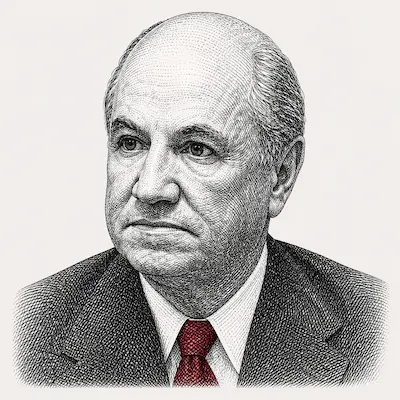
The periphery paid for American dominance through the structure of trade itself.
Keynes identified the mechanism at the top. I documented what it cost at the bottom. My 1950 ECLAC report showed that between 1876 and 1947, commodity prices fell steadily against manufactured goods prices. Latin America exported copper, wheat, and coffee; America exported machines and collected the difference. The GATT rules Keynes's Bretton Woods world produced then locked that structure in place, applying reciprocity between partners who were not equal. Free trade between unequal partners is not neutrality. It is a transfer.
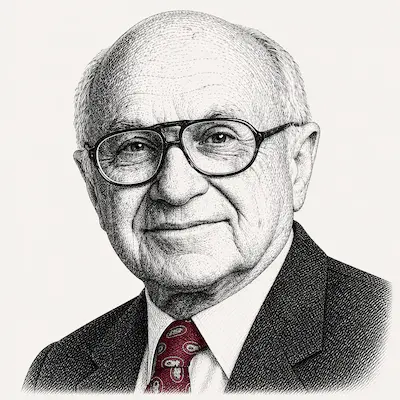
American dominance rested on price stability and the freedom markets released.
Prebisch mistakes the symptom for the cause. Commodity prices fell because productivity in manufacturing rose faster, not because a conspiracy transferred income. American dominance was built on something simpler: when government stopped inflating the currency and let prices work, the economy grew. My work with Anna Schwartz showed that the Federal Reserve caused the Great Depression by letting the money supply collapse by one third between 1929 and 1933. Fix the money, free the market, and productive energy does the rest.
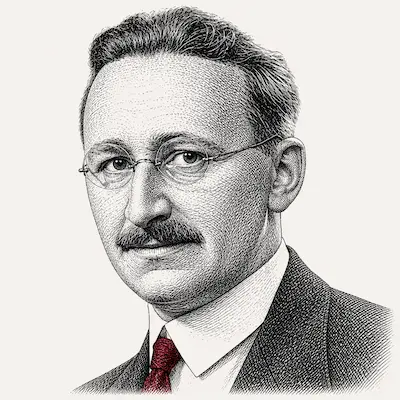
No planner possessed the knowledge that built American productive capacity.
Friedman is right about money, but the deeper story is epistemological. America's edge across 250 years was not a plan. It was a continental market where millions of farmers, mechanics, and merchants made local decisions that no Washington bureau could replicate. I did not govern in an era of 19th-century American expansion, but I watched the Soviet planning apparatus fail by the 1970s for precisely this reason: dispersed knowledge cannot be centralised without destroying it. The moments America faltered were the moments Washington imagined it knew better than the price system.
The convergence note
Where the council converges: American dominance required both functioning markets and deliberate institutional choices. Neither alone was sufficient.
Where it divides: Roosevelt and Keynes argue that state architecture, especially Bretton Woods and wartime mobilisation, created advantages no market would have built. Friedman and Hayek argue that free prices and dispersed decision-making were the engine, and government mostly got in the way. Prebisch stands apart from both: he argues the system was built to extract from the periphery, so its benefits were never as broadly earned as either camp claims.
For a policymaker to decide on: Which condition was primary: the dollar-centred monetary order that locked in American structural advantage, or the domestic market freedom that generated the productivity to exploit it? The answer determines whether today's rivals should copy American institutions or dismantle the rules those institutions wrote.