Should cities cap mass tourism to preserve local quality of life?
Built from documented writings, speeches, decisions and historical records. Council members argue from documented positions, applied to today's question.
Cities should govern tourist volumes, but resident-designed pricing beats blanket administrative caps.
Rawls and Rousseau agree that uncapped tourism shifts costs onto residents who cannot move: rent inflation, crowding, and noise fall on the least mobile while property owners collect the gains. Ostrom adds that Venice's 2024 blanket cap produced permit black markets and displaced visitors to adjacent areas, not fewer visitors overall. Amsterdam's tiered entry fees, introduced in 2023, offer a testable alternative: prices aggregate dispersed information that no quota-setter can know, as Hayek argued in 1974.
The split is over binding caps versus pricing. Ostrom and Rawls accept caps if residents design and enforce them. Hayek argues that even resident-designed caps destroy the information pricing would have revealed.
- 1Replace blanket visitor caps with tiered congestion pricing, using Amsterdam's 2023 entry fee model as the testable baseline.
- 2Require resident-led bodies to design, monitor, and enforce any tourism governance rules, not city administrations alone.
- 3Publish annual displacement data tracking lower-income resident retention to verify whether pricing or caps reduce harm.

Tourism caps work when residents design the rules, not when cities impose them.
Venice tried blanket visitor limits in 2024 and produced exactly what my fieldwork on Swiss alpine commons predicted: displacement to adjacent areas, black markets in accommodation permits, and zero improvement in resident welfare. The question is never "cap or no cap" but who sets the boundaries, who monitors compliance, and what sanctions apply to violators. Irrigation communities in Spain and the Philippines governed shared resources for centuries without either privatisation or state quotas. The same design logic applies here.
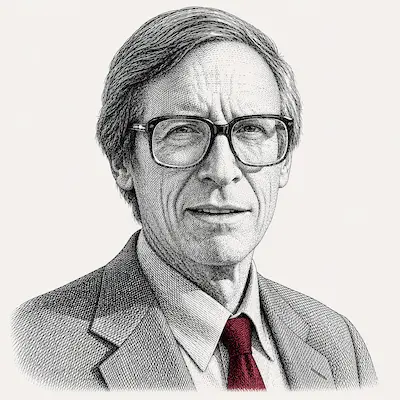
Displacement of working-class residents by tourist rents fails the most basic test of justice.
Ostrom asks who designs the rules. I ask who bears the costs when no rules exist. A city that allows uncapped tourism concentrates benefits in property owners and hospitality capital while imposing noise, crowding, and rent inflation on the people least able to move elsewhere. That is not a neutral market outcome; it is a structural arrangement that the difference principle condemns. The basic structure of a city's tourism economy must be evaluated by its effects on the least advantaged residents, not by aggregate visitor spending.
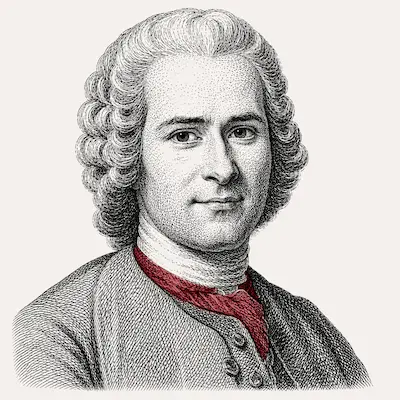
A city's residents are its sovereign; tourist throughput cannot override their collective will.
Rawls asks whether the arrangement benefits the least advantaged. I ask something prior: who has the right to decide at all. The residents of Venice or Barcelona constitute a political community. Their shared streets, squares, and neighbourhoods are not commodities to be allocated by market price. When property owners and tour operators capture that space for private profit, the social contract Locke imagined protecting becomes instead the fraud I described in the Second Discourse: law deployed to protect accumulated advantage against the community that created it.
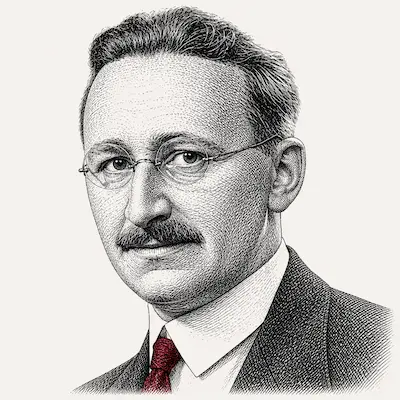
No authority possesses the knowledge needed to set a correct tourist quota.
Rousseau asks whether residents have a right to decide. I ask whether any authority can decide correctly. In my 1974 Nobel lecture I called this the pretence of knowledge: the belief that a planner can determine the optimal number of visitors to a neighbourhood, a street, a season. That number is dispersed across millions of individual decisions, preferences, and prices. What Rousseau calls popular sovereignty and Rawls calls the difference principle both require a central authority to know things it cannot know. Tourism taxes and congestion pricing aggregate that dispersed knowledge. Administrative caps destroy it.
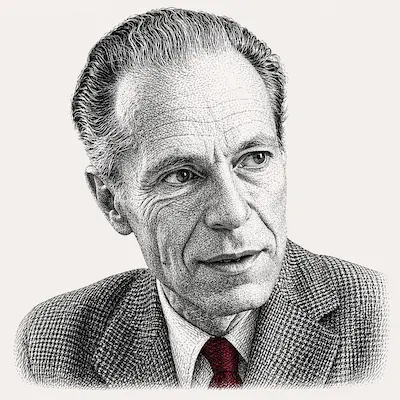
Anti-cap arguments deserve scrutiny as arguments, not automatic deference as analysis.
Hayek raises three recognisable moves from my 1991 work: caps will perversely displace tourism elsewhere, futilely fail to change underlying demand, or jeopardise Barcelona's economic recovery. Each of these may be true. Each is also a rhetorical weapon that has been used to block every reform in every city that tried one. The empirical question is whether Amsterdam's tiered entry fees, which began in 2023, actually displaced pressure or reduced it. When residents can no longer afford to stay, exit suppresses the very voice that would fix the problem. That is the irreversibility I worry about most.
The convergence note
Where the council converges: Tourism costs fall on residents who did not choose them, and some form of governance response is legitimate. Doing nothing is not a neutral position.
Where it divides: Ostrom and Rawls support binding rules designed with resident participation; Hayek insists no authority can set correct quotas and price mechanisms are superior; Hirschman demands that anti-cap arguments prove themselves empirically rather than serve as rhetorical shields for entrenched economic interests.
For a policymaker to decide on: Should the city impose binding visitor caps with resident-designed rules, or replace caps with escalating congestion pricing and test which instrument actually reduces displacement of lower-income residents?