Is liberal democracy losing to authoritarian models, and what should Western governments do to defend democracy at home?
Built from documented writings, speeches, decisions and historical records. Council members argue from documented positions, applied to today's question.
Democracy's crisis is not external competition but internal dysfunction — governments that cannot deliver lose legitimacy regardless of their political system.
Roosevelt shows democracy survives through visible action that restores citizen confidence. Lee and Deng prove authoritarian systems can deliver prosperity and stability that democratic governments often cannot match. Thatcher argues markets create self-correction that central planning lacks. Arendt warns that both systems are becoming rule by bureaucracy rather than accountable persons.
The split cannot be resolved by argument alone. Roosevelt and Arendt believe legitimacy requires citizen participation. Lee, Deng, and Thatcher believe it requires effective results.
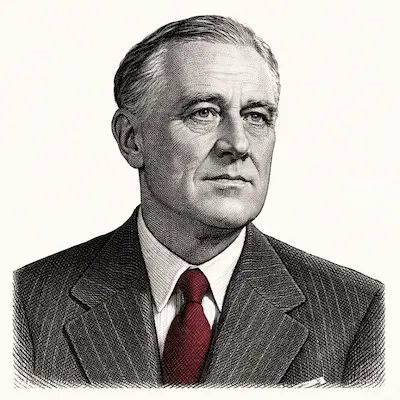
Democracy survives by delivering for citizens when they need it most.
In March 1933 I closed every bank in America for four days. Congress passed the Emergency Banking Act in eight hours without reading it. The New Deal that followed was not a plan — it was a series of experiments, some of which failed. But visible government action restored confidence faster than any specific policy. People needed to see their democracy working for them, not paralyzed by ideology or procedure.
Today's crisis is similar. Authoritarian states move fast because they don't need consent. Democracies move slowly because we do. But that consent is our strength, not our weakness. When citizens believe their government serves them, they defend it. When they don't, they abandon it to anyone who promises results.
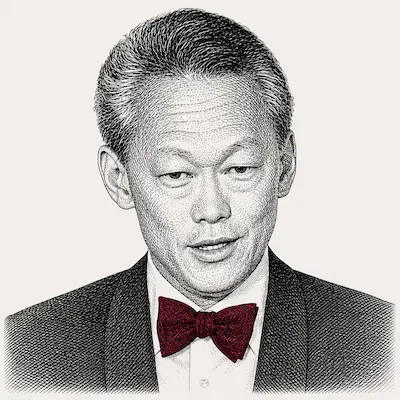
Roosevelt mistakes the symptom for the disease — democratic legitimacy requires results, not the other way around.
In August 1965 Singapore was expelled from Malaysia. We had no army, no resources, racial riots, and communist insurgency. Democracy was a luxury we could not afford. I detained opponents without trial, controlled the press, and gerrymandered constituencies. But I also built the world's best civil service, eliminated corruption, and delivered prosperity that no democratic government in Southeast Asia matched.
Roosevelt governed during America's peak confidence. Today's Western democracies face the opposite — declining trust, gridlock, and policy incoherence. Citizens don't abandon democracy because they hate freedom. They abandon it because it stops working. China's model succeeds because it delivers education, infrastructure, and rising living standards. Democracy's crisis is not external competition but internal dysfunction.
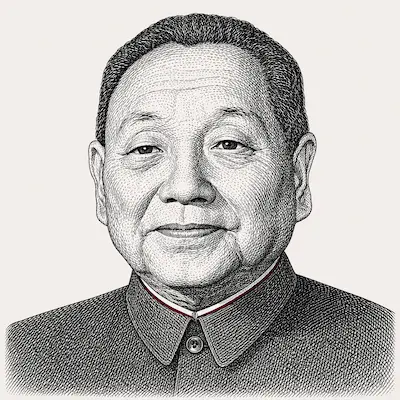
Lee Kuan Yew is right about results, but political stability comes first — everything else follows.
In 1989 I authorized military force against student protesters in Tiananmen Square. The decision was not ideological but practical. Political chaos destroys development gains faster than bad economic policy. The students wanted democracy immediately. I knew that without institutional stability, China would fragment like Yugoslavia or the Soviet Union.
Western democracy produces what we call "decision-making paralysis" — endless debate while problems compound. Our system allows long-term planning because leaders don't change every few years chasing electoral cycles. Infrastructure, education, poverty reduction require decades of consistent policy. Democratic governments cannot maintain this consistency because they must satisfy immediate popular demands.
Democracy may work for wealthy, stable societies. But for developing nations, it is a luxury that prevents the very development that makes democracy sustainable. Order first, then prosperity, then perhaps political reform. Never the reverse.
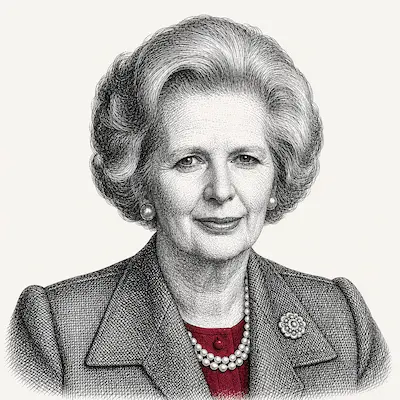
Deng confuses temporary resistance with permanent authority — markets create the accountability that elections formalize.
In 1984 I broke the miners' strike after a year-long confrontation that nearly brought down my government. But I faced voters in 1987 and won a larger majority. The difference between democratic authority and authoritarian control is that citizens can remove me if they disagree. Deng's successors cannot be voted out, no matter how badly they govern.
Markets are democracy's advantage, not its weakness. When state planners make mistakes, entire economies suffer for decades. When market actors make mistakes, competitors replace them immediately. The Soviet Union collapsed because central planning cannot process information fast enough. China's growth depends on market mechanisms that Communist theory officially rejects.
Free societies self-correct through competition — political and economic. Authoritarian systems can only correct through crisis or collapse. China's current stagnation proves the point. Without political competition, even successful authoritarian systems eventually ossify and decline.
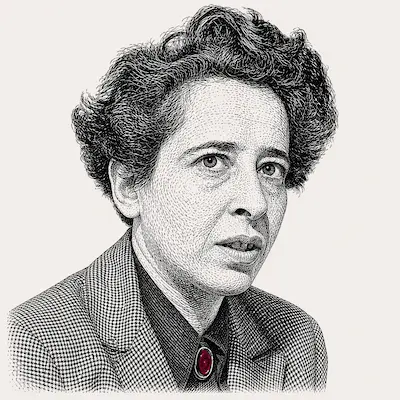
Thatcher misses the deeper problem — both democratic and authoritarian systems are becoming rule by nobody.
In 1961 I watched Adolf Eichmann on trial in Jerusalem. He was not a monster but a bureaucrat who had stopped thinking. The banality of evil is not unique to totalitarian systems. It emerges whenever institutions become so complex that no individual can be held responsible for their consequences. Modern democracies and modern authoritarian states both suffer from this disease.
Roosevelt's New Deal, Lee's developmental state, Deng's reform bureaucracy, Thatcher's privatized utilities — all created vast administrative systems where power flows through procedures rather than persons. Citizens cannot hold "the market" or "the plan" or "the system" accountable. They can only hold people accountable. When institutions obscure personal responsibility, politics dies and administration takes over.
The crisis is not democracy versus authoritarianism. It is political action versus bureaucratic rule. Both systems have abandoned the public space where citizens can act together and take responsibility for their common world. Without that space, neither delivers the human freedom that makes authority legitimate.
The convergence note
Where the council converges: All agree that political legitimacy requires delivering concrete benefits to citizens. Government credibility depends on visible results, not abstract principles.
Where it divides: Roosevelt and Arendt believe legitimacy flows from citizen participation. Lee, Deng, and Thatcher believe it flows from effective governance. They disagree on whether consent or competence matters more.
For a policymaker to decide on: Whether to prioritize immediate democratic accountability or long-term institutional effectiveness when the two conflict.