Built from documented writings, speeches, decisions and historical records. Council members argue from those positions, applied to today's question.
Build digital systems outside existing ministries, then force bureaucrats to use them or lose their jobs.
Thatcher's confrontation with civil servants and Estonia's bypass strategy both worked because they avoided institutional resistance. Schmidt's coordination challenge is real but secondary to breaking bureaucratic self-preservation instincts first. Denmark's mandatory digital channels achieved 90% adoption because citizens had no alternative.
The council splits on accountability after efficiency is achieved. Confucius and Arendt demand named officials who citizens can blame when systems fail.
- 1Build new digital systems outside existing government ministries to bypass institutional resistance.
- 2Force civil servants to adopt the new systems or face job elimination.
- 3Maintain named officials who citizens can directly blame when digital systems fail.
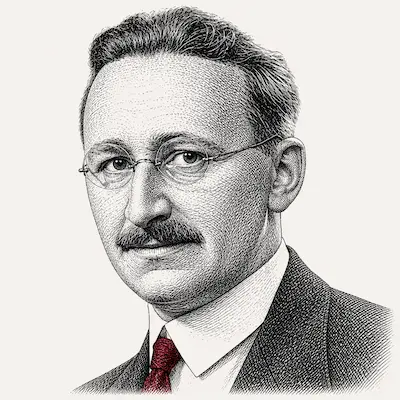
Digital government concentrates the knowledge problem it claims to solve.
Estonia's e-Residency may process 99% of services digitally, but this efficiency masks a fundamental error. In 1945 I demonstrated that no central authority can possess the dispersed, local knowledge that citizens have about their own circumstances. Digital systems aggregate data, not knowledge. They cannot distinguish between a rule that works in 10,000 cases and the one case where it fails catastrophically. Denmark's "digital by default" policy forces citizens into standardized categories that eliminate the tacit, contextual information that makes governance decisions actually work.
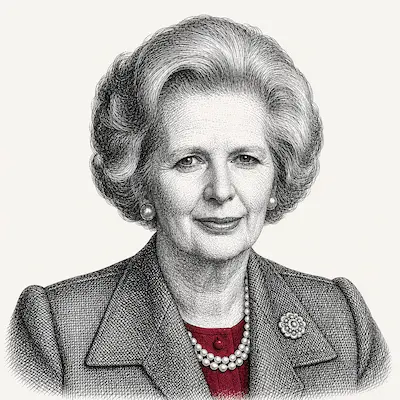
Bureaucrats resist reform because reform threatens their jobs.
Hayek misses the political reality. Between 1980 and 1990 I eliminated 732,000 civil service positions not through digital efficiency but through privatization and direct confrontation. The UK's consolidation of 1,700 websites onto GOV.UK happened because someone with authority forced it through. Bureaucracies don't streamline themselves. They multiply procedures, create interdependencies, and generate work that justifies their existence. Estonia succeeded because it built new systems outside existing ministries. Digital tools are useful, but only after you've broken the institutional resistance to change.

Bureaucracy becomes rule by nobody when digitized.
Thatcher's confrontation approach misses the deeper danger. In 1963 I identified bureaucracy as the most insidious form of modern domination because it eliminates personal responsibility. Digital bureaucracy perfects this elimination. When Denmark's citizens must use digital channels by law, who do they hold accountable when the system fails? The programmer? The minister? The algorithm? Estonia's 99% digital processing creates the illusion of efficiency while systematically destroying the human relationships through which political accountability actually functions. Citizens become data points, not political actors.

Good governance requires officials you can name and blame.
Arendt identifies the core problem. In 500 BC I resigned from the State of Lu when the Duke accepted dancing girls and neglected governance for three days. I could identify the failure and act on it because authority was personal and visible. Digital systems diffuse responsibility across networks where no individual can be held accountable. The rectification of names, calling things what they are, becomes impossible when "customer service" means talking to a chatbot. Denmark's 90% digital adoption may be efficient, but efficiency without accountability is not governance. It is administration by nobody.

European bureaucracy needs coordination, not elimination.
Confucius assumes accountability requires personal authority, but modern governance requires institutional coordination across multiple levels. During the 1973 oil crisis I learned that effective response demands rapid information flow between federal, state, and European institutions. Estonia's digital success works because it's a small, unitary state. The EU has 27 member states, multiple languages, and overlapping jurisdictions. Digital standardization could eliminate the coordination failures that paralyzed European energy policy in 1973. The question isn't whether to digitize, but how to build systems that strengthen rather than fragment institutional authority.
The convergence note
Where the council converges: Current bureaucratic systems waste time and resources. Digital tools can improve efficiency when properly implemented.
Where it divides: Whether digitization strengthens or weakens democratic accountability. Whether efficiency gains justify reduced human discretion.
For a policymaker to decide on: Build digital systems that preserve personal responsibility, or accept algorithmic efficiency with diffused accountability.