The Long Council
Who was selected, and why
With an increasing grip of technology and state surveillance, how can a “Brave New World” scenario be avoided?
The central tension
Does preventing authoritarian surveillance require hard constitutional limits on state power, or does it require rebuilding the civic institutions and human solidarity that make such limits meaningful?
The two poles
Hard limits on state power (constitutional, rights-based, structural constraints)
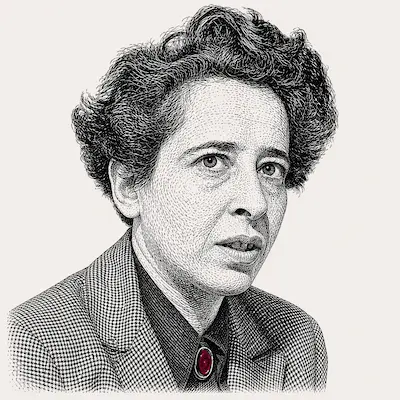 Hannah Arendt
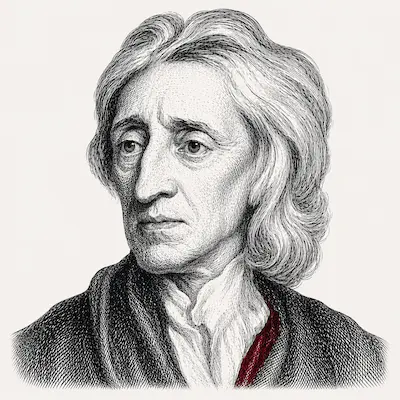 John Locke
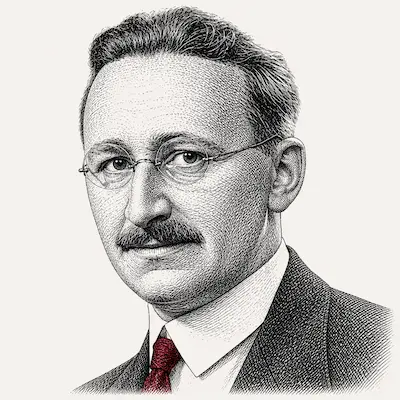 Friedrich Hayek
Rebuilding civic capacity and solidarity (institutions, common goods, human development)
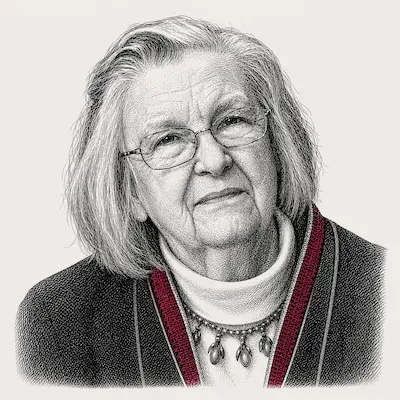 Elinor Ostrom
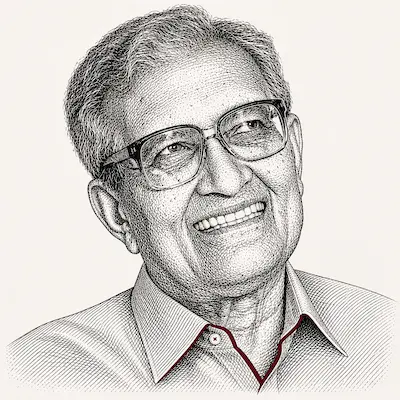 Amartya Sen
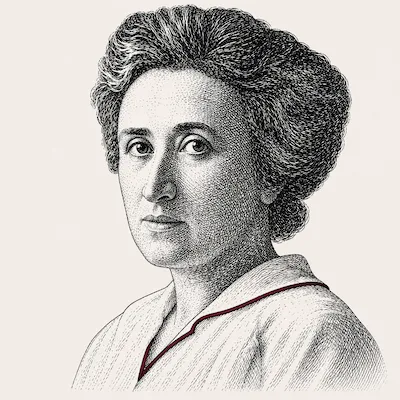 Rosa Luxemburg
Selected members
Hannah Arendt
Will argue: Pervasive surveillance is not merely a policy problem but a structural condition, atomisation, the destruction of the public realm, and the diffusion of accountability through bureaucratic systems are exactly the preconditions she identified for totalitarianism; the answer is rebuilding plural political spaces where people act in concert.
She is the council's theorist of totalitarianism, bureaucratic domination, and how atomised populations become raw material for control.
John Locke
Will argue: The state has no legitimate authority over the minds and private lives of citizens; surveillance that penetrates the inner sphere of thought, association, and communication is not governance but tyranny, and populations retain the right to dissolve the authority that exercises it.
He is the council's foundational voice for natural rights as pre-political limits on state power, including the right to dissolve a government that systematically violates them.
Friedrich Hayek
Will argue: Mass surveillance gives the state exactly the kind of centralised knowledge Hayek argued was both epistemically impossible and politically catastrophic, the concentration of information asymmetry in state hands destroys the dispersed, private knowledge that makes both markets and individual freedom possible; rule-of-law constraints are the only structural corrective.
His knowledge problem and road to serfdom arguments apply directly, centralised information collection is the technological completion of the planning project he warned against.
Elinor Ostrom
Will argue: Neither state monopoly over surveillance data nor pure privatisation (commercial surveillance) solves the governance problem, polycentric, locally accountable, rule-bound institutions with user participation and graduated sanctions are the only demonstrated model for governing shared information resources durably.
The governance of surveillance data is a genuine commons problem, information about individuals is shared, rivalrous in its uses, and subject to exactly the collective action failure she documented.
Amartya Sen
Will argue: Surveillance is not a neutral technical capacity but a direct assault on the capabilities, political freedom, transparency, and social opportunity, that make genuine human development possible; the absence of a free press and political accountability is structurally identical to the entitlement failures he identified in famine: information blockages that allow catastrophic harm to accumulate unseen.
He provides the capability argument, surveillance that chills speech, association, and dissent directly destroys the human capabilities that development is for; and a free press is his documented mechanism for preventing the information failures that enable abuse.
Rosa Luxemburg
Will argue: Surveillance infrastructure built for any stated purpose, security, public health, crime prevention, becomes the instrument through which ruling powers suppress the political opposition and working-class organising that are the only structural check on elite capture; "freedom only for supporters of the government is no freedom at all" applies with full force to the digital era.
She is the council's sharpest voice on how the suppression of dissent, even when claimed as temporary or protective, structurally transforms power relations in ways that cannot be reversed without the freedoms it abolished.
Considered but not selected
Confucius: His meritocratic governance framework addresses the character of officials, not the structural limits on state power. In a question about constraining state capacity, his reliance on ruler virtue as the primary governance instrument is precisely the inadequacy the question exposes; he has no framework for preventing a virtuous system from becoming a panopticon, and his T4 contradiction on this is unresolved.
Lee Kuan Yew: Highly relevant as the council's most explicit documented practitioner of benevolent surveillance ("the state knows best"), but the question asks how to avoid the dystopia, not how to argue for it. He would generate debate but would sit alone at a pole that the question frames as the problem rather than a solution. His documented ISA use and documented contempt for liberal constraints on state information-gathering would pull the deliberation toward defending the very scenario being questioned rather than analysing it.
Ibn Khaldun: His asabiyya framework is genuinely useful for diagnosing why surveillance states emerge (eroding group solidarity concentrates power), but his toolkit for institutional resistance is thin. He provides diagnosis better than prescription here, and the six selected members cover the structural analysis more thoroughly with more directly applicable frameworks.