Governments struggle to think beyond the next election, how to change that?
Built from documented writings, speeches, decisions and historical records. Council members argue from documented positions, applied to today's question.
Build the institutional locks now, but only those citizens helped design and can still monitor.
Schmidt's 1978 EMS and Keynes's 1944 Clearing Union both show the same thing: elected governments will not hold painful commitments through a recession if voters can punish them before the payoff arrives. Rawls adds that future generations cannot vote, so majority rule alone will always discount them. These three converge on insulated mandates as a necessary correction.
Ostrom's Swiss alpine communities governed shared resources from the 13th century onward without external treaties, because users wrote and monitored the rules themselves. Sen points to the free press as the mechanism: no democracy with one has suffered a famine, because visible failure gets corrected before it becomes irreversible.
The split is sequencing, not destination: Schmidt, Rawls, and Keynes say lock in the rules now and earn legitimacy later; Ostrom, Sen, and Rousseau say institutions imposed without citizen participation will be dismantled the moment they bite.
- 1Establish independent fiscal councils with long mandates, but require citizens to participate in drafting their governing rules.
- 2Codify press freedom and long-run consequence reporting as constitutional obligations, not statutory preferences.
- 3Require parliamentary approval for any suspension of insulated mandates, making dismantlement publicly costly.
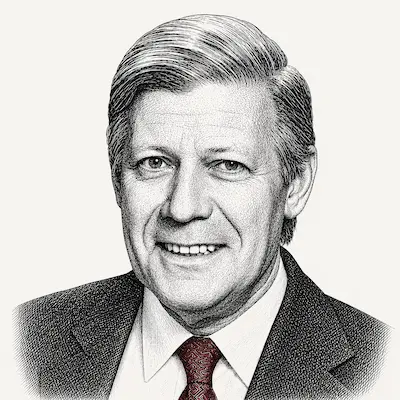
Politicians cannot choose long-term when short-term survival punishes them for it.
Good intentions do not survive electoral arithmetic. I built the European Monetary System in 1978 precisely because I knew no elected government would hold exchange rates steady through a recession if voters could punish them for it. So I locked the commitment into a treaty. The Bundesbank's independence worked the same way: it removed price stability from the ballot. Structural insulation is not anti-democratic. It is the price democracies pay to bind their future selves.
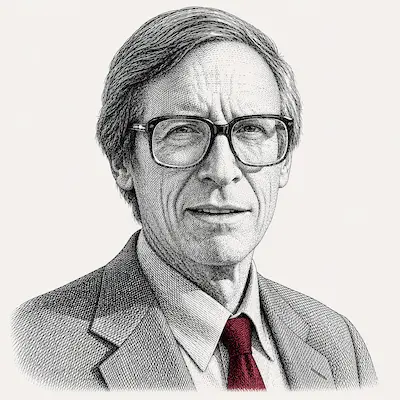
A just basic structure must protect generations who cannot yet vote.
Schmidt is right that insulation can serve justice, but the argument needs a firmer foundation than political convenience. From behind a veil of ignorance, no rational person would design institutions that let the present generation consume the future's resources unchecked, because they cannot know which generation they will inhabit. In A Theory of Justice I argued that the basic structure is the primary subject of justice. That includes constitutional rules that bind majorities on behalf of those not yet in the room.
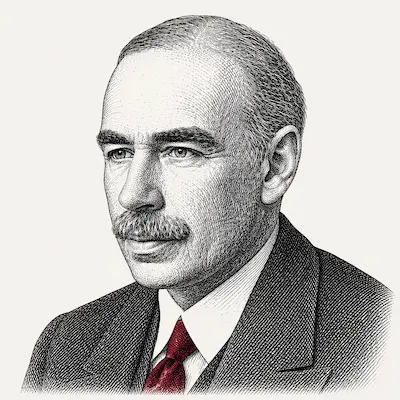
Uncertainty, not weakness of will, is why governments discount the long run.
Rawls frames this as a justice problem; I frame it as a knowledge problem, and the distinction matters. At Bretton Woods in 1944 I proposed an International Clearing Union precisely because no single government, facing genuine uncertainty about future trade balances, would voluntarily accept symmetric adjustment obligations. The problem is not that politicians are cowardly. It is that under genuine uncertainty, the rational move is to protect the short position. Independent institutions with long mandates hold the line when no individual actor can afford to.

Communities that write their own rules outlast institutions imposed from above.
Keynes asks whether communities can hold long horizons without external anchors. My field research answers yes, with conditions. The alpine meadow communities of Törbel in Switzerland governed shared pasture sustainably from the 13th century onward, not because a treaty compelled them but because the users themselves designed the rules, monitored compliance, and applied graduated sanctions. The design principles I drew from hundreds of such cases show the same pattern: when people participate in building the rules they live under, they accept costs that externally imposed rules cannot extract.
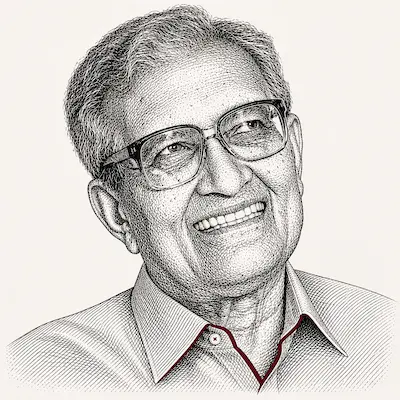
Democracy fails the long run when citizens cannot see long-run consequences.
Ostrom asks whether better information changes what voters demand. My answer is yes, and the evidence is concrete. No democracy with a free press has experienced a famine, because the press forces governments to register failures before they become irreversible. I argued in Development as Freedom that democracy is an epistemological instrument: it generates the information that corrects course. Electoral short-termism is not a structural defect of democracy itself. It is what happens when the information reaching voters stops at the next quarter's figures.
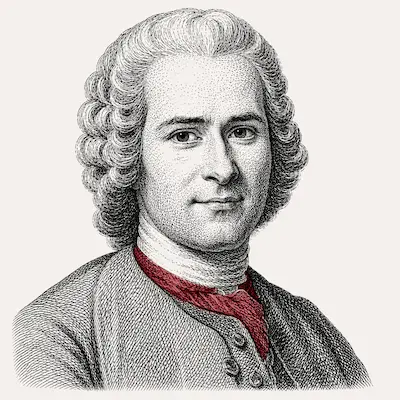
Electoral cycles harvest private interests, not the common good.
Sen puts faith in information. I put the question earlier: what do citizens do with it? In The Social Contract I distinguished the will of all, which is simply the sum of private interests, from the general will, which is directed at the common good. Elections aggregate the first. They do not produce the second. Better information helps citizens see consequences, but citizens formed by inequality and private appetite will still choose private advantage. The fix is not more data. It is forming citizens who identify with the community before they enter the voting booth. I acknowledge the danger in my own argument: those who claim to speak the general will have used it to silence legitimate dissent. The answer is not to abandon the goal but to build civic education into constitutional design from the start, not to hand the claim to a revolutionary vanguard.
The convergence note
Where the council converges: Electoral cycles alone cannot protect long-run interests. Some institutional mechanism beyond the vote is necessary.
Where it divides: Schmidt, Rawls, and Keynes trust independent institutions with insulated mandates to hold the long horizon. Ostrom, Sen, and Rousseau argue that institutions imposed without citizen participation or information will not hold, and that the real fix runs through how citizens are formed and informed, not through bypassing them.
For a policymaker to decide on: Which comes first: build independent fiscal councils, central banks, and constitutional rules that constrain short-term majorities now, or invest in civic education, press freedom, and participatory rule-making so that future majorities choose long-term outcomes without needing to be constrained?