Built from documented writings, speeches, decisions and historical records. Council members argue from documented positions, applied to today's question.
Immigration raises national income, but whether specific workers gain or lose depends on institutions that most countries have not built.
Sen and Rawls agree: aggregate GDP growth is the wrong test. The real question is whether low-skill native workers end up better off after redistribution. Hirschman adds that national averages describe nobody's actual situation; Stuttgart and Sunderland absorb labour differently, and policy set on averages fails both.
Friedman and Hayek split with Sen and Rawls on what follows. Friedman argued in 1999 that open borders and a welfare state cannot coexist fiscally. Hayek adds that no ministry holds the local knowledge to manage the trade-off well.
- 1Shift immigration policy decisions to local labour market authorities, not national ministries holding averaged data no locality matches.
- 2Require any immigration arrangement to demonstrate that low-skill native workers gain after redistribution, not merely that aggregate GDP rises.
- 3Resolve publicly whether the welfare state will be reformed or immigration restricted; governing both simultaneously without choosing produces fiscal and political failure.

Immigration expands capabilities for migrants and receiving societies alike.
The right question is not whether GDP rises but whether people gain real freedoms. In 1943, Bengal exported food while millions starved because entitlements collapsed, not because food disappeared. Immigration works the same way: aggregate numbers can look fine while specific workers lose purchasing power and specific migrants gain nothing because institutions fail them. Where complementary institutions distribute gains broadly, immigration expands capabilities on both sides of the border. Where those institutions are absent, the gains are real but captured narrowly.

Justice demands we ask who bears the adjustment costs.
Sen asks who gains. I ask who is permitted to lose. The difference principle does not require equal outcomes; it requires that any inequality benefit the least advantaged. When a low-skill native worker's wages fall because of labour market competition, that outcome requires justification: does the overall arrangement, including redistribution of gains, leave that worker better off than they would otherwise be? If it does not, the arrangement is unjust regardless of its aggregate efficiency. I have no documented position on contemporary wage data, but the normative test is clear.

Open immigration and a welfare state cannot coexist.
Rawls asks whether the least advantaged benefit. I agree that is the right test. But in 1999 I said plainly at Stanford: free immigration is incompatible with a welfare state. When immigrants can access benefits immediately, you attract people drawn by transfers rather than by work. That changes the fiscal arithmetic and the incentive structure simultaneously. Low-skill native workers lose on wages and then watch the safety net they depend on stretch thin. You cannot have open borders and a generous welfare floor. Choose one.
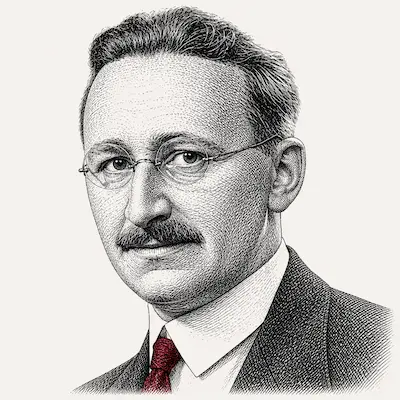
Governments lack the knowledge to manage immigration beneficially.
Friedman's fiscal arithmetic is correct, but his framing still assumes governments can design an immigration policy that captures the benefits while limiting the costs. In my 1945 essay I argued that the economic problem is never about allocating known resources but about using knowledge dispersed across millions of individuals. Labour needs in Stuttgart differ from those in Sunderland; absorption capacity in one neighbourhood differs from the next. No ministry possesses that information. Policies set centrally will systematically produce both economic inefficiency and the political backlash that ultimately destroys liberal institutions.

The question as posed is the wrong unit of analysis.
Hayek asks about knowledge; I ask about the question itself. "Is immigration economically beneficial?" is a perversity argument waiting to happen on both sides. In my Colombia fieldwork in the 1950s I watched planners aggregate local realities into national models and then act on the average, which described nobody's actual situation. When low-skill workers cannot exit declining labour markets, as Hayek rightly implies, they also lose the credible threat that makes voice effective. Immigration then reduces their bargaining power without giving them any compensating mechanism. The answer depends entirely on which workers, which institutions, and over what horizon.
The convergence note
Where the council converges: Aggregate GDP is the wrong metric; distributional effects on specific workers matter most. Complementary institutions determine whether immigration benefits are captured broadly or narrowly.
Where it divides: Friedman and Hayek argue the welfare state makes open immigration fiscally and institutionally unsustainable. Sen and Rawls argue the solution is better institutions, not closed borders. Hirschman disputes both poles, insisting the question cannot be answered at the national level.
For a policymaker to decide on: Should immigration policy be set by national wage and fiscal targets, or by local labour market conditions and absorption capacity? Does the welfare state require immigration limits, or does immigration require welfare reform?