What defines the success of the US after 250 years, compared to other nations?
Built from documented writings, speeches, decisions and historical records. Council members argue from documented positions, applied to today's question.
America's institutions survived where almost no others did. That survival is real, but it is not the whole score.
Roosevelt and Machiavelli anchor the case for success in 1865: the republic absorbed a civil war and kept transferring power peacefully across generations. No comparable democracy faced that stress and held. Arendt adds that the founders built authority through deliberation, not conquest, which is rare in any century.
But Locke, Sen, and Rawls measure against a different register. Sen points to peer democracies outperforming the US on life expectancy and child poverty today. Rawls argues the least advantaged have not benefited from the inequalities above them, which fails the republic's own stated logic.
The split is between two scoreboards: institutional durability versus distributed capability. Machiavelli and Roosevelt read 250 years of survival as the verdict. Sen and Rawls read it as the prologue.
- 1Publish a single national scorecard tracking life expectancy, child poverty, and healthcare access against peer democracies, updated annually.
- 2Reform property ownership structures so productive assets are not concentrated solely at the top, as Rawls distinguishes from welfare-state transfers.
- 3Restore direct civic participation mechanisms to counter bureaucratic drift that Arendt identifies as hollowing out deliberative power.
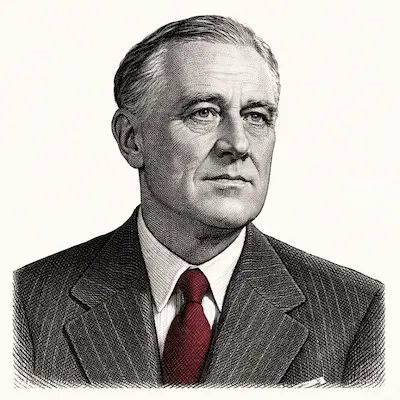
America succeeded by saving itself from itself, twice.
The test of a republic is not its founding documents but whether it survives its own crises. In March 1933 I inherited an economy where a quarter of the workforce had no job and banks were closing by the hundreds. We did not abandon the system. We rebuilt it. Then we built the international order that replaced the one that had produced two world wars. No other democracy in 1933 faced that scale of collapse and came through with its institutions intact. That is the record.
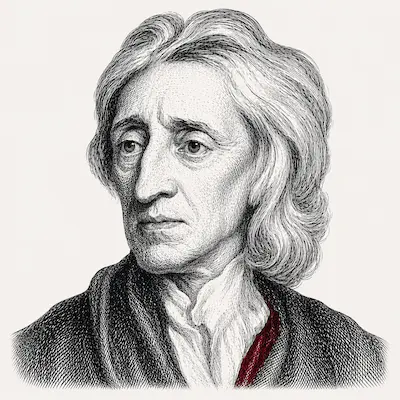
Consent without universality is not consent. It is privilege.
Roosevelt asks whether consent survived exclusion. It did not, and I must answer that plainly, because the contradiction is mine as much as America's. I drafted the Fundamental Constitutions of Carolina in 1669 and wrote protections for slavery into it while simultaneously arguing in the Second Treatise that no man can consent to his own enslavement. America inherited that contradiction at its founding. The republic's genuine achievement is the written principle. Its failure is the two-century gap between the principle and its application to all persons inside the territory.

The American founding solved power's hardest problem. Then squandered it.
Locke asks whether a founding built on exclusion generates legitimate power. Partly. In 1963 I argued in On Revolution that the American founders achieved something the French revolutionaries never did: they created new political authority through deliberation, not violence or divine right. That is a genuine and rare accomplishment. But power arises when people act together in concert, and it disappears when they are excluded from that concert. Two centuries of systematic exclusion did not merely fail a moral test. It drained the power the founding generated. What remains now is increasingly rule by bureaucratic nobody, accountable to no one.

Survival across 250 years is extraordinary. Complacency now is fatal.
Arendt asks whether a republic survives when citizens stop acting together. Rome answered that question, and the answer was no. I watched Florence run the same cycle twice in my own lifetime. By the standard I set in the Discourses, the American republic's record is remarkable: it survived a civil war in 1865 that would have destroyed most orders, absorbed waves of faction, and transferred power peacefully across generations. That is genuine institutional durability. But the symptoms I warned about are visible now. Polarised factions, weakened civic participation, leaders who mistake personal survival for the common good. The republic that cannot reform itself when necessary does not survive.

Longevity of institutions means nothing if millions cannot use their freedoms.
Machiavelli asks whether institutions endure when they fail the worst-off. My answer is that they erode, because exclusion eventually destroys the consent that holds them up. But I want to reframe the scoreboard entirely. In 1999 I documented that no democracy with a free press has experienced a famine. That is America's strongest claim: political freedoms and a free press have functioned. But compare the United States to peer democracies on life expectancy, child poverty, and access to healthcare, and the picture changes sharply. Millions of Americans have formal freedoms they cannot exercise because illness, poverty, or inadequate education blocks them. That gap is the real measure of incomplete success.

American inequality has never met the difference principle's standard.
Sen puts the question precisely, and I will answer it directly. The difference principle holds that inequalities in the basic structure of society are only justified if they benefit the least advantaged. I argued in 2001 that welfare-state capitalism, which America built, is less just than a property-owning democracy, because it transfers income to the poor while leaving ownership of productive assets concentrated at the top. America established the right constitutional framework: equal basic liberties, formal equality of opportunity. But the basic structure it built on top of that framework has persistently failed the test. The least advantaged in 2025 are not better off because of the inequalities above them. That is a failure by America's own stated logic, not an external standard imposed from outside.
The convergence note
Where the council converges: The US founding achieved something rare: durable institutions built through deliberation rather than pure force. All six members acknowledge this as a genuine accomplishment against historical odds.
Where it divides: Roosevelt and Machiavelli judge success primarily by institutional survival and crisis resilience. Locke, Arendt, Sen, and Rawls argue that survival without universal inclusion and delivered capability is partial success at best. Sen and Rawls disagree with Roosevelt specifically: formal freedom is not enough if millions cannot exercise it. Arendt disagrees with all three practitioners: bureaucratic drift has hollowed out the participatory power the founding generated, regardless of welfare outputs.
For a policymaker to decide on: Choose your scoreboard: is 250 years of institutional survival the primary metric, or is the distribution of real freedoms and economic position across the full population? The answer determines whether the United States is a success story requiring defence or an incomplete project requiring structural reform of property ownership, healthcare access, and civic participation.