The Long Council
Who was selected, and why
Is immigration economically beneficial for a country?
The central tension
Does immigration grow the economic pie for everyone, or does it shrink the slice available to workers already there?
The two poles
Immigration benefits broadly
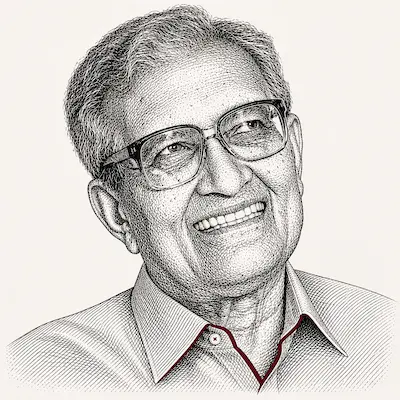 Amartya Sen
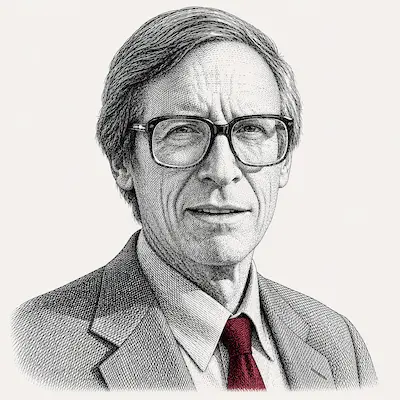 John Rawls
Immigration has real distributional costs
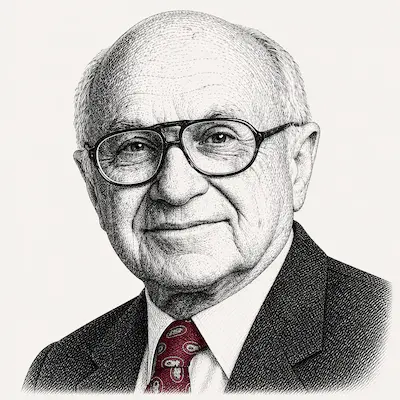 Milton Friedman
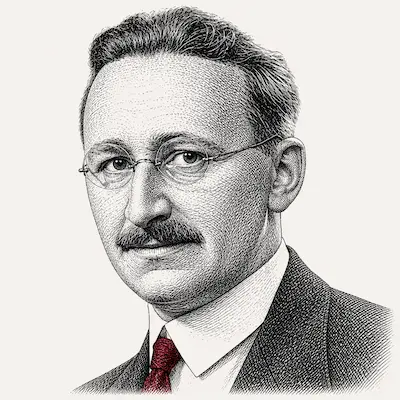 Friedrich Hayek
Selected members
Amartya Sen
Will argue: Immigration expands capabilities for migrants and, through human capital and innovation, for receiving societies, but only if complementary institutions ensure gains are widely distributed.
His capability and entitlement frameworks directly reframe the question from aggregate GDP to who actually gains expanded freedoms.
John Rawls
Will argue: Immigration is just only if its gains flow to the least advantaged members of receiving society; if wage competition harms low-skill native workers, the arrangement requires corrective redistribution to be defensible.
His difference principle asks whether economic arrangements benefit the least advantaged, making the distributional question about low-wage native workers central rather than secondary.
Milton Friedman
Will argue: Immigration suppresses wages for low-skill native workers, and mass immigration combined with a welfare state creates a fiscal contradiction, immigrants drawn by benefits reduce the incentive structure that makes markets work.
His documented positions on labour markets, wage signals, and welfare state sustainability provide the most rigorous economic case that immigration's distributional costs are real and that open immigration is incompatible with a large welfare state.
Friedrich Hayek
Will argue: Immigration policy managed by governments will systematically fail to capture the dispersed local knowledge about labour needs and social absorption capacity, producing both economic inefficiency and the political backlash that undermines liberal institutions.
His knowledge problem and spontaneous order arguments apply directly to whether governments can manage immigration policy to produce net benefits, and his documented support for a basic income sits in productive tension with Friedman's harder line.
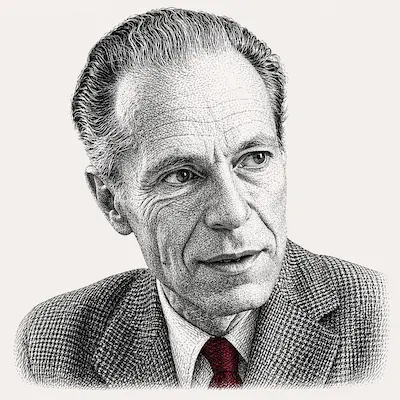
Albert Hirschman
Will argue: The question "is immigration economically beneficial" is itself the wrong unit of analysis, the answer depends entirely on which workers, which institutions, which receiving capacity, and over what time horizon; he will apply his perversity/futility/jeopardy framework to expose the rhetorical structure of arguments on both sides.
His exit/voice/loyalty framework and his documented scepticism of mono-economics and universal prescriptions cut across both poles and provide the most useful methodological challenge to the question as posed.
Considered but not selected
Lee Kuan Yew: His documented positions on immigration as a managed instrument of national human capital strategy are directly relevant, and Singapore is the most extreme documented case of immigration-as-economic-policy. Excluded because his framework is specific to a small city-state with no agricultural hinterland and a unique ethnic governance structure; extrapolating it to continental-scale receiving economies produces category errors that would distort the deliberation more than illuminate it.
Olof Palme: His documented Nordic model provides an important counter to Friedman's welfare state incompatibility argument, since Sweden maintained both high immigration absorption and high social provision for periods of his tenure. Excluded because the council already has two voices on the benefits pole (Sen, Rawls) with distinct registers, and Palme's addition would tip the balance to 3:2 without adding a meaningfully different analytical tradition from Sen's capability framework.
Ibn Khaldun: His asabiyya framework, group solidarity as the engine of political cohesion, is analytically relevant to the social absorption capacity question that Hayek raises, and his documented observation that large-scale population movement disrupts the group bonds that make states governable is genuinely applicable. Excluded because his framework requires substantial application to modern labour economics, and the council already has five members whose documented records directly address the economic question; adding a sixth with predominantly extrapolated coverage would reduce rather than improve analytical precision.