Will the current global economy continue to grow, or will tensions cause a recession?
Built from documented writings, speeches, decisions and historical records. Council members argue from documented positions, applied to today's question.
Current global tensions will trigger recession unless governments coordinate immediate fiscal response while markets adjust.
Schmidt warns that energy and supply disruptions move faster than economies can adapt. Deng argues that manufacturing economies survive external shocks better than finance-dependent ones. Keynes identifies the core mechanism: under genuine uncertainty, business investment collapses regardless of productive capacity. Sirleaf shows that small economies become collateral damage without coordinated protection from larger powers.
Hayek stands alone in believing market adjustment will work without massive disruption costs.
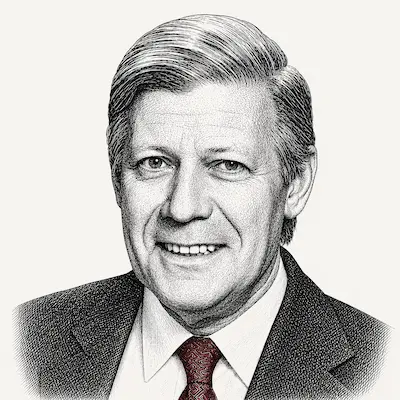
External shocks require immediate resource security, not theoretical optimism.
Schmidt's experience managing the 1973 oil embargo taught him that global tensions translate directly into economic vulnerability. In November 1973, he told the Bundestag that energy dependence was not an energy question but a sovereignty question. The current tensions — supply chain disruption, energy price volatility, geopolitical fragmentation — follow the same pattern as the crises that defined his chancellorship.
The question is not whether markets will eventually adjust. The question is whether economies can survive the adjustment period without social breakdown. Schmidt learned this during the 1970s stagflation: theoretical confidence in market mechanisms offers no protection against the immediate disruption of essential supplies.
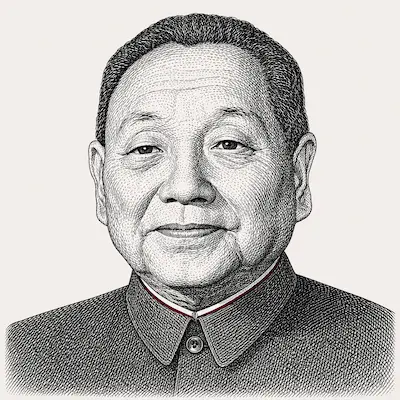
Economic resilience requires productive capacity, not financial engineering.
Schmidt understands the sovereignty dimension, but he governed a developed economy with existing industrial capacity. During China's 1997 Asian financial crisis aftermath, Deng observed that countries with strong manufacturing bases weathered external shocks better than those dependent on financial services or commodity exports. The current global tensions expose the same structural weakness: economies built on consumption and finance are more vulnerable than those built on production.
The solution is not demand management but supply-side resilience. China's reform experience showed that building productive capacity — factories, infrastructure, technical skills — creates the foundation for economic stability that no monetary policy can substitute. Current tensions will favor economies that can produce what they need domestically.
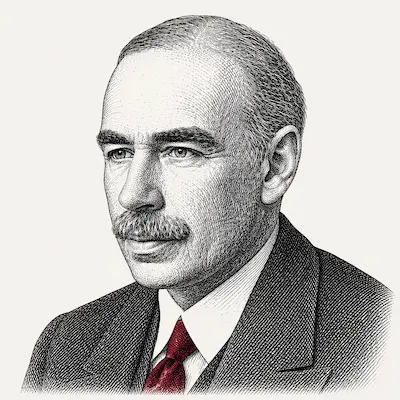
Under genuine uncertainty, markets can remain irrational longer than economies can remain solvent.
Deng's supply-side focus misses the immediate crisis mechanism. The current situation resembles the period before my General Theory — not a normal business cycle but a collapse of confidence under genuine uncertainty. When businesses cannot assign probabilities to future scenarios, they stop investing regardless of productive capacity or government encouragement.
My experience at Versailles and Bretton Woods taught me that international economic crises require coordinated intervention, not individual country resilience strategies. The 1930s showed what happens when each country tries to build fortress economies: global trade collapses, taking everyone's productive capacity with it. The correct response is aggressive counter-cyclical policy to maintain aggregate demand while uncertainty resolves.
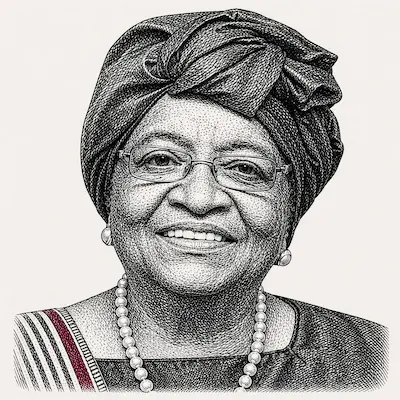
Vulnerable economies face disproportionate risks from global contraction and need coordinated protection.
Keynes assumes governments have the fiscal capacity to implement counter-cyclical policy. During the 2008 global financial crisis, Liberia's entire national budget was smaller than a single European bank bailout. Small economies cannot stimulate their way out of global recessions — they become collateral damage from decisions made in Washington, Brussels, and Beijing.
My experience with the HIPC debt relief process showed that international coordination can work, but only when larger economies accept responsibility for systemic stability. The current tensions require the same approach: debt relief for vulnerable countries, coordinated fiscal response from surplus economies, and protection of the weakest from the adjustment costs of great power competition.
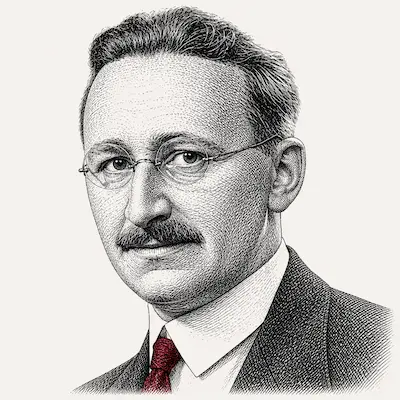
Market mechanisms will adjust to current tensions more effectively than government intervention.
Sirleaf's concern for vulnerable economies is understandable, but her solution — more government coordination — will amplify the problem. The current tensions arise precisely because governments have created artificial dependencies through industrial policy, currency manipulation, and subsidized trade relationships. These interventions prevent the price system from signaling real scarcities and opportunities.
My experience observing the socialist calculation debate taught me that dispersed knowledge cannot be centrally coordinated. Each attempt to manage global economic adjustment through government planning destroys the information that markets need to find sustainable solutions. The recession risk comes not from the tensions themselves but from governments' attempts to prevent the necessary adjustments.
The convergence note
Where the council converges:
Current global tensions create genuine economic risks that require active policy responses rather than passive market faith.
Where it divides:
Whether the solution is coordinated government intervention to maintain stability or reduced intervention to allow market adjustment. The fundamental disagreement is whether current economic arrangements should be preserved through policy or replaced through market forces.
For a policymaker to decide on:
Whether to prioritize short-term stability through fiscal and monetary stimulus or long-term resilience through structural adjustment, knowing that each path imposes different costs on different populations.