Built from documented writings, speeches, decisions and historical records. Council members argue from documented positions, applied to today's question.
Capitalism can survive AI, but only if redistribution happens before ownership concentration captures the governments that would impose it.
Keynes, Friedman, and Hayek agree: AI productivity without redistribution kills the consumer demand that keeps markets running. Friedman argues cash transfers are enough; Keynes argues governments must act aggressively before the gap widens. Luxemburg points to the Weimar Republic: when capital concentrates this severely, owners capture the legislatures before redistribution becomes possible.
Hirschman closes the argument with a timing problem. Once AI restructures labour markets, reversing those arrangements costs far more than building them differently from the start. The split is not whether to redistribute, but whether cash transfers within current ownership structures are enough, or whether ownership itself must be addressed first.
- 1Impose redistribution mechanisms on AI profits now, before ownership concentration captures the legislatures that would enact them later.
- 2Reject regulatory frameworks that expand administrative control over AI without preserving the price system beneath them.
- 3Publish a binding policy timeline for cash transfer implementation, anchored to current labour market conditions, not post-displacement ones.
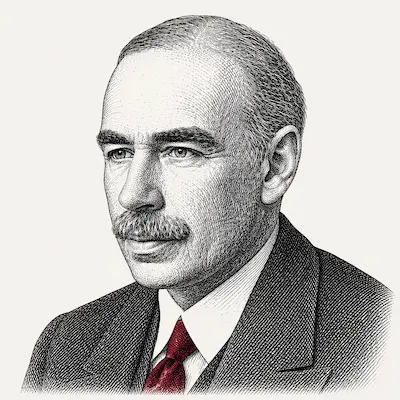
AI productivity growth without redistribution collapses the demand it creates.
I wrote in 1930 that we were solving the economic problem, that our grandchildren would work fifteen hours a week. I was right about the productivity and wrong about the politics. Markets do not automatically distribute the gains of technological transformation. In 1936, when unemployment sat at ten percent in Britain, I showed that demand collapses when income concentrates. AI ownership is concentrating faster than any prior technology. The machine profits; the wage earner does not. Capitalism survives productivity shocks only when governments redistribute aggressively enough to sustain the purchasing power that keeps the whole system running.
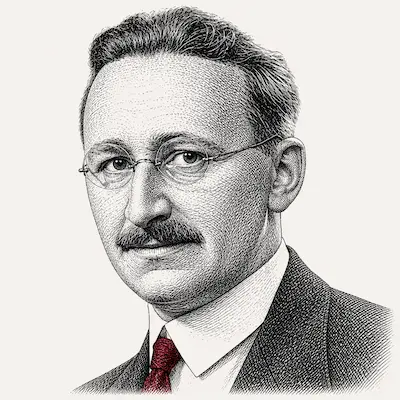
AI concentrating ownership is dangerous; AI replacing price signals is catastrophic.
Keynes asks whether price signals survive AI. They do, because the knowledge problem has not been solved. In 1945 I showed that no central authority can possess the local, tacit, contextual knowledge that millions of individuals carry. Machine learning systems optimise for measurable proxies. They do not capture what a grandmother in Bratislava knows about her neighbourhood, what a small manufacturer knows about his suppliers. I did not govern in an era of AI, but I watched Soviet planners fail with far simpler tools. The fatal conceit is not dead. It has new hardware. Redistribution I accept; planning disguised as algorithmic management I do not.

AI disruption calls for cash transfers, not ownership regulation.
Hayek is right that the price system must be preserved. I argued in 1962 that a negative income tax, a clean cash transfer to every citizen below a threshold, was superior to every bureaucratic welfare programme ever devised. The same logic applies here. AI displaces workers. The correct response is not to regulate who owns the AI, not to impose profit-sharing mandates, not to build a new administrative apparatus. Give people money directly. Let them choose. The danger is not that capitalism cannot survive AI. The danger is that governments use AI disruption as a pretext to expand the regulatory state into every corner of economic life.
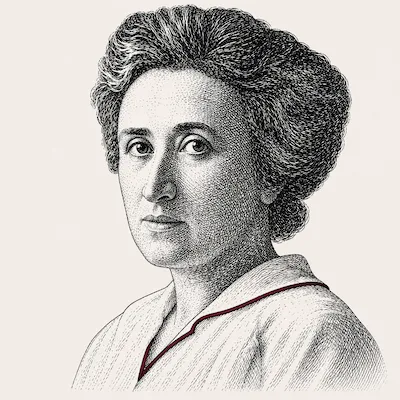
AI destroys the wage relation that distributes purchasing power across society.
Friedman asks whether taxing AI profits reaches workers. He has identified the problem and missed its depth. In 1913 I showed that capitalism requires a mechanism to distribute purchasing power broadly enough to realise the surplus it produces. That mechanism is wage labour. AI does not merely reduce wages. It removes the wage relationship at scale. A negative income tax financed by AI profits presupposes a political settlement in which the owners of AI accept permanent redistribution of their returns. In every country where capital has concentrated this severely, those owners have captured the regulatory and legislative apparatus that would impose that settlement. The Weimar Republic showed me what happens when democratic institutions are too weak to tax concentrated power.
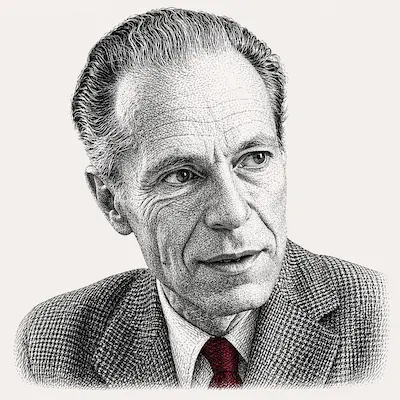
Irreversible labour displacement forecloses the exit that disciplines capital.
Luxemburg has named the mechanism precisely. When exit from wage labour becomes involuntary rather than chosen, voice is the only remaining instrument. In 1970 I showed that exit disciplines organisations: the threat of departure forces improvement. But AI displacement does not offer workers a credible exit. There is nowhere to go. That asymmetry is the core danger, and it arrives before the political settlement Luxemburg describes becomes achievable. I observed in Colombia in the 1950s that once infrastructure investments locked in particular economic arrangements, reversing them cost far more than building them differently from the start. The same logic applies here. Once labour markets are restructured around AI systems, the institutional arrangements and investment patterns become extremely hard to unwind. The burden of justification must fall before the transition consolidates, not after.
The convergence note
Where the council converges: AI-driven productivity growth without active redistribution will collapse the demand that sustains the system. Every member accepts that some policy response is necessary.
Where it divides: Keynes and Luxemburg argue the distributional crisis is structural, requiring aggressive redistribution or transformation of ownership. Friedman and Hayek argue cash transfers and preserved price signals are sufficient. Luxemburg goes further: the political conditions for any redistribution are themselves at risk from the concentration of power AI enables. Hirschman adds that the window for reversible intervention closes as infrastructure locks in.
For a policymaker to decide on: Should AI governance focus on redistribution within existing ownership structures, or must it address ownership concentration directly before the political conditions for redistribution disappear?