Built from documented writings, speeches, decisions and historical records. Council members argue from documented positions, applied to today's question.
Democracy can solve long-term problems, but only when institutions force future costs into the present before catastrophe does it instead.
Roosevelt's Social Security design is the clearest model: payroll contributions created immediate stakeholders who then defended the programme across generations. Sen adds that the Bengal famine of 1943 killed three million people under colonial rule, where press freedom was suppressed; open information systems do accelerate democratic response. Lee Kuan Yew's CPF delivered home ownership to over eighty percent of Singaporeans by insulating savings from electoral revision entirely.
Ibn Khaldun and Machiavelli identify the limit: organised present interests are cohesive, future beneficiaries are not yet born, and democratic systems tend to move only when a bond market refuses or a coastline floods a capital. The council splits on whether good design can substitute for that felt necessity, or whether it only works when crisis has already arrived to make delay politically impossible.
- 1Design long-term policy instruments, like pension funds or carbon pricing, so present contributors become immediate stakeholders defending future benefits.
- 2Protect press freedom and public accountability institutions; Sen's Bengal famine evidence shows information suppression kills democratic response to slow-moving crises.
- 3Insulate specific savings or infrastructure mechanisms from electoral revision, following Singapore's CPF model, before crisis forces the choice.
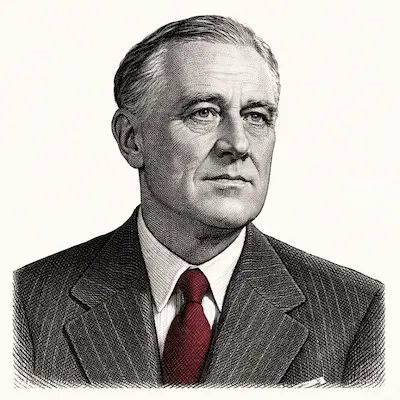
Democracies solve long-term problems when leaders make future benefits feel present.
In August 1935 I signed Social Security into law against fierce opposition from people who called it socialism. I insisted on payroll contributions rather than general revenue funding. Workers would feel they had earned their benefits. That design made the programme politically indestructible across generations. The lesson is not that democracy naturally looks ahead. It is that leaders can engineer institutions whose future beneficiaries become an immediate political constituency, binding the present to the future through self-interest, not virtue.
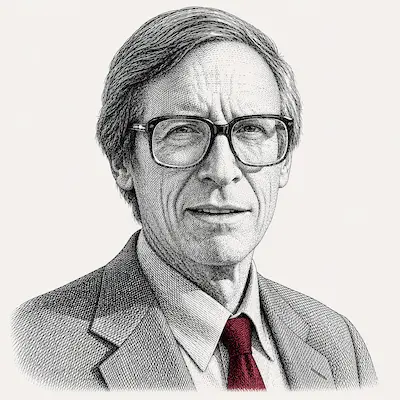
Future generations cannot vote, so institutions must speak for them.
Roosevelt is right that constituency-building matters. But self-interest alone is too fragile a foundation. The original position asks us to reason without knowing which generation we will be born into. Rational people choosing from that position would demand institutions that protect future citizens as firmly as present ones. In 1971 I argued that just institutions are not designed for today's majority but for persons across time. A democracy that cannot commit to future-regarding rules is not fully just. It is merely responsive.
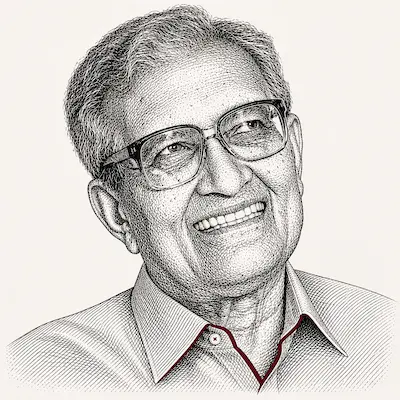
Democratic failure on long-term problems is an information failure, not a structural one.
Rawls asks what rational people would choose behind a veil of ignorance. I ask what actual people learn when institutions let them speak. No democracy with a free press has allowed a famine to run unchecked: the Bengal famine of 1943 killed three million people under colonial administration, where public accountability was suppressed. When citizens can see damage accumulating and journalists can name it, governments act. The problem with climate or pension debt is not that democracy cannot respond. It is that the damage is slow, dispersed, and easy to deny until it is not.
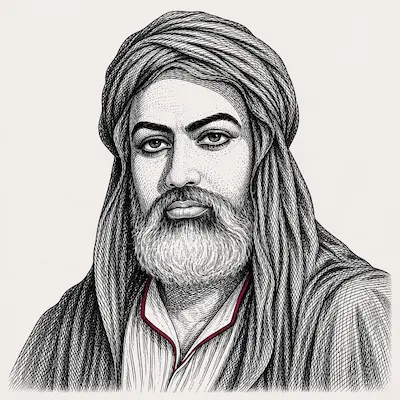
Prosperous orders lose the cohesion that made collective sacrifice possible.
Sen is correct that information matters. But the deeper obstacle is not what citizens know. It is whether they still feel bound to one another. In the Muqaddimah I observed that every dynasty I studied across North Africa and Andalusia followed the same arc: conquest built on tight group solidarity, then prosperity, then luxury, then the slow dissolution of the will to act together. The mechanism applies here, though the form differs. Democratic prosperity concentrates organised present interests and disperses future ones. The group that benefits from delay is cohesive. The group that suffers from it is not yet born.
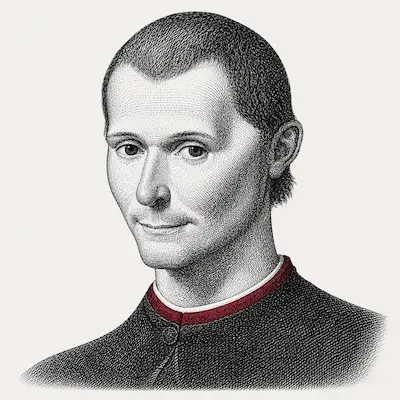
Institutional design cannot substitute for the necessity that forces action.
Ibn Khaldun identifies the disease. I will name the cure that actually works. In the Discourses I argued that republics survive not through virtue but through necessity: Rome renewed itself when external pressure made the cost of inaction visible and immediate. The structural problem with long-term democratic failure is precisely that climate debt and pension shortfalls do not yet feel necessary. They feel optional. When they stop feeling optional, because a bond market refuses to lend or a coast floods a capital city, democratic institutions move with remarkable speed. The question is not whether democracy can act. It is whether it acts before or after catastrophe.
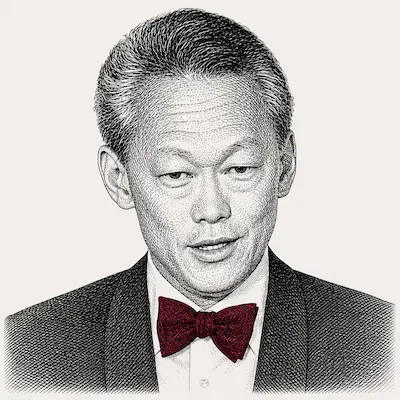
Electoral cycles and thirty-year planning horizons cannot occupy the same institution.
Machiavelli waits for catastrophe to force action. I did not have that luxury. Singapore in 1965 had no hinterland, no resources, and no margin for error. I built the Central Provident Fund into a compulsory savings mechanism precisely because I knew that democratic majorities would consume today what they needed for tomorrow. That is not a failure of information or solidarity. It is arithmetic. The CPF delivered home ownership to over eighty percent of Singaporeans within two decades because it was insulated from electoral pressure, not because voters chose wisely. Roosevelt built durable institutions. But he also had a continental economy and a crisis so acute it overrode normal democratic resistance. Most long-term problems do not arrive that conveniently.
The convergence note
Where the council converges: Democracy does not automatically solve long-term problems. It requires deliberate institutional design to do so.
Where it divides: Roosevelt, Rawls, and Sen argue that democratic institutions can be engineered to bind the present to the future. Ibn Khaldun and Lee Kuan Yew argue that prosperity itself erodes the solidarity and political will that such engineering requires. Machiavelli holds that only felt necessity, not design, reliably moves democratic systems before collapse.
For a policymaker to decide on: Should long-term policy instruments like pension funds, infrastructure bonds, or carbon pricing be insulated from electoral revision, or does that insulation itself corrode the democratic legitimacy that makes the policy stick?