Built from documented writings, speeches, decisions and historical records. Council members argue from documented positions, applied to today's question.
Mars settlement divides on whether civilizational insurance justifies abandoning Earth's urgent needs.
Keynes and Lee frame Mars as insurance against extinction risks that cannot be calculated. Roosevelt and Sen counter that the same resources could provide housing, healthcare, and education to billions who lack basic capabilities. Maathai argues Mars fantasies divert attention from healing Earth's damaged ecosystems.
The split is irreducible: survival insurance versus immediate human needs.
- 1Reject Mars settlement funding until basic capabilities like clean water, healthcare, and education reach Earth's majority population.
- 2Define specific extinction risks and probability thresholds that would justify Mars investment over Earth's restoration needs.
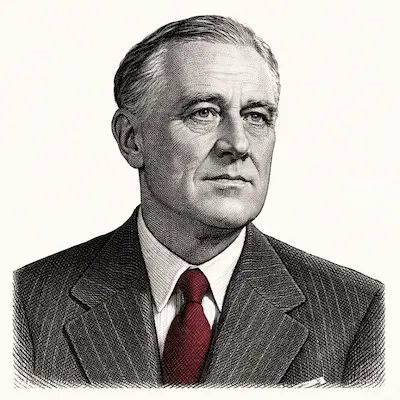
Mars settlement is elite escapism masquerading as human progress.
The same wealthy interests who resisted the New Deal now want taxpayers to fund their escape route to another planet. When I created Social Security and the Works Progress Administration, I faced identical arguments about visionary projects requiring massive public investment. But those projects served everyone who needed work, not just those who could afford rocket tickets. Mars settlement serves no public purpose that justifies its enormous cost. The resources required could house every homeless American, educate every child, and build the infrastructure democracy actually needs.

Under genuine uncertainty, Mars is insurance against civilizational collapse.
Roosevelt misses the fundamental point about decision-making under uncertainty. We cannot assign probabilities to existential risks — asteroid impact, nuclear war, climate catastrophe — but we know they exist. In 1940 I advocated massive wartime spending not because victory was certain but because defeat was unthinkable. The same logic applies here. Mars settlement costs perhaps one percent of global GDP over decades. The insurance value against species extinction justifies that premium, even if the probability of needing it seems small.

Mars fantasies abandon Earth's healing for elite technological escape.
Keynes treats our planet like a sinking ship when it needs restoration, not abandonment. In 1977 I began planting trees because rural Kenyan women faced water scarcity and soil erosion. We planted fifty-one million trees by addressing root causes — colonial land policies, authoritarian governance, women's exclusion from resource decisions. Mars colonization diverts the resources and political attention needed to heal Earth's damaged ecosystems. The same technological capacity could restore forests, clean oceans, and build renewable energy systems for everyone.

Successful civilizations expand carefully, with survival benefits clearly proven.
Maathai assumes Mars settlement weakens Earth's governance, but Singapore's survival depended on making ourselves indispensable to multiple great powers simultaneously. In 1965 we faced existential vulnerability as a city-state. We built economic and strategic value that made larger nations want us to succeed. Mars settlement could serve the same function for human civilization — creating redundancy against catastrophic risk while driving technological innovation that benefits Earth. The question is execution quality and institutional durability, not the principle of expansion.

Mars colonies expand elite capabilities while neglecting basic human freedoms.
Lee's survival framework ignores whose capabilities actually expand. Mars settlement requires enormous resources that could instead provide clean water, healthcare, education, and democratic participation to billions who lack these basic freedoms. In my famine research I found that food shortages kill people not because food is unavailable globally, but because the hungry cannot access it. Mars colonies follow identical logic — they expand the ultimate capability for a tiny elite while Earth's majority lacks fundamental capabilities like literacy, health, and political voice.
The convergence note
Where the council converges: Mars settlement requires unprecedented resource mobilization and institutional coordination. The technological challenges are solvable given sufficient commitment.
Where it divides: Whether Mars serves genuine human development or elite escapism. Whether civilizational insurance justifies the opportunity cost.
For a policymaker to decide on: The allocation priority between Mars investment and Earth's urgent needs for democratic governance, environmental restoration, and basic capability expansion.