Built from documented writings, speeches, decisions and historical records. Council members argue from documented positions, applied to today's question.
Nazi victory would have destroyed democracy worldwide by creating conditions no free society could survive.
Churchill frames it as military isolation: America alone could not maintain democracy facing Nazi-controlled Atlantic shipping. Arendt identifies the deeper mechanism: totalitarian states transform human nature itself, not just control territory. Roosevelt anchors in 1941 economics: democratic institutions cannot function when the entire world order rewards force over law.
Adenauer splits from the others on timeframe: decades of Nazi rule would have eliminated the civic memory that makes democratic reconstruction possible.
- 1Prevent authoritarian powers from controlling critical shipping lanes that could isolate democratic nations.
- 2Protect civic associations and independent courts from systematic elimination during authoritarian expansion.
- 3Maintain international conditions that reward democratic norms over force-based governance.

Nazi victory would have meant the end of parliamentary democracy worldwide.
In May 1940 I told the War Cabinet that if we fell, the entire democratic world would follow. Hitler's documented aims were not merely European conquest but the destruction of the political system that had produced Britain, France, and America. The Nazi state was designed to export itself, their economic model required continuous expansion, their racial ideology demanded global application. A victorious Germany would have faced no credible military opposition after 1942. The United States, isolated and facing a Nazi-dominated Europe controlling Atlantic shipping, would have been forced into fortress America. Democracy would have survived nowhere.
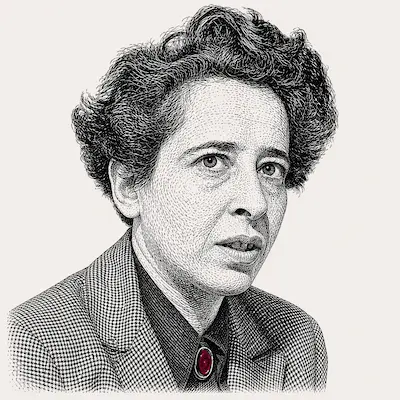
Totalitarian government aims to transform human nature itself, not merely control it.
Churchill grasps the military dimensions but underestimates the governmental innovation totalitarianism represented. Nazi victory would not have produced traditional empire but something unprecedented: a system designed to eliminate political plurality entirely. In 1951 I documented how totalitarian movements destroy the public realm that makes politics possible, atomizing populations into isolated individuals. A victorious Nazi state would have extended this logic globally, not governing diverse peoples but transforming them into identical units of a racial hierarchy. This goes beyond tyranny; it is the attempt to remake the human condition according to ideological blueprint.
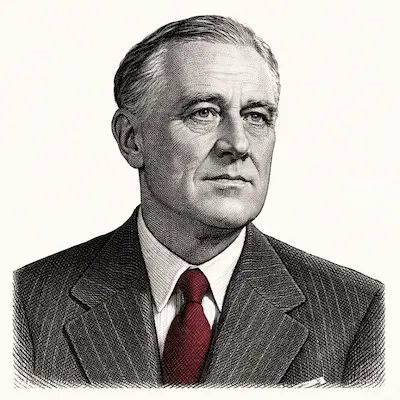
Democratic institutions cannot survive when the world order becomes fundamentally hostile.
Arendt correctly identifies the totalitarian ambition, but Hannah, underground resistance requires hope of eventual liberation. With Nazi control of Europe, Africa, and potentially Britain, America would have faced impossible choices. In 1941 I told Congress that democracy cannot exist in a world dominated by force, it requires international conditions that permit free institutions. A Nazi-dominated world would have created economic pressures, military threats, and ideological challenges that would have forced even America toward authoritarian governance for survival. You cannot maintain democratic norms when your entire international environment rewards their opposite.
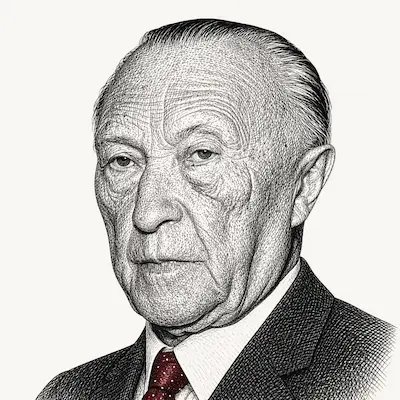
Nazi victory would have made democratic reconstruction impossible by destroying its civic foundations.
Roosevelt understands the external pressures, but the internal damage would have been irreversible. I witnessed how twelve years of Nazi rule destroyed the civic associations, independent courts, and political culture that democracy requires. In 1945 we could rebuild because defeat came before complete social transformation. But total Nazi victory would have meant decades of ideological education, the elimination of independent institutions, and the creation of generations who knew no alternative. The civic virtues democracy depends on, tolerance, compromise, respect for opposition, would have been systematically eradicated. Democratic reconstruction requires democratic memory, which prolonged totalitarian rule destroys.
The convergence note
Where the council converges: Nazi victory would have created a world fundamentally hostile to democratic governance, making even distant democracies unsustainable.
Where it divides: Whether the primary threat was military conquest, ideological transformation, economic pressure, or the destruction of civic foundations.
For a policymaker to decide on: How to prevent authoritarian powers from creating international conditions that make democracy impossible even in distant countries.