The Long Council
Who was selected, and why
What would have happened if hitler won the war?
The central tension
[Between historical counterfactual speculation and actionable governance analysis]
Selected members
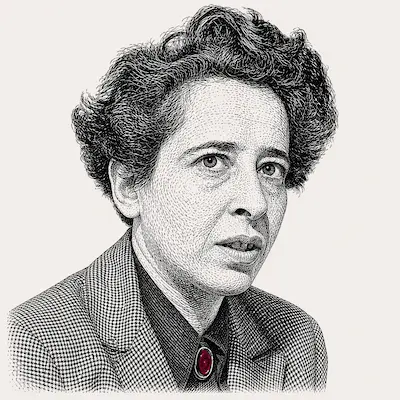
Hannah Arendt
Will argue: That Nazi victory would have produced a new form of government aimed at transforming human nature itself, eliminating political plurality and reducing governance to administration of biological categories.
Her analysis of totalitarianism's structural logic and the conditions under which it consolidates power is directly applicable to understanding how Nazi victory would have affected governance systems globally.
Winston Churchill
Will argue: That Nazi victory would have meant the end of parliamentary democracy and the rule of law across Europe, with global implications for the survival of free institutions.
As the primary architect of anti-Nazi strategy, his documented analysis of Nazi intentions and capabilities provides the most authoritative assessment of what Nazi victory would have meant for European and global governance.
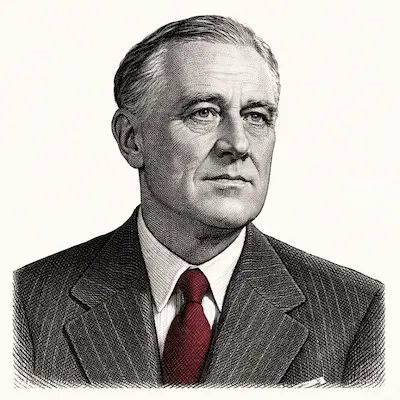
Franklin D. Roosevelt
Will argue: That Nazi victory would have created a world where democratic governance was impossible, requiring either accommodation with tyranny or perpetual resistance.
His documented analysis of the Nazi threat to democratic institutions and his strategic framework for defending them provides insight into what their victory would have meant for global governance systems.
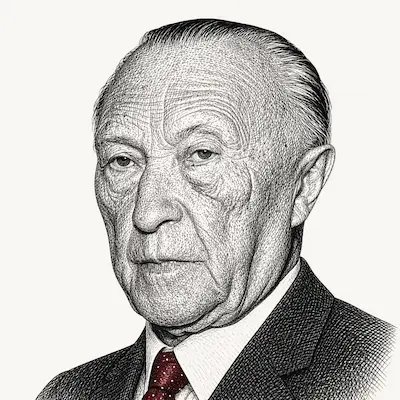
Konrad Adenauer
Will argue: That Nazi victory would have made post-war democratic reconstruction impossible by destroying the civic and institutional foundations that democracy requires.
His documented experience of Weimar's collapse and Nazi consolidation, plus his post-war analysis of what reconstruction required, provides insight into how Nazi victory would have affected German and European political development.
Considered but not selected
Charles de Gaulle: While his resistance experience is relevant, his framework is primarily about French sovereignty rather than the structural analysis of totalitarian governance that this question requires. Nelson Mandela, His framework for post-liberation reconciliation assumes the survival of democratic possibilities that Nazi victory would have eliminated.