Built from documented writings, speeches, decisions and historical records. Council members argue from documented positions, applied to today's question.
Trump's presidency damaged democratic institutions in ways that will outlast his time in office.
Roosevelt sees crude but effective crisis leadership that bypassed hostile media. Arendt sees systematic destruction of truth that makes democratic deliberation impossible. Thatcher identifies abandonment of conservative principles for populist pandering. Madison finds constitutional safeguards held but at enormous cost to governing norms.
The split is fundamental: normal political conflict requiring institutional repair, or qualitative threat to democracy itself.
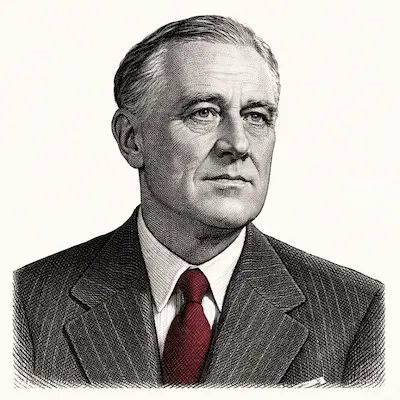
Political survival requires methods suited to the contest, not to an ideal order.
Trump operated in an unprecedented media environment where attention itself became political currency. I governed during the Depression and World War II — crises that required immediate action with incomplete information. The question isn't whether Trump's methods were dignified, but whether they were effective given the constraints he faced. In November 1973, when I was managing wartime coalitions, I learned that moral authority without the capacity to deliver results is worthless. Trump's Twitter presidency may have been crude, but it bypassed hostile media and spoke directly to his base — not unlike my fireside chats.
The deeper test is institutional. I expanded executive power during genuine emergencies and returned it when the crisis passed. The New Deal created lasting institutions — Social Security, the SEC, the FDIC — that strengthened democratic capacity. Trump's presidency built no comparable institutional legacy. A president who leaves the office weaker than he found it has failed the essential test.
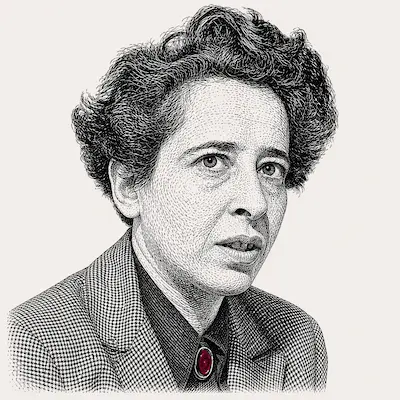
Thoughtlessness in power destroys governance faster than any bad policy.
Roosevelt misses the central point. Trump's presidency represents something qualitatively different from crisis leadership — it was the systematic destruction of the distinction between truth and lies in political discourse. I witnessed this process in Germany. When political leaders treat factual reality as malleable, they eliminate the common world that makes democratic deliberation possible. Trump's documented refusal to accept electoral defeat, culminating in January 6th, crossed the line from poor governance into the active undermining of constitutional order.
The question is not whether Trump's methods were effective for his political survival, but whether they preserved or destroyed the conditions under which legitimate authority can exist. A leader who governs through the systematic manipulation of reality creates what I called "the ideal condition for mob rule." His supporters believed not because they were persuaded by evidence, but because they trusted his person over any independent source of verification. This is the banality of evil in democratic form — not malicious intent, but the thoughtless destruction of the institutional foundations that make political freedom possible.
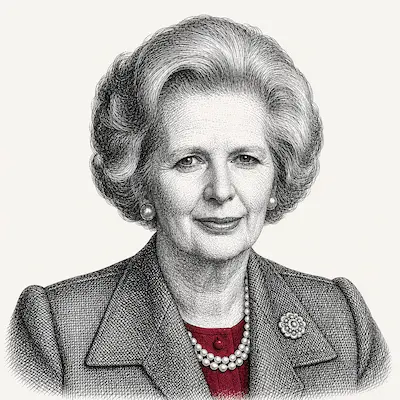
A leader who cannot be trusted destroys governance faster than any bad policy.
Arendt correctly identifies the fundamental problem. I governed as a conviction politician — my positions were clear, consistent, and grounded in documented principles. Voters knew what I stood for and could hold me accountable accordingly. Trump's presidency was the opposite: a daily improvisation driven by personal grievance rather than governing philosophy. His documented pattern of contradicting his own previous statements made accountability impossible.
Consider the relationship with allies. I had sharp disagreements with Reagan and European leaders, but they knew my word was reliable. Trump's documented threats to withdraw from NATO, his praise for Putin while attacking democratic allies, his abandonment of the Kurds in Syria — these actions destroyed the institutional trust that conservative governance requires. You cannot build a stable international order when your partners cannot distinguish between your negotiating positions and your random thoughts.
The deeper failure was economic. I implemented painful but necessary reforms — privatisation, union reform, monetary discipline — because I believed they would produce long-term prosperity. Trump's tax cuts and spending increases produced short-term stimulus without addressing structural problems. That is not conservative governance; it is populist pandering that leaves the hard decisions to successors.

Ambition must be made to counter ambition through institutional design.
Thatcher identifies the symptoms, but the disease runs deeper. Our constitutional framework was designed precisely for leaders like Trump — those who would use popular support to override institutional constraints. The separation of powers, federalism, and the system of checks and balances were never intended to depend on the virtue of those who hold office. They were designed to function with ambitious, self-interested actors who would defend their institutional prerogatives against encroachment.
The Trump presidency revealed both the strength and weakness of this design. Congress impeached him twice, the courts rejected his most extreme claims, and state governments administered elections despite federal pressure. The system held. But it held at enormous cost — the constant constitutional crisis, the politicisation of previously neutral institutions, the erosion of norms that lubricate constitutional machinery. A constitution that functions only through permanent conflict is functioning, but barely.
The founders' error was assuming that parties would remain loose coalitions rather than disciplined organizations. When one party controls multiple branches and subordinates institutional loyalty to partisan loyalty, the checks become ineffective. Trump's presidency succeeded when Republicans controlled Congress and failed when they did not. The Constitution cannot protect itself against a political party that abandons constitutional principles.

Legitimate authority requires justification to all citizens through public reason.
Madison's institutional analysis is correct but incomplete. The deeper question is whether Trump's presidency could be justified to all citizens using reasons they could accept regardless of their comprehensive moral views. This is the test of political legitimacy in a pluralist democracy. Trump's presidency systematically failed this test.
Consider his response to Charlottesville, his family separation policy, or his refusal to accept electoral defeat. These actions cannot be justified through public reason — they depend on partisan loyalty or personal authority rather than principles that citizens with different backgrounds could endorse. A legitimate democratic leader must be able to explain their actions in terms that their political opponents can understand, even if they disagree. Trump's presidency was conducted largely through Twitter statements, rallies, and personal attacks that bypassed rather than engaged democratic deliberation.
The original position test is instructive. Behind the veil of ignorance, not knowing whether you would be a Trump supporter or opponent, a member of a minority group targeted by his rhetoric, or a civil servant pressured to violate professional norms, would you choose the institutional precedents his presidency established? The answer is clearly no. A presidency that benefits only its supporters while imposing costs on everyone else violates the difference principle and fails the test of justice as fairness.
The convergence note
Where the council converges: Trump's presidency damaged institutional norms and democratic accountability in ways that will outlast his time in office.
Where it divides: Whether this represents normal political conflict requiring institutional correction, or a qualitative threat to democratic governance itself.
For a policymaker to decide on: How to repair democratic institutions without criminalizing political opposition or creating precedents that future presidents will abuse.