Why don't EU countries invest in mutual train lines to reduce CO2 emissions?
Built from documented writings, speeches, decisions and historical records. Council members argue from documented positions, applied to today's question.
EU cross-border rail stalls because each member state pays now and waits decades to benefit, while no corridor-level institution enforces shared commitments.
Schmidt locates the core failure in 1978: states calculate national cost before collective gain, and only move when someone names what they lose by staying out. Keynes adds that private capital will never hold a 30-year payback; the EU must finance corridors the way it financed post-war reconstruction, borrowing now and collecting returns in growth and avoided carbon costs later. Hirschman points to Lyon-Turin: once enough concrete is poured, stopping costs more than finishing, but a tunnel without upgraded approaches on both sides creates a bottleneck, not a route.
Hayek and Ostrom split on the fix. Hayek argues open track access and competitive pricing would shift freight without Brussels mandates. Ostrom counters that the Rhine-Alpine corridor's joint management body already outperforms top-down rules; the answer is corridor-specific institutions with real enforcement power, not a single Brussels committee and not deregulation alone.
- 1Finance cross-border rail corridors through EU public borrowing now; collect returns in growth and avoided carbon costs later.
- 2Replicate the Rhine-Alpine corridor's joint management body on every major TEN-T corridor, with real enforcement authority.
- 3Build approach-line upgrades into tunnel contracts from the start, not as afterthoughts added after completion.
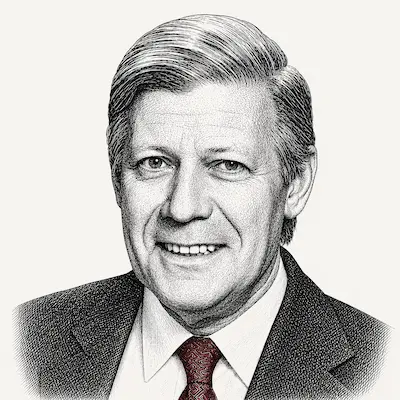
Cross-border rail stalls because sovereignty fears beat shared benefit every time.
Rail corridors fail for the same reason the EMS nearly failed before Bremen in 1978: member states calculate national cost before collective gain. I spent two years persuading Bundesbank officials and French finance ministers that a shared monetary mechanism served each country's interest separately. The argument only landed when I showed them the alternative, which was dollar volatility eating their export revenues. Rail needs the same logic: frame each corridor as a sovereignty instrument, not a subsidy, and name who loses if it stays unbuilt.
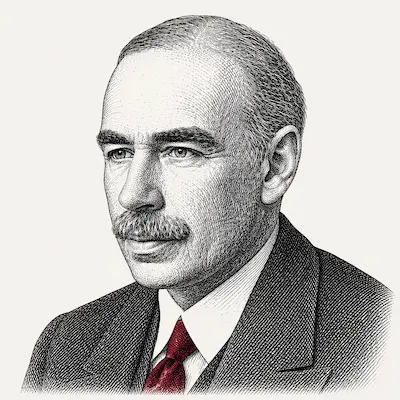
Rail's returns are real but arrive too late for any private investor.
Schmidt is right that the political framing must shift. But the deeper problem is financial, not rhetorical. In 1944 at Bretton Woods I argued that long-horizon public goods require public financing, because private capital discounts the future too steeply to act. Cross-border rail is identical: the Lyon-Turin tunnel will pay back over decades, not years, and no private balance sheet can hold that. The EU must treat corridor investment the way I treated post-war reconstruction: deficit-finance it now, collect the returns later in growth and avoided carbon costs.
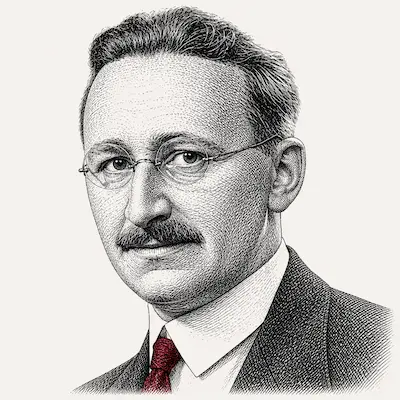
Mandating corridors from Brussels substitutes planners' maps for passengers' choices.
Keynes asks whether Brussels can identify the right corridors. It cannot, and that is not a solvable administrative problem. In 1945 I showed that no central body possesses the dispersed, local knowledge that millions of individual decisions aggregate. Rail freight sits at 18 percent modal share not because planners drew the wrong lines, but because road hauliers respond to shipper needs faster than regulated rail can. Open track access, competitive pricing, and the removal of cabotage restrictions would shift freight without a single mandate from a Brussels committee that has never loaded a lorry.
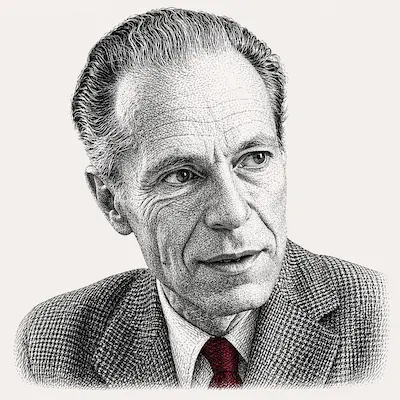
Irreversibility is not the obstacle; it is the mechanism that forces completion.
Hayek's question cuts close. Yes, starting a tunnel does not guarantee it gets finished well. But the Lyon-Turin case illustrates something my fieldwork in Colombia confirmed: once enough concrete is poured, the political cost of stopping exceeds the cost of continuing. That is not a flaw in project design; it is the hiding hand at work. The danger is not irreversibility itself but the absence of planned linkage investments. A tunnel without upgraded approaches on both sides creates a bottleneck, not a corridor. The EU should start projects deliberately and build the connecting investments in from the contract, not as afterthoughts.
Shared corridors need corridor-level institutions, not one-size-fits-all Brussels rules.
Hirschman's linkage problem is real, and monitoring is exactly where corridor governance breaks down. My work on irrigation systems in Spain and the Philippines found the same failure: when users share infrastructure but each governs only their own section, no one monitors the whole. The TEN-T regulation sets targets but assigns no corridor-specific body with real authority to enforce them. What works in a commons is clear boundaries, rules designed by the users, graduated sanctions for defection, and nested authority connecting the corridor level to the national level to the EU. The Rhine-Alpine corridor already has a joint management body. Replicate that design, do not replace it with a single Brussels mandate.