The Long Council
Who was selected, and why
Should governments redistribute wealth globally through taxation and aid?
The central tension
Does redistributing wealth across borders actually help poor countries develop, or does it deepen dependency and bypass the governance reforms they need?
The two poles
Pro-redistribution / structural reform
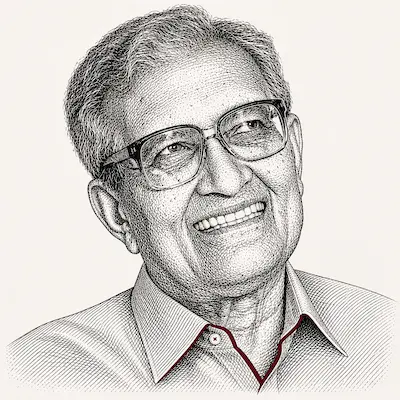 Amartya Sen
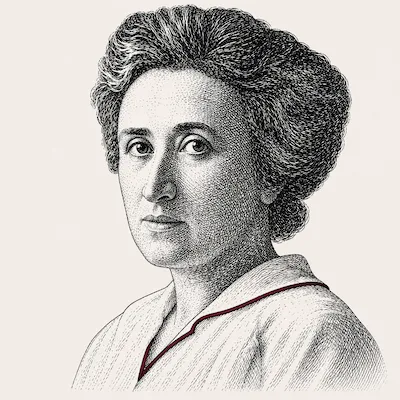 Rosa Luxemburg
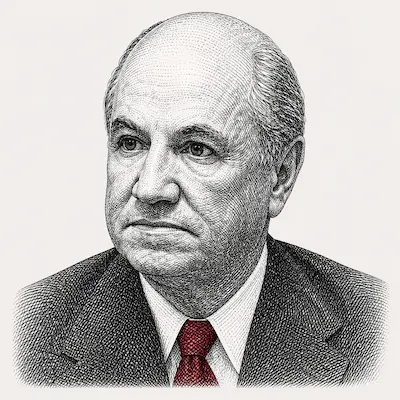 Raúl Prebisch
Against / dependency / governance-first
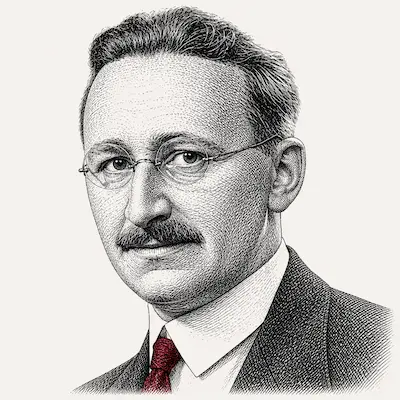 Friedrich Hayek
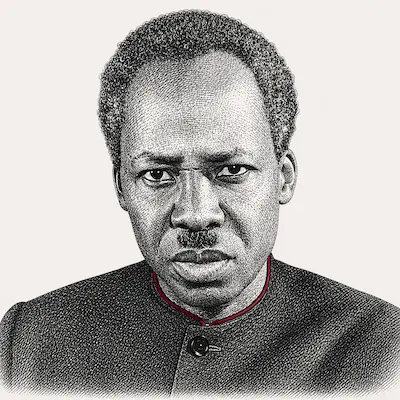 Julius Nyerere
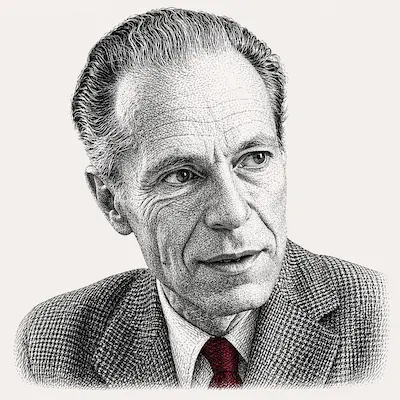 Albert O. Hirschman
Selected members
Amartya Sen
Will argue: External redistribution is necessary but insufficient, capability expansion requires complementary institutions, not transfers alone.
His capability approach and entitlement theory directly frame whether income transfers expand the real freedoms poor populations lack.
Rosa Luxemburg
Will argue: Global inequality is produced by systematic extraction through capitalist trade and finance, so redistribution through taxation is partial justice, not generosity.
Her theory of capitalist accumulation documents how the global trading system structurally extracts wealth from peripheral economies, making redistribution a structural correction, not charity.
Raúl Prebisch
Will argue: The international trading system already redistributes wealth upward; taxation and aid reverse a structural bias rather than imposing a new one.
His documented terms-of-trade analysis is the foundational empirical case that the current global economic order transfers wealth from poor to rich countries structurally, making formal redistribution a corrective.
Julius Nyerere
Will argue: Aid as currently structured reproduces dependency and bypasses governance reform; he wants changed terms of trade, not transfers.
He is the council's most documented practitioner of rejecting aid dependency while demanding structural reform of international institutions, providing the sharpest internal challenge to pro-redistribution arguments from within the Global South.
Friedrich Hayek
Will argue: Compulsory international redistribution concentrates decisions about resource allocation with actors who lack the knowledge to make them well, producing waste and political distortion.
His knowledge-problem argument provides the most rigorous documented case that centrally directed wealth transfers cannot achieve their stated aims because no authority possesses the dispersed information needed to allocate them effectively.
Albert O. Hirschman
Will argue: External aid suppresses local voice and creativity, the populations most capable of reforming their own institutions exit into aid dependency rather than fighting for change.
His documented frameworks on development, exit/voice, and the irreversibility threshold all bear on whether external redistribution builds or suppresses the local problem-solving capacity that development actually requires.
Considered but not selected
Eleanor Roosevelt: Her human rights framework supports economic rights (Articles 22, 27 of the UDHR) and would ground a rights-based argument for redistribution, but her documented positions on the specific mechanisms of aid and taxation are thin. Sen covers the substantive normative terrain with more analytical depth on the development question specifically.
Wangari Maathai: Directly relevant to Global South resource governance and her documented critique of aid financing authoritarian regimes is sharp, but her framework overlaps substantially with Nyerere on the dependency-and-governance argument. Nyerere provides the stronger documented case from a state-level practitioner perspective; Maathai's distinctive contribution (environmental-democratic integration) is not the live axis of this question.
John Rawls: His difference principle would seem to mandate redistribution. However, his Law of Peoples (1999) explicitly and controversially argued the difference principle does not apply globally, and his international theory is documented as his weakest area. Selecting him would risk misrepresenting his documented position, and Sen provides the more rigorous normative framework with better documented positions on global poverty.