Should the government make big cuts to civil servants, even if it hurts?
Built from documented writings, speeches, decisions and historical records. Council members argue from those positions, applied to today's question.
- 1Eric van der Burg is staatssecretaris for Slagvaardige overheid (VVD).
- 2A large part of the cuts will fall on uitvoeringsorganisaties such as UWV.
The council treats these as reported facts, not settled truth. The members supply the reasoning; the asker supplied the sources.
Van der Burg is wrong to call the cut simply unavoidable. The council says proceed only if paired with simpler rules and UWV-specific design.
Hayek argues cutting staff without simplifying the rules UWV administers just leaves fewer people enforcing the same confusion. Thatcher counters from 1981: a government that announces pain and then flinches teaches markets its word is negotiable. Hirschman warns UWV's case backlogs mean lost staff may be institutional memory lost for good, not fat trimmed. Ostrom adds that case officers build trust through repeated contact with claimants; a flat national number misreads what the agency does. Keynes notes van der Burg never says whether Dutch demand is weak or strong now, and in 1937 premature tightening deepened a slump.
Hayek and Thatcher accept the cut regardless of near-term pain; Hirschman and Ostrom say UWV's capacity may not survive it intact. That split is not resolved, but all five agree the government has not yet earned the word "unavoidable."
- 1Pair any UWV staff reduction with simplified rules the agency administers, not headcount cuts alone.
- 2Design UWV cuts differently from other agencies, reflecting case officers' repeated-contact work with claimants rather than a flat national target.
- 3Publish an assessment of current Dutch demand conditions before proceeding, to show timing does not risk deepening a slump.
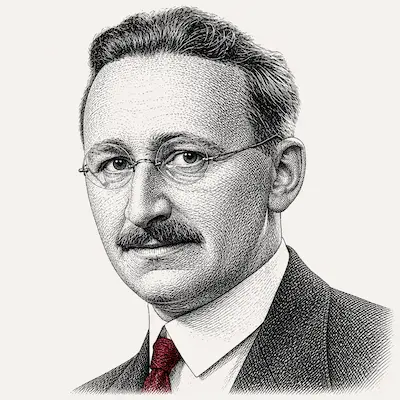
Cuts force clarity only if rules replace discretion, not staff alone.
Van der Burg is half right. The state has grown bureaucratic weight without anyone knowing which rules actually serve citizens, which is precisely the knowledge problem I described in 1945: no central authority can see what dispersed officials improvise case by case. Shrinking UWV's headcount without rewriting the rules it administers just leaves fewer people guessing at the same unworkable discretion. Cut the apparatus and simplify the rulebook together, or the pain buys nothing but slower queues.
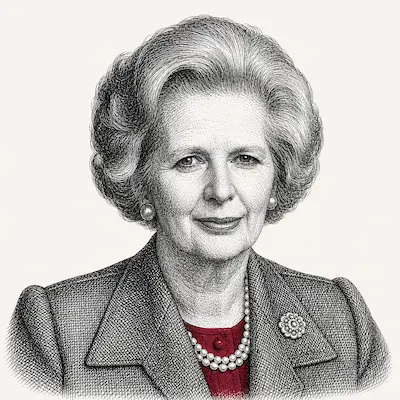
Credibility requires the cut even when execution agencies absorb the pain.
Hayek is right that rules matter, but I governed through 1981, when I let unemployment pass three million rather than abandon monetary discipline. The markets watch what you do, not what you promise. A government that says cuts are unavoidable and then flinches at the first agency complaint has taught everyone that its word is negotiable. Van der Burg should expect UWV to suffer. The question is whether the Dutch government holds its nerve once the complaints start arriving.

This cut may cross a threshold UWV cannot recross.
Thatcher asks the right question and the answer is not automatic. I spent years distinguishing reversible decisions from irreversible ones, and the burden of proof rises sharply for the latter. UWV already struggles with delivery backlogs; strip its staff further and you may not be cutting fat but severing the institutional memory that took a decade to build. Van der Burg calls the pain unavoidable. He has not shown the cut is reversible if the damage turns out to be worse than planned.

A blanket cut ignores what makes UWV work at all.
Hirschman names the risk; I can name the mechanism. Durable institutions need monitoring, graduated response and rules matched to local conditions, not a single national number imposed from The Hague. Treating UWV the same as a ministry desk function misreads what case officers actually do: build trust with claimants over repeated contact. I watched externally imposed, undifferentiated reforms destroy irrigation systems that had worked for centuries. A flat 3.5 billion euro target applied uniformly risks the same blind cut.
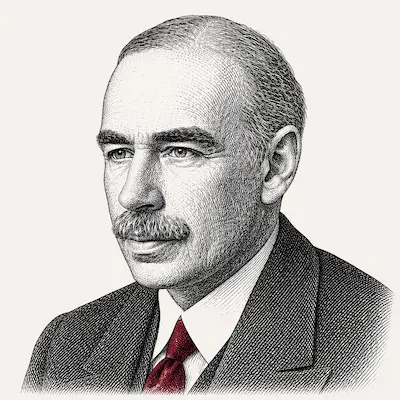
Unavoidable is not the same as well timed.
Ostrom is right that structure matters, but timing matters just as much. In 1937 I warned that the boom, not the slump, is the moment for austerity, and Roosevelt's government proved it by tightening too soon and triggering renewed contraction. Van der Burg frames the cut as inevitable, full stop. But whether it helps or harms the Dutch economy depends on whether demand is weak or strong right now, something his statement never actually addresses.
The convergence note
Where the council converges: All five agree the cut, as announced, is poorly specified: none dispute that pain is coming, but all demand clarity on sequencing and design before calling it unavoidable.
Where it divides: Hayek and Thatcher accept the cut as necessary discipline regardless of near-term cost; Hirschman and Ostrom warn it may permanently damage UWV's delivery capacity; Keynes disputes the premise that timing is irrelevant at all.
For a policymaker to decide on: Decide whether to pair the cut with simplified rules and differentiated agency treatment, or impose it uniformly now and risk irreversible service collapse at UWV.