How can the Netherlands improve the sustainability reputation of its flower bulb industry?
Built from documented writings, speeches, decisions and historical records. Council members argue from documented positions, applied to today's question.
Bind the bulb sector to the waterschappen water rules, then price extraction and runoff so growers pay the real cost.
Ostrom's field research shows voluntary certification fails without monitored, enforceable boundaries. The waterschappen already govern shared Dutch waterways; extending their authority to bulb-sector inputs applies a tested institution to a known commons problem. Maathai adds that certification designed by exporters protects the brand, not the aquifer. Hirschman identifies the mechanism that keeps standards weak: growers who can relocate production will use that threat to resist any rule with real teeth.
Friedman and Hayek both accept the commons problem but split with Ostrom on method. They argue a uniform water levy and runoff charge lets each grower in North Holland, Zeeland, or Drenthe find their own least-cost path to compliance, rather than following rules written by regulators who cannot know local soil conditions. The unresolved question is whether pricing alone closes the exit option Hirschman identifies, or whether binding collective governance is the only instrument that does.
- 1Extend *waterschappen* authority to set binding water extraction and runoff limits on all bulb-sector growers.
- 2Impose a uniform water extraction levy and runoff charge on every grower, domestic and contracted abroad.
- 3Apply supply-chain requirements to contracted foreign growers so the exit option cannot undercut domestic standards.

Bulb growers share aquifers and waterways; voluntary pledges will not protect them.
The Dutch flower bulb industry's pesticide runoff and groundwater extraction are classic common-pool resource problems. My field research on irrigation commons in Spain and the Philippines showed that voluntary self-certification fails without six specific conditions: boundaries clearly defined, rules matched to local conditions, collective choice among users, real monitoring, graduated sanctions, and external recognition. The Dutch water boards, the waterschappen, governed shared water this way for centuries. That institution already exists. The question is whether the bulb sector is brought inside it.

Certification protects the brand. It does not protect the soil or the water.
Ostrom identifies the governance gap correctly. I want to name what fills it instead: a branding arrangement that separates profit from ecological cost. The exporters and the Netherlands Board of Tourism sell the image of clean Dutch tulips to buyers in Tokyo and Chicago. The aquifer depletion and the pesticide load stay in North Holland. I watched Kenya's tea and coffee export economy work exactly this way for decades. The certification scheme, when it arrives, will be designed by those who profit, not those who bear the damage. That is not governance. That is reputation management.
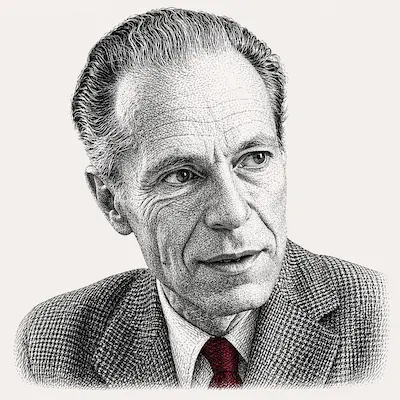
The threat to move production abroad is what keeps domestic standards weak.
Maathai names the gap between reputation and reality. I want to name the mechanism that sustains it. The bulb industry's credible exit option, relocating production to lower-cost, lower-regulation countries, suppresses the domestic voice that would otherwise push for structural reform. This is precisely what I documented in 1970: when exit is cheap, those most capable of improving an institution leave or threaten to leave, and voice is silenced. The soil structure loss and aquifer depletion Ostrom describes are partially irreversible. That irreversibility matters. A decision that permanently degrades a shared aquifer requires a qualitatively higher burden of justification than a reversible one, and the current arrangement has not met that burden.
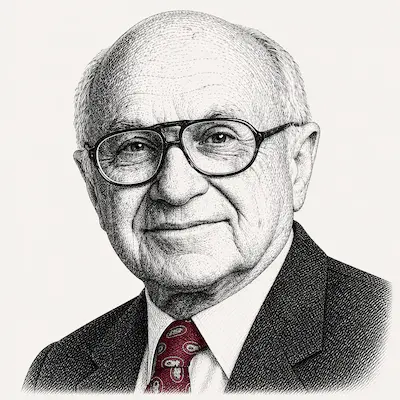
Price the externality correctly; let growers choose how to comply.
Hirschman asks who sets the price. The answer is: set it through a uniform water extraction levy and a runoff charge applied to all growers equally, then step back. I argued in 1962 that where genuine externalities exist, the correct instrument is pricing them in, not commanding specific production methods. The Dutch government should not tell a grower in Drenthe which pesticide application technique to use. It should charge accurately for every litre extracted and every gram of nitrate reaching shared waterways. Growers will then find their own least-cost path to compliance, some through reduced inputs, some through precision technology, some through crop rotation. That discovery process produces better outcomes than any certification bureaucracy can design in advance.
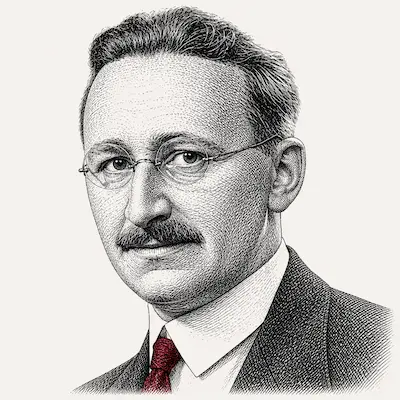
Uniform runoff rules beat sector mandates; local growers know their own land.
Friedman's pricing argument is correct in principle. But his question to me points to a real problem. Soil conditions in the dune-sand regions of North Holland differ from the clay-peat polders of Zeeland and the sandy soils of Drenthe. A single nationally calibrated water extraction price embeds the knowledge of 2025 regulators into a rule that cannot adapt as local conditions change. In my 1945 essay I argued that the economic problem is precisely how to use knowledge dispersed across millions of individuals, knowledge that is local, tacit, and cannot be centralised. The superior instrument is a general rule, a uniform runoff standard and a clear extraction limit, enforced consistently, that leaves each grower free to apply their knowledge of their own land in meeting it. That is the rule of law, not a production mandate.
The convergence note
Where the council converges: Voluntary certification without monitoring and enforcement will not solve the commons problem. The shared aquifer and waterways require binding rules, not brand management.
Where it divides: Ostrom and Maathai argue the waterschappen model must be extended to cover bulb-sector inputs, with collective governance by users. Friedman and Hayek accept the commons problem but insist the instrument must be a uniform price or output standard, not a sector-specific production mandate. Hirschman warns that without closing the exit option, any standard, however designed, will be undermined by the threat of relocation.
For a policymaker to decide on: Should the Netherlands extend waterschappen authority to set binding input rules for the bulb sector, or rely on a water extraction levy and runoff charge that lets growers choose their own compliance path? And should new standards apply only to domestic producers, or extend through supply-chain requirements to contracted growers abroad?