The Long Council
Who was selected, and why
Should the government make big cuts to civil servants, even if it hurts?
The central tension
Does cutting government staff now save money, or does it just break the services citizens depend on?
Where they stand
Fiscal retrenchment is necessary
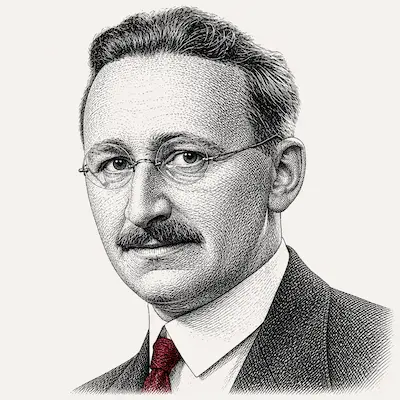 Friedrich Hayek
 Margaret Thatcher
Cuts will wreck execution capacity
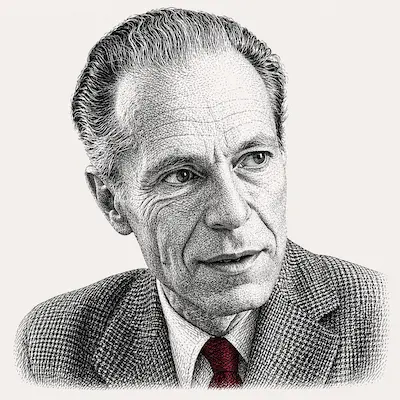 Albert O. Hirschman
 Elinor Ostrom
Crosscutting/structural view
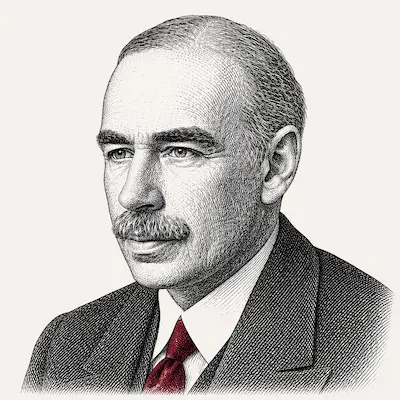 John Maynard Keynes
Selected members
Friedrich Hayek
Will argue: Shrinking the state apparatus can be healthy if it forces clearer rules rather than discretionary bureaucratic power.
Hayek argues governments routinely overestimate what central bureaucracies can competently manage, supporting leaner administration.
Margaret Thatcher
Will argue: Short-term pain from reducing civil service bloat is the necessary price of long-term fiscal credibility.
Thatcher governed on the explicit principle that painful fiscal discipline now prevents worse crises later, directly engaging the minister's claim.
Albert O. Hirschman
Will argue: Cuts to agencies that already struggle with delivery risk crossing an irreversibility threshold, destroying capacity that takes years to rebuild.
Hirschman's exit-voice-loyalty framework and irreversibility threshold directly test whether cutting execution agencies like UWV is a reversible or damaging decision.
Elinor Ostrom
Will argue: Blanket cuts applied without regard to each agency's actual operating conditions will degrade institutions that are hard to rebuild once trust and capacity are lost.
UWV is the kind of execution institution whose durability depends on adequate staffing, monitoring and trust, making Ostrom's institutional design framework directly relevant to whether cuts will cause collapse.
John Maynard Keynes
Will argue: Whether this cut helps or harms depends entirely on the state of the economy and timing, not on a blanket principle that cuts are unavoidable.
Keynes's distinction between cyclical and structural fiscal positions, and his argument that the "right time for austerity" matters, speaks directly to whether now is the right moment for these cuts.
Considered but not selected
Milton Friedman: would reinforce Hayek's pole without adding a distinct line of reasoning on this specific execution-agency question; Hayek plus Thatcher already cover the market-discipline pole with both theorist and practitioner registers. Helmut Schmidt, his fiscal discipline record is relevant but his core expertise is energy security and European monetary architecture, not civil service staffing; would be a weaker fit than Thatcher for this specific question. Olof Palme, his equality-builds-efficiency framework is relevant to welfare state cuts generally, but his Nordic model is less directly engaged with the specific execution-agency bottleneck (UWV) than Hirschman and Ostrom's institutional frameworks.