Should the Dutch government reopen the Groningen gas field to secure energy supplies, and how should it compensate affected residents?
Built from documented writings, speeches, decisions and historical records. Council members argue from documented positions, applied to today's question.
The council agrees compensation must be automatic and generous, but splits on whether energy sovereignty justifies reopening.
Schmidt argues energy dependence threatens national sovereignty more than earthquakes threaten Groningen. Hirschman counters that geological damage cannot be undone while energy alternatives remain unexplored. Ostrom demands Groningen residents control extraction decisions that affect them. Roosevelt insists citizens' safety rights limit what governments can impose for collective benefit.
The split turns on irreversibility: energy dependence versus earthquake damage.
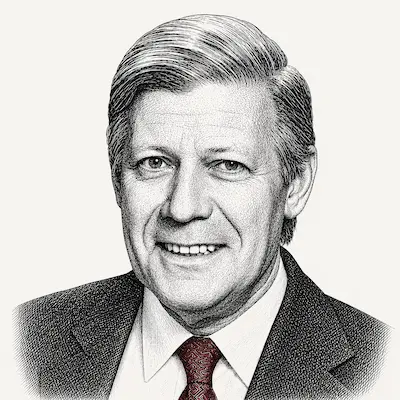
Energy security is sovereignty — a state that cannot secure its own energy cannot govern.
The 1973 oil embargo taught me that energy dependence is not an energy question but a sovereignty question. When OPEC cut supplies, we had car-free Sundays and rationed heating oil within weeks. A modern industrial state cannot function without reliable energy, and a state that depends entirely on others for energy is not truly sovereign. The Dutch government faces this choice starkly: reopen Groningen and accept the earthquake risks, or remain dependent on volatile global markets and potentially hostile suppliers. Energy security requires accepting costs that seem unacceptable until the alternative becomes clear.
Compensation must be generous and automatic, not grudging. When the state makes decisions for national security that impose concentrated costs on specific communities, those communities have earned the right to full compensation plus a premium for bearing risks others do not. This is not charity — it is the price of legitimacy for hard decisions.
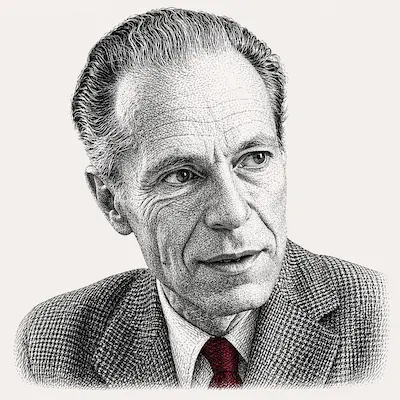
Irreversible decisions require qualitatively higher justification than reversible ones.
Schmidt treats this as a choice between two securities — domestic energy versus earthquake safety. But these are not equivalent risks. Energy markets are volatile but manageable through diversification, storage, and efficiency. Geological damage from gas extraction, once done, cannot be undone. The Groningen field has already produced documented seismic activity; reopening intensifies a process that operates on geological time scales. When a decision cannot be reversed, the burden of proof must be correspondingly higher.
The irreversibility principle demands we ask: what alternatives remain unexplored? Emergency gas storage, accelerated renewable deployment, demand-side management, and regional supply diversification are all reversible policies. They preserve future options rather than foreclosing them. A government that chooses the irreversible path without exhausting reversible alternatives is gambling with permanence.

Legitimate resource governance requires meaningful participation by those who bear the costs.
Hirschman correctly identifies the irreversibility problem, but misses the governance failure that created it. Groningen's earthquakes are not a technical externality — they are the predictable result of extracting a common pool resource without proper institutional design. The Dutch state treated gas extraction as a national resource decision while imposing all physical risks on Groningen residents. This violates the most basic design principle for durable resource institutions: those affected by resource use must have voice in resource management.
Reopening requires fundamentally restructuring the governance arrangement. Groningen communities must have veto power over extraction levels, direct control over compensation mechanisms, and representation in ongoing monitoring. Without institutional redesign, any reopening simply reproduces the original governance failure. The earthquake damage is not the cost of energy security — it is the cost of extraction without accountability.
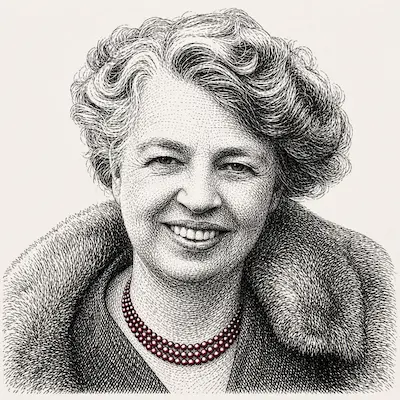
Citizens have rights to safety and property that government cannot override without due process and just compensation.
Ostrom identifies the institutional failure, but the deeper issue is one of human rights. The residents of Groningen have fundamental rights to security of person and property that exist prior to any calculation of national energy needs. A government that knowingly subjects its own citizens to earthquake risk — even for legitimate state purposes — must meet the highest standards of due process, informed consent, and just compensation. These are not policy choices but rights obligations.
The international human rights framework provides clear guidance: economic, social and cultural rights include the right to adequate housing and physical security. When states pursue policies that systematically undermine these rights for some citizens to benefit others, they create obligations that transcend national sovereignty. Groningen residents have the right to say no, and if the national interest truly requires their sacrifice, they have the right to compensation that makes them whole.
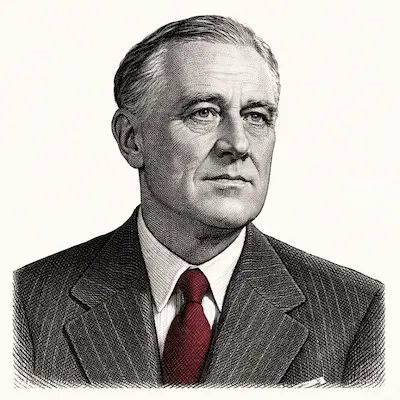
Government must build public consent for hard choices through transparent process and generous compensation.
Eleanor correctly identifies the rights at stake, but governing requires making hard choices when all alternatives impose costs on someone. The question is not whether to reopen Groningen — it is how to make that decision in a way that maintains democratic legitimacy and public trust. I learned from the New Deal that you can ask people to sacrifice for the common good, but only if they believe the process is fair and the burden is shared.
The Dutch government should establish a transparent decision-making process with Groningen representatives as full participants, not merely consultees. If reopening proceeds, compensation must be automatic, generous, and visible to the entire country. The rest of the Netherlands must understand they are asking Groningen to bear risks for national benefit. Make the choice explicit, make the compensation real, and make the process legitimate. Democracy can handle hard choices if the choices are made democratically.
The convergence note
Where the council converges: All agree that concentrated costs for diffuse benefits require extraordinary justification and compensation.
Where it divides: Schmidt prioritizes energy sovereignty; Hirschman demands exhausting reversible alternatives first; Ostrom requires institutional redesign; Roosevelt insists on rights-based limits; FDR focuses on democratic legitimacy.
For a policymaker to decide on: Whether to reopen Groningen, under what governance structure, with what compensation mechanism, and through what decision-making process.