Has the Dutch Polder Model become a brake on innovation and growth, and should it be dismantled?
Built from documented writings, speeches, decisions and historical records. Council members argue from those positions, applied to today's question.
Reform the polder model with accountability mechanisms and decision deadlines, but preserve stakeholder consultation where it adds value.
Schmidt anchors in Germany's 1981 crisis: when deliberation prevents decision, markets punish delay faster than voters punish action. Kuan Yew points to Singapore's 1965 survival choice and Denmark's 2.1% growth versus Dutch 1.1% as proof consensus costs compound. Deng frames selective reform over wholesale replacement: ASML's €300 billion success shows Dutch innovation works despite governance constraints. Ostrom argues polycentric systems coordinate faster than centralized control when designed with clear boundaries and sanctions.
The split centers on speed versus inclusion: market advocates want faster allocation through prices, institutional designers want better consultation with accountability mechanisms.
- 1Impose decision deadlines on housing policy committees to prevent endless delay while maintaining stakeholder input.
- 2Experiment with market-based allocation in specific sectors where speed matters most for competitiveness.
- 3Build accountability mechanisms into consultation processes with graduated sanctions for non-performance.
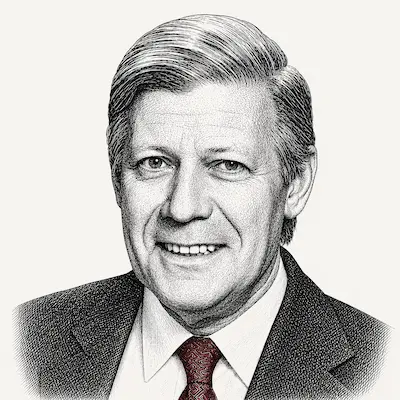
Consensus without leadership becomes paralysis disguised as democracy.
The Netherlands faces what I confronted in 1981: when deliberation prevents decision, markets punish delay faster than voters punish action. During Germany's recession, I pushed budget consolidation against SPD opposition because survival required speed over consensus. The Dutch housing crisis proves my point, 390,000 missing units while committees debate. Polder-style consultation works for incremental policy, not structural reform. Keep the stakeholder input, but someone must decide and accept responsibility. Reform the model; don't abandon it entirely.
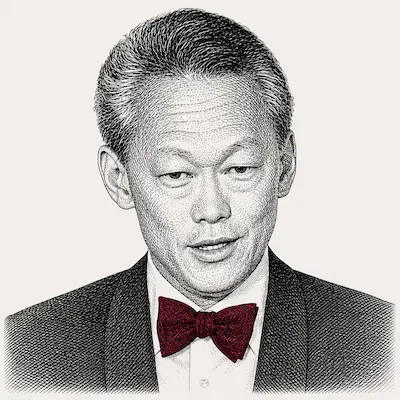
Consensus is a luxury only wealthy societies think they can afford.
Schmidt understates the problem. In 1965 Singapore faced racial riots and economic collapse. Consensus-building would have meant paralysis while the city burned. I chose survival over consultation, competence over compromise. The Netherlands' 1.1% growth while Denmark achieves 2.1% proves the point, deliberation costs compound. ASML succeeds despite the system, not because of it. When global competition demands speed, polder politics becomes a national handicap. Singapore's lesson: build institutions that can act decisively when survival is at stake.
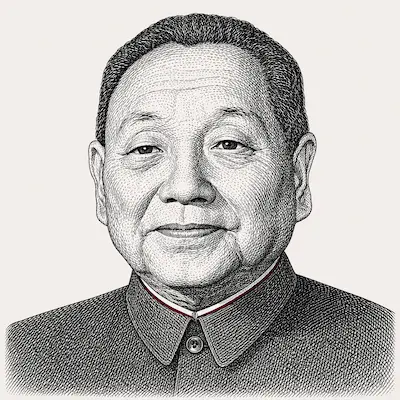
Keep what delivers results, discard what prevents them.
Kuan Yew is right about speed, but wrong about abandoning everything. In 1978 I kept party control while opening markets, selective reform, not wholesale replacement. The Dutch problem isn't consensus itself but consensus without accountability. ASML's €300 billion success shows Dutch innovation capacity works. The housing shortage shows Dutch governance capacity doesn't. Cross the river by feeling the stones: experiment with faster decision-making in specific sectors while preserving stakeholder consultation where it adds value. Ideology about either pure consensus or pure efficiency misses the pragmatic middle path.

Multiple authorities can coordinate faster than single authorities can learn.
Deng misunderstands the coordination problem. My research on irrigation systems in Spain and the Philippines shows polycentric governance often responds faster than centralized control, when properly designed. The Netherlands' problem isn't too many voices but poor institutional design. Effective commons governance requires clear boundaries, graduated sanctions, and conflict resolution mechanisms. Dutch housing policy lacks these design principles. The solution isn't dismantling consultation but rebuilding it with accountability mechanisms that prevent endless delay. ASML succeeds because it operates in competitive markets with clear feedback loops.
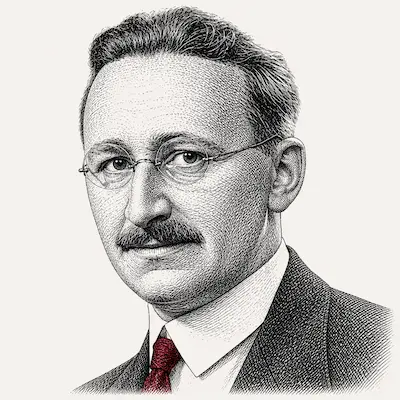
Price signals coordinate millions; committee consensus coordinates no one.
Ostrom's polycentric approach works for local commons, not national economies competing globally. The Netherlands' growth lag demonstrates the knowledge problem: no committee possesses the dispersed information that markets aggregate through prices. Dutch housing shortages persist because planning committees cannot know what entrepreneurs discover, where to build, how much, for whom. The polder model suppresses the price signals and entrepreneurial discovery that drive innovation. Denmark's superior growth reflects faster market responses to changing conditions. Reform means reducing political barriers to market coordination, not designing better committees.
The convergence note
Where the council converges: The Dutch system needs reform to accelerate decision-making while preserving stakeholder input mechanisms.
Where it divides: Schmidt wants reformed consensus with strong leadership. Kuan Yew and Hayek want market-driven replacement. Deng wants selective experimentation. Ostrom wants better institutional design.
For a policymaker to decide on: Whether to reform consultation mechanisms gradually or replace them with faster market-based allocation systems.