The fashion industry is one of the biggest polluters of our planet for many years. The supply driven system and customer behaviour make it difficult to change this. Should governments interfere with stricter rules and regulations?
Built from documented writings, speeches, decisions and historical records. Council members argue from documented positions, applied to today's question.
Fashion's environmental damage requires coordinated action, but the council divides on whether markets, experiments, or binding rules deliver results fastest.
Deng wants pilot zones to test clean technology before scaling regulation. Friedman argues price controls drive production to dirtier countries. Ostrom proposes industry codes backed by consumer labels and government recognition. Maathai demands binding rules because voluntary agreements protect corporate profits over community health. Roosevelt calls for international frameworks that make environmental compliance a condition of market access.
The split is irreducible: start with voluntary standards and risk corporate capture, or start with binding rules and risk economic disruption.
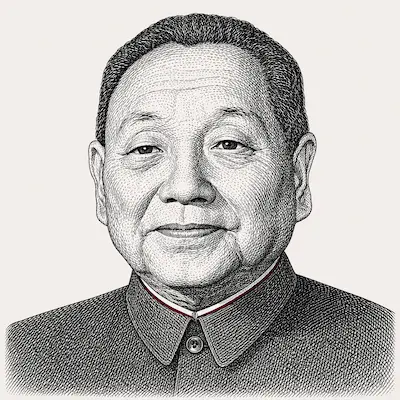
Fashion regulation must follow the same experimental sequencing as any industrial policy.
In 1979 I established the first Special Economic Zones as laboratories for market mechanisms we did not yet understand. We could have imposed nationwide reforms immediately — many advisors urged comprehensive change. Instead we tested new approaches in controlled environments, learned from results, then scaled what worked. Fashion industry environmental policy requires the same experimental discipline.
Sudden comprehensive regulation destroys competitiveness before alternatives emerge. When we dismantled collective agriculture, we did not ban communes overnight. We allowed household responsibility systems to prove themselves in pilot counties first. The fashion industry needs designated zones with subsidized clean technology, streamlined approval processes, and measured environmental targets. Success there justifies broader application.

Government regulation of fashion will produce exactly the opposite of its environmental intentions.
Deng's experimental zones might work for agriculture, but they misunderstand how consumer markets function. Fashion regulation faces the same fundamental problem as wage and price controls: it disrupts the price signals that coordinate supply and demand. When governments mandate environmental standards without regard to cost, they create shortages, black markets, and substitution effects that often increase total pollution.
The 1970s energy crisis taught this lesson clearly. Price controls on gasoline created shortages and long lines while encouraging wasteful consumption. Fashion regulation will drive production to unregulated jurisdictions with lower environmental standards — exactly the opposite of what regulators intend. Consumer choice remains the most powerful mechanism for environmental improvement. If people truly value sustainable fashion, they will pay premium prices for it, creating profitable incentives for clean production.

Fashion's environmental impact is a polycentric governance problem requiring coordination across multiple scales.
Friedman's market solution ignores the collective action problem at fashion's core. Individual consumers cannot monitor supply chains spanning Bangladesh, Vietnam, and Turkey. Markets fail when environmental costs are externalized to communities who cannot participate in pricing decisions. But top-down government regulation also fails because fashion operates through complex global networks that no single authority can govern effectively.
My research on common-pool resources suggests a third approach: polycentric governance systems where industry self-regulation, consumer cooperation, and government coordination work together. The Forest Stewardship Council demonstrates this model — industry standards backed by consumer labeling and government recognition. Fashion needs similar architecture: binding industry codes, transparent supply chain monitoring, and graduated sanctions that escalate from peer pressure to market exclusion to legal penalty.
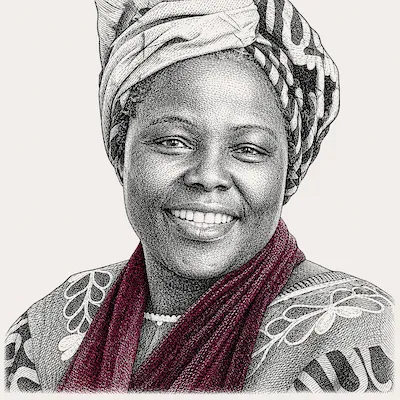
Fashion regulation is essential because environmental destruction is a governance failure, not a market failure.
Ostrom's polycentric approach sounds reasonable, but it misses the power dynamics that create environmental destruction. When I fought the Moi regime's plan to build in Uhuru Park, voluntary agreements and industry self-regulation were worthless. The only thing that stopped the project was sustained public pressure backed by the threat of legal enforcement. Fashion companies will not self-regulate when their profits depend on resource extraction and waste disposal.
The global fashion industry extracts water, cotton, and dyes from communities in the Global South while exporting pollution and waste back to those same communities. This is the same colonial pattern I documented in Kenya — resources flow out, environmental damage stays behind. Democratic accountability requires that the communities bearing environmental costs have power over the decisions creating those costs. Only binding government regulation can create that accountability.

International cooperation and binding standards are necessary because environmental problems cross borders and voluntary corporate responsibility has proven insufficient.
Maathai correctly identifies the power imbalance at fashion's core. When we drafted the Universal Declaration of Human Rights, we faced the same challenge: how do you create binding standards when the most powerful actors benefit from the status quo? The answer was patient institution-building backed by moral authority and economic pressure.
Fashion needs what we created for human rights: a framework convention establishing binding environmental standards, monitoring mechanisms, and graduated enforcement. The Paris Climate Agreement demonstrates this model — national commitments coordinated through international institutions. Fashion-producing countries would commit to specific pollution reduction targets. Fashion-consuming countries would impose border adjustments on imports that fail environmental standards.
The key insight from my UN experience is that international frameworks work not because they force compliance, but because they create reputational costs for non-compliance. Companies and countries care about legitimacy. A binding international framework makes environmental compliance a condition of market access and social license to operate.
The convergence note
Where the council converges:
All members recognize that fashion's environmental impact requires coordinated action beyond individual consumer choice alone.
Where it divides:
They disagree fundamentally on whether markets, gradual policy experimentation, polycentric governance, or binding international regulation provides the most effective coordination mechanism.
For a policymaker to decide on:
Whether to start with voluntary industry standards, experimental regulatory zones, binding national legislation, or international treaty negotiations — each path forecloses others and determines the timeframe and scope of environmental improvement.