The Long Council
Who was selected, and why
The fashion industry is one of the biggest polluters of our planet for many years. The supply driven system and customer behaviour make it difficult to change this. Should governments interfere with stricter rules and regulations?
The central tension
Whether market-based solutions and consumer choice can adequately address environmental externalities, or whether government regulation is necessary to force industry transformation despite potential economic costs.
Selected members
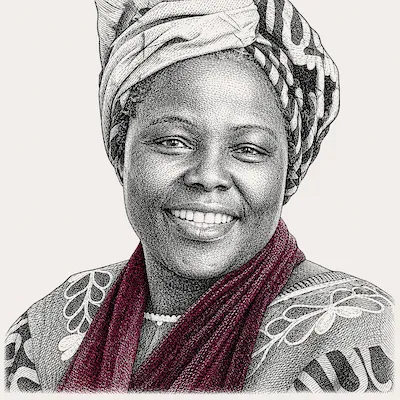
Wangari Maathai
Will argue: Government regulation is essential because environmental destruction is a governance failure, not a market failure, companies will not self-regulate when profits depend on resource extraction.
Her framework directly addresses the relationship between environmental governance, democratic accountability, and corporate behavior in resource-intensive industries.
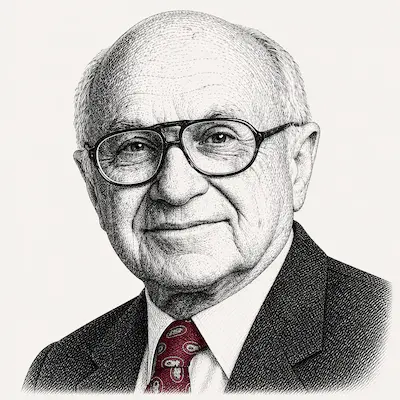
Milton Friedman
Will argue: Government regulation will increase costs, reduce innovation, and harm consumers; market mechanisms and consumer choice are more effective at driving sustainable practices.
Provides the strongest framework for market-based solutions and opposition to government regulation of industry.

Elinor Ostrom
Will argue: The fashion industry's environmental impact is a collective action problem requiring polycentric governance, industry self-regulation, consumer cooperation, and government coordination working together.
Offers a third way between pure market and pure government solutions through her analysis of collective action and institutional design.
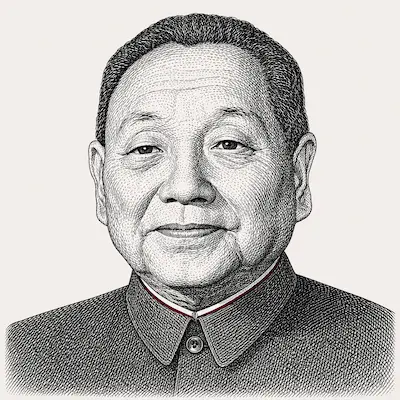
Deng Xiaoping
Will argue: Regulation must be gradual and economically rational, sudden environmental restrictions could destroy industry competitiveness and employment without necessarily achieving environmental goals.
Brings experience with industrial policy and the relationship between economic development and environmental regulation.
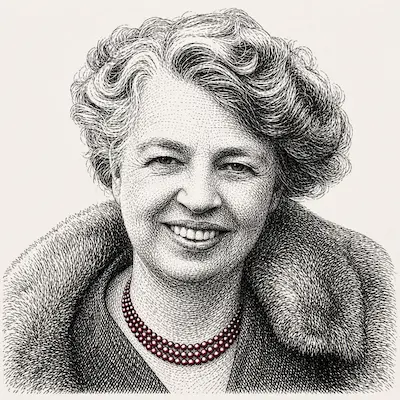
Eleanor Roosevelt
Will argue: International cooperation and binding standards are necessary because environmental problems cross borders and voluntary corporate responsibility has proven insufficient.
Her framework for international cooperation and institutional mechanisms applies to global environmental problems requiring coordinated action.
Considered but not selected
Margaret Thatcher: Her deregulation philosophy would oppose fashion industry regulation, but Friedman already provides this perspective more systematically - John Maynard Keynes, His framework for government intervention focuses on macroeconomic management rather than environmental regulation - Kautilya, His ancient framework would require extensive extrapolation to modern environmental and industrial policy