Built from documented writings, speeches, decisions and historical records. Council members argue from documented positions, applied to today's question.
Europe must build AI capability through strategic state investment while liberalizing regulations to attract private talent and capital.
Schmidt's energy lesson applies directly: single-source dependency becomes political vulnerability within years. Colbert's industrial policy worked in glass and shipbuilding; AI requires the same state-backed learning phase against established competitors. Friedman correctly identifies regulatory barriers as innovation killers; GDPR has already pushed AI development elsewhere.
The council splits on sequencing: state investment first or regulatory reform first. Both are necessary but insufficient alone.
- 1Establish state-backed AI training infrastructure to reduce dependency on US and Chinese models.
- 2Eliminate regulatory barriers that drive AI development to more permissive jurisdictions outside Europe.
- 3Attract AI talent through liberalized immigration policies while protecting strategic capabilities during the learning phase.
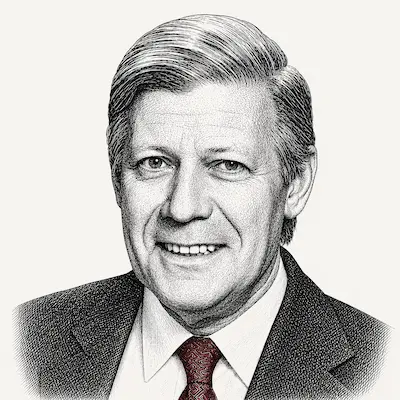
Energy dependency is not an energy question, it is sovereignty.
The 1973 oil embargo taught me that states which cannot control their energy supply cannot control their destiny. When OPEC cut oil to Europe, I watched governments that had built welfare states and democratic institutions suddenly discover they were hostage to producers 6,000 kilometres away. Today's AI dependency creates the same vulnerability. In 1974 I diversified Germany's energy mix, nuclear, coal, renewables, and yes, Russian gas, because no single dependency is acceptable. Europe that cannot train its own AI models cannot govern its own future.

Strategic industries require state investment until they achieve competitive scale.
Schmidt understands that sovereignty demands capability. In the 1660s, I built French manufacturing from nothing, glass, tapestries, shipbuilding, against established Dutch and English competitors. The method: state investment, talent acquisition, protection during the learning phase, then competition once capability was secured. AI follows the same logic. I imported Venetian glassmakers to teach French workers, just as Europe must now attract AI talent and build training infrastructure. The alternative is permanent dependence on others' innovations serving others' interests.

Government cannot pick winners, but markets discover what works.
Colbert's mercantilism created protected inefficiencies that took centuries to dismantle. The market already allocates AI resources better than any planner could, Nvidia's dominance reflects superior products, not accidents. Europe's problem isn't insufficient state direction but excessive regulation that deters investment. The GDPR alone has driven AI development to more permissive jurisdictions. Rather than building state champions destined for failure, Europe should eliminate barriers that prevent entrepreneurs from competing. Free movement of talent, capital, and data will produce European AI leaders faster than subsidies ever could.
The convergence note
Where the council converges: AI dependency creates genuine sovereignty risks that require strategic responses.
Where it divides: Whether state industrial policy or market mechanisms better build technological capability. Schmidt advocates diversified dependency through strategic partnerships. Colbert supports direct state investment in AI infrastructure and talent. Friedman argues regulatory liberalisation will attract private innovation.
For a policymaker to decide on: Whether to build European AI champions through state investment or attract them through regulatory competition.