Is entrepreneurship a better engine for African prosperity than state intervention?
Built from documented writings, speeches, decisions and historical records. Council members argue from those positions, applied to today's question.
Neither alone succeeds; state capacity enables market success, as Kenya's M-Pesa and Rwanda's growth show.
Friedman points to Nigeria's $1.2 billion venture funding as proof markets work without state backing. Lee counters with Rwanda's Vision 2020: state planning tripled per capita income in twenty years. Nyerere and Prebisch warn that pure markets trap Africa in raw material exports to foreign manufacturers.
The split is sequencing: whether states should build capacity first or markets should drive institutional development.
- 1Build state capacity for strategic sector identification and infrastructure development before unleashing market competition.
- 2Create regulatory frameworks that enable African entrepreneurs to scale domestically rather than serve foreign platforms.
- 3Establish democratic accountability mechanisms that give citizens control over both market outcomes and state resource allocation.
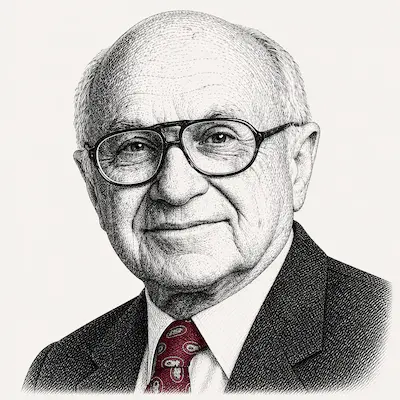
Markets unleash African potential faster than governments can plan it.
Nigeria's $1.2 billion venture funding proves my point. Flutterwave reached unicorn status without state backing because entrepreneurs respond to price signals governments cannot see. When states pick winners, they pick based on political connections, not market demand. In Chile I advised rapid liberalization because gradual reform gives rent-seekers time to capture the process. Africa's bureaucrats will auction licenses to the highest bidder while entrepreneurs build the next M-Pesa.
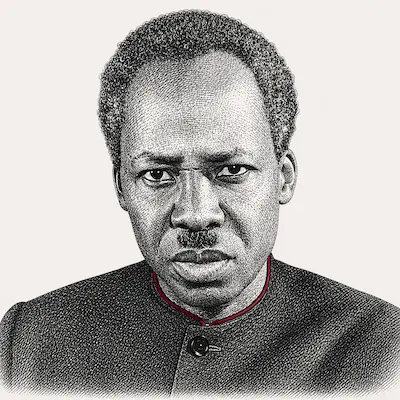
Markets cannot address the structural disadvantages that keep Africa peripheral.
Friedman ignores that Kenya's M-Pesa required the Central Bank's regulatory framework to scale nationwide. Markets alone produce what Prebisch documented: Africa exports raw materials and imports manufactured goods, transferring wealth to the center. In 1967 I launched the Arusha Declaration because private capital served foreign interests, not African development. My forced villagization failed, but the diagnosis remains correct. Without state intervention, African entrepreneurs become junior partners in their own economies.
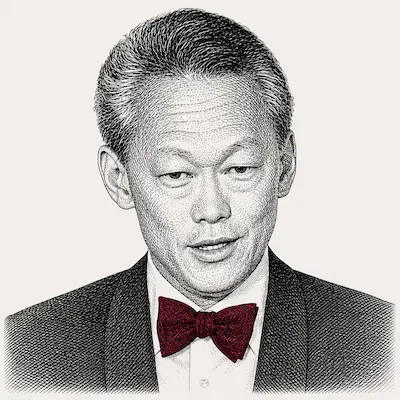
State-guided markets deliver results; pure markets deliver dependency.
Nyerere is right that markets need direction, but wrong about the mechanism. In 1961 I founded Singapore's Economic Development Board to attract foreign investment while building local capacity. We used multinational corporations as teachers, not masters. Rwanda's Vision 2020 program mirrors what we did: identify strategic sectors, create infrastructure, then let competition determine winners within that framework. The key is state capacity, not state ownership. African governments must guide without controlling.
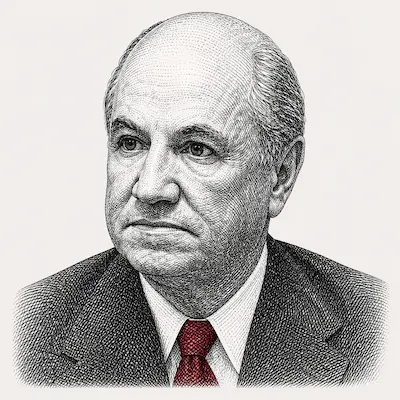
Free trade between unequal partners reproduces underdevelopment, not prosperity.
Lee Kuan Yew's city-state model cannot scale to continental Africa. Singapore succeeded by becoming a service hub for the global economy, but Africa cannot all be Singapore. My analysis of deteriorating terms of trade from 1876 to 1947 shows that primary commodity exporters systematically lose income to manufactured goods exporters. Nigeria's tech sector is promising, but it serves foreign platforms and depends on imported technology. Without strategic industrialization behind protective barriers, African entrepreneurship remains peripheral to global value chains.
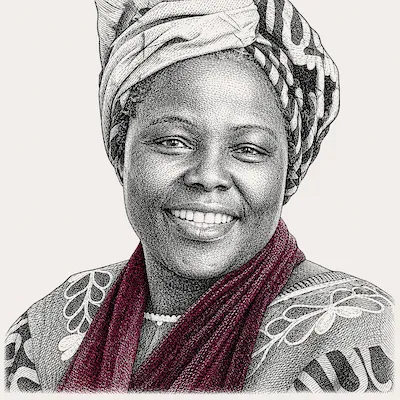
Neither pure entrepreneurship nor pure state intervention addresses Africa's core problem: democratic accountability.
Prebisch correctly identifies structural disadvantage, but misses the governance failure that enables it. In 1989 I defeated President Moi's Times Media Complex project in Uhuru Park through sustained civic mobilization. The issue was not market versus state, but whether citizens control their resources. Rwanda's Vision 2020 succeeded because it delivered results to citizens. Nigeria's entrepreneurs thrive where state capacity exists. The question is not whether markets or states develop Africa, but whether African citizens govern both.
The convergence note
Where the council converges: Africa needs institutional capacity to harness both market dynamism and state strategic direction.
Where it divides: Whether markets or states should lead development sequencing, and whether small-state models apply continentally.
For a policymaker to decide on: Which institutional reforms enable effective state-market coordination in specific African contexts.