Should Europe give African countries easy access to the EU market in order to stimulate African economies and reduce immigration to the EU?
Built from documented writings, speeches, decisions and historical records. Council members argue from documented positions, applied to today's question.
Europe should open markets to African manufactured goods, not just commodities, while African states invest export revenues in education and infrastructure.
Maathai warns that trade without African democratic control reproduces elite capture and environmental destruction. Prebisch shows how commodity preferences lock economies into permanent dependency on raw material exports. Nyerere argues for strategic market access that builds value-added processing capacity rather than reinforcing extraction. Hirschman expects African entrepreneurs to use preferences in unpredictable ways that create new opportunities.
The council agrees current trade arrangements disadvantage Africa and that preferences could help if designed correctly. But commodity-only access reproduces dependency while manufactured goods access builds capacity.

European trade preferences without African democratic control reproduce extractive relationships.
In Kenya during the 1980s, we saw how export-oriented agriculture destroyed food security while enriching political elites. Coffee and tea plantations replaced indigenous forests that provided food, medicine, and water regulation. The profits flowed to Nairobi and London while rural women walked further for firewood and clean water. This is the documented pattern across post-colonial Africa: export production serves external markets while degrading the ecological foundation of local livelihoods.
EU market access for African countries will follow the same logic unless African communities control the production process. The question is not whether Europe opens its markets, but whether Africans govern their own land, water, and labour. Without democratic accountability over resource use, preferential trade becomes another mechanism for elite capture. The Green Belt Movement succeeded because women controlled the tree nurseries, earned the income, and decided what to plant. Trade preferences that bypass this community governance will reproduce dependency, not development.

Preferential access without structural transformation reproduces centre-periphery dependency.
Maathai correctly identifies elite capture, but the problem runs deeper than governance — it is structural. My analysis of deteriorating terms of trade between 1876 and 1947 documented that primary commodity exporters systematically lose real income to manufactured goods exporters. EU market preferences for African commodities may improve prices temporarily, but they lock African economies into peripheral specialisation. In my ECLAC work, we documented how Latin American coffee and copper exporters remained vulnerable to price volatility and technological displacement despite preferential access.
The EU proposal reproduces this dependency relationship. African countries will export raw materials and agricultural products while importing manufactured goods and technology from Europe. The value-added processing, research and development, and industrial learning remain in the centre. Even with preferential access, Africa cannot build the productive capacity that genuine development requires. Import substitution industrialisation — building domestic manufacturing behind protective tariffs — proved problematic in Latin America, but the alternative of permanent commodity dependence is worse.
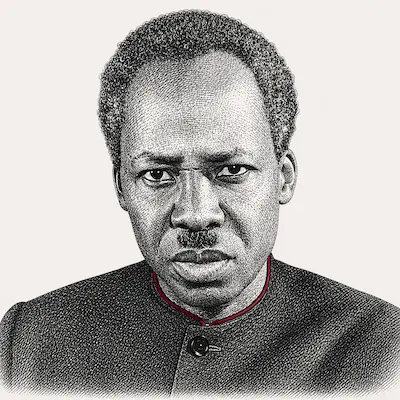
Market access can benefit Africa, but only if it builds productive capacity rather than reinforcing commodity dependence.
Prebisch identifies the structural trap, but his import substitution model failed in Africa as it did in Latin America. Tanzania's experience with ujamaa villages and state-led industrialisation in the 1970s demonstrated that autarkic development produces inefficiency and stagnation. We cannot reject all external economic engagement. The question is how to use market access strategically — as an instrument for building capacity, not as a permanent specialisation.
EU preferences could work if they are designed to support African value-added processing rather than raw material exports. Instead of exporting raw cotton, African countries should export textiles. Instead of exporting cocoa beans, they should export chocolate. This requires European markets to accept African manufactured goods, not just African commodities. It also requires African states to invest export revenues in education, infrastructure, and industrial capacity rather than allowing them to be captured by political elites, as Maathai documented in Kenya.
The mistake is not engagement with global markets — it is engagement without a strategy for graduation from commodity dependence. South Korea used export markets to build industrial capacity. Africa can do the same, but only with leadership committed to long-term development over short-term extraction.

The hiding hand may conceal both obstacles and opportunities — African agency will surprise European planners.
My colleagues assume they can predict how trade preferences will work, but development economics consistently underestimates the creativity and problem-solving ability of people in poor countries. When I advised Colombia in the 1950s, the most successful projects were those that encountered unexpected difficulties and forced innovative solutions. The hiding hand principle applies here: if African and European planners knew all the obstacles to beneficial trade relationships, they might never start.
Nyerere's value-chain argument is correct in principle, but it treats African economies as passive recipients of European preferences. The more interesting question is how Africans will use these preferences in ways Europeans don't anticipate. Maathai's Green Belt Movement succeeded precisely because it created productive tensions — women needed income, communities needed trees, the state needed legitimacy. None of these linkages were planned by donors.
European market access will work differently in Nigeria than in Rwanda, differently for women than for men, differently for existing businesses than for new ones. The unbalanced growth these preferences create will force adaptive responses we cannot predict. Some will fail — that is documented in every development process. But the ones that succeed will build African capabilities in directions no planner anticipated. The question is whether African states preserve the flexibility to exploit these unexpected opportunities.
The convergence note
Where the council converges All members accept that current global trade arrangements systematically disadvantage African economies and that EU market preferences could provide beneficial opportunities if properly designed.
Where it divides Maathai emphasises democratic control over resources, Prebisch warns against structural dependency, Nyerere advocates strategic value-chain development, and Hirschman expects unpredictable adaptive responses — these are not reconcilable through analysis alone.