Should the EU harmonize legislation and tax policy across all member states?
Built from documented writings, speeches, decisions and historical records. Council members argue from documented positions, applied to today's question.
Fiscal harmonization across the EU would strengthen European stability against economic nationalism but only at the cost of eliminating the policy diversity and democratic accountability that responsive governance requires.
Schmidt argues that monetary union demands fiscal coordination to prevent free-riding, while Adenauer sees harmonized institutions as insurance against future nationalist governments undermining European stability. Thatcher counters that tax competition disciplines government spending and preserves the fiscal sovereignty essential to democratic accountability, while Ostrom demonstrates that uniform rules across diverse economies eliminate the policy experimentation that drives innovation. Arendt warns that fiscal decisions made by unaccountable European institutions create bureaucratic rule that citizens cannot influence through political action.
The split turns on whether deeper integration or preserved sovereignty poses the greater threat to European democracy in the coming decades.
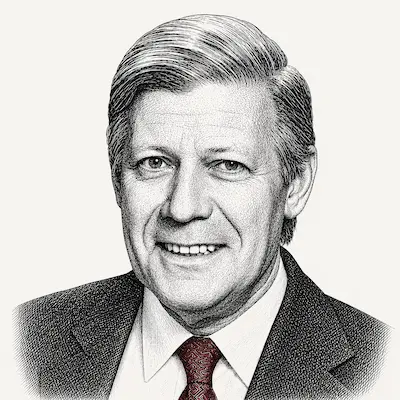
European integration requires fiscal sovereignty — you cannot have monetary union without political union.
The European Monetary System negotiations of 1978–79 taught me that monetary cooperation is possible between sovereign states, but fiscal harmonization is a different matter entirely. When Giscard and I designed the EMS, we preserved national fiscal authority precisely because we understood that tax and spending decisions are the core of democratic accountability. A government that cannot set its own tax rates cannot be held responsible by its voters for the economic consequences.
The deeper principle is that alliance relationships constrain but also enable security policy — and the same applies to economic integration. Germany accepted constraints on Deutsche Mark policy through the EMS because we gained influence over European monetary conditions. But fiscal policy is different. The ability to adjust taxation and public spending is not just an economic instrument — it is the mechanism through which democratic governments respond to changing circumstances without losing legitimacy. Harmonized fiscal policy eliminates that adaptive capacity.
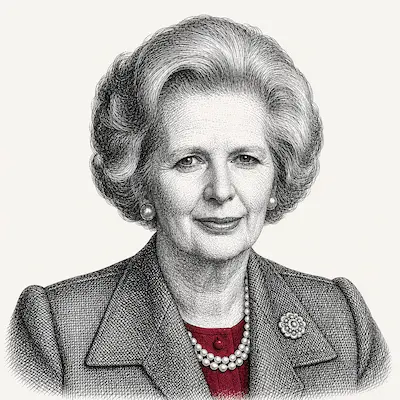
The single market requires cooperation, not the surrender of taxation sovereignty to Brussels bureaucrats.
Schmidt assumes that tax competition undermines the single market, but my experience suggests the opposite. During the 1980s, Britain's willingness to reduce corporate tax rates and eliminate exchange controls helped make London the financial capital of Europe — precisely because we maintained fiscal sovereignty while embracing free movement of capital. The Bruges Speech in 1988 was explicit on this point: "We have not successfully rolled back the frontiers of the state in Britain only to see them re-imposed at a European level."
Tax competition is not a problem for the single market — it is the single market working as intended. When businesses and individuals can choose between fiscal regimes, governments must justify their tax levels to their own citizens. Harmonized tax rates eliminate that discipline and create what I consistently opposed: a European superstate exercising dominance from Brussels. The European Community was designed as a market, not a political union, and taxation remains the sovereign prerogative that no democracy can surrender without ceasing to be democratic.
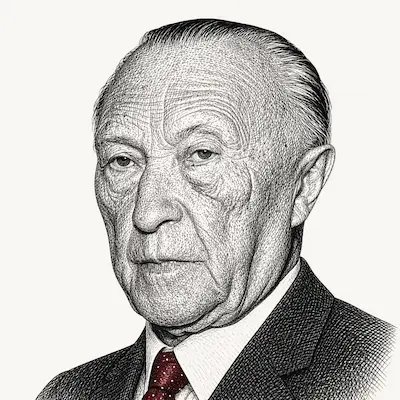
European institutions must be strong enough to survive changes in national governments — including hostile ones.
Thatcher's argument assumes that European integration weakens democracy, but my experience building the European Coal and Steel Community demonstrated the opposite. The supranational High Authority was more accountable to European citizens than the old cartel arrangements that had operated in secret between national industries. When we pooled sovereignty over coal and steel in 1951, we did not lose democratic control — we gained it, because decisions that had been made in corporate boardrooms were now made by institutions that European parliaments could oversee.
The fundamental issue is not whether fiscal harmonization reduces democratic accountability today, but whether it prevents a future German government — or any national government — from using fiscal policy to undermine European stability. I accepted limitations on German sovereignty in the 1950s precisely because I could imagine German governments I would not trust with unlimited sovereignty. European institutions with fiscal authority are insurance against the return of economic nationalism that destroyed Europe twice in the 20th century.

Uniform rules across diverse contexts eliminate the experimentation that produces policy innovation.
Adenauer's insurance argument misunderstands how complex systems adapt to changing conditions. My research on polycentric governance across different scales demonstrates that successful collective arrangements require the capacity to adjust rules based on local learning. The European Union is a classic common-pool resource problem — members share benefits but face different costs — and my eight design principles suggest that one-size-fits-all fiscal rules violate the core requirement that rules must match local conditions.
The Nordic countries, Mediterranean countries, and post-communist countries face fundamentally different economic structures and social preferences. Harmonized tax rates that work for Denmark's social democratic model would be catastrophic for Estonia's development strategy, and vice versa. The key insight from my commons research is that institutional diversity at lower levels strengthens rather than weakens the overall system's resilience. Tax competition between member states functions as policy experimentation — we learn what works by observing different approaches, not by eliminating variation through harmonization.

Harmonization without genuine European democratic institutions creates rule by nobody — the most dangerous form of modern domination.
Ostrom correctly identifies the democratic deficit, but understates its seriousness. When the European Commission or the European Central Bank makes fiscal policy decisions that determine unemployment levels, pension sustainability, and public service provision, we have what I characterised as bureaucratic rule — governance by institutions that cannot be meaningfully held accountable by those they govern. This is not merely inefficient; it is the structural condition that totalitarian movements exploit.
The fundamental problem is not harmonization itself, but harmonization without a genuine European political community. Citizens cannot hold accountable institutions they cannot reach through political action. European fiscal policy would require European democratic institutions — not just a parliament that cannot initiate legislation, but deliberative forums where European citizens can engage as citizens, not merely as interest groups. Until Europeans can act together politically on fiscal questions, fiscal sovereignty must remain national because that is where democratic accountability remains possible. The alternative is rule by nobody, which my analysis of modern bureaucracy shows systematically eliminates personal responsibility and political judgment.
The convergence note
Where the council converges All members accept that democratic accountability requires citizens to be able to influence the fiscal decisions that affect their lives through political institutions they can meaningfully access.
Where it divides Schmidt and Adenauer argue that fiscal harmonization can strengthen democratic control by preventing economic nationalism and creating European-scale influence over European-scale problems. Thatcher and Ostrom argue that it eliminates the policy diversity and competitive discipline essential for responsive governance. Arendt argues that it creates unaccountable bureaucratic power regardless of its economic effects.
For a policymaker to decide on Whether the European Union should prioritize deeper integration (risking democratic accountability) or preserve fiscal sovereignty (risking economic fragmentation and renewed nationalism) depends on a judgment about which risk is more dangerous to European democracy in the 21st century.