The Long Council
Who was selected, and why
Why don't EU countries invest in mutual train lines to reduce CO2 emissions?
The central tension
Should cross-border rail be driven by EU-level authority with binding budgets, or left to national governments cooperating voluntarily?
The two poles
Supranational push (EU mandates and funds rail)
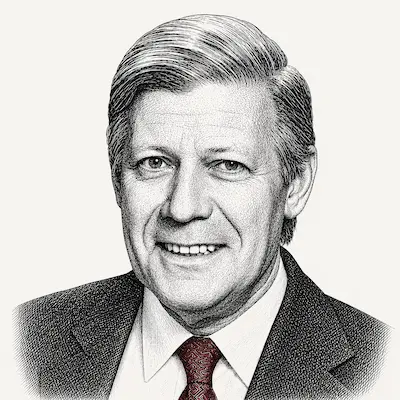 Helmut Schmidt
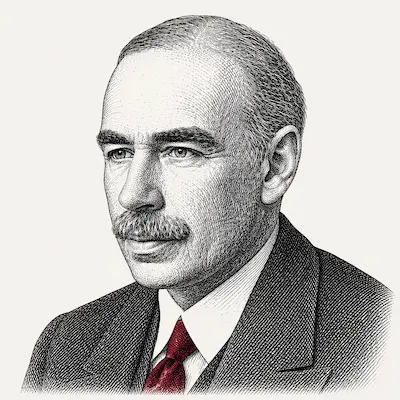 John Maynard Keynes
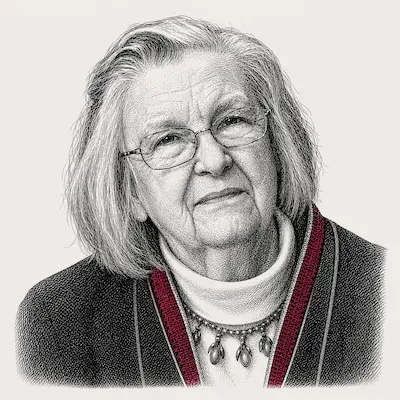 Elinor Ostrom
National control / structural realism (voluntary cooperation, market mechanisms, political economy)
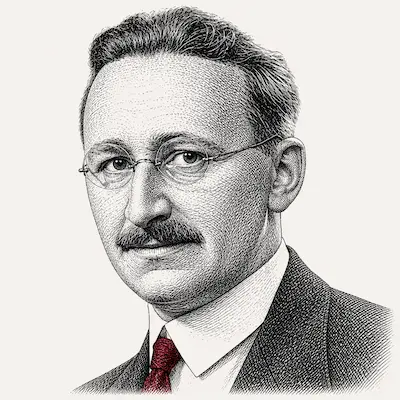 Friedrich Hayek
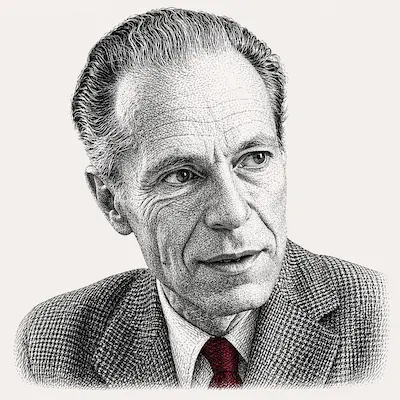 Albert O. Hirschman
Selected members
Helmut Schmidt
Will argue: Cross-border rail fails because member states free-ride on each other's investment; a binding EU fiscal instrument is the only solution, just as the EMS required institutional commitment to work.
Governed EU monetary integration and energy sovereignty; documented that infrastructure dependencies are sovereignty questions requiring supranational coordination.
John Maynard Keynes
Will argue: Rail infrastructure is a classic case of market failure, private returns are too uncertain and too distant to attract capital, so public investment and EU-level deficit financing are not optional luxuries but economic necessities. 3. Friedrich Hayek
Documented framework for public investment where private markets underinvest due to long time horizons, uncertain returns, and coordination failures.
Elinor Ostrom
Will argue: Neither full EU centralisation nor purely national decision-making will work; durable cross-border rail governance requires corridor-specific institutions with clearly defined boundaries, rules designed by the users, monitoring mechanisms, and nested authority, her design principles applied to infrastructure rather than fisheries.
Cross-border rail is genuinely a collective-action problem involving shared corridor infrastructure governed by multiple national authorities, the design of polycentric governance across competing jurisdictions is her documented core domain.
Considered but not selected
Deng Xiaoping: China's high-speed rail buildout is the world's largest, and his experimental-zone model (SEZs) is suggestive. Excluded because his framework is authoritarian-developmental and cannot speak to the EU's specific problem of democratic member-state veto power; his documented positions do not address multilateral voluntary coordination.
Rawls: Could argue the difference principle requires prioritising rail investment that benefits peripheral and low-income regions. Excluded because the central question is institutional design and political economy, not distributive justice principles; his ideal-theory framework adds less than Ostrom's empirical design framework on the specific collective-action problem.
Thatcher: Her documented Bruges Speech framework and opposition to EU supranational authority is directly relevant as a countervoice to Schmidt. Excluded because Hayek covers the market-mechanism and anti-centralisation pole with stronger analytical depth specific to infrastructure investment; Thatcher's documented record on European integration is primarily about sovereignty and pooling, less about the economics of infrastructure underinvestment specifically. Including her would create a fourth voice on the national-control pole and over-weight it.