The Long Council
Who was selected, and why
Should democratic states rethink their democratic processes in the light of fake news shared via social media?
The central tension
Whether protecting democratic integrity through institutional reform justifies constraining information flows and potentially limiting democratic participation itself.
Selected members
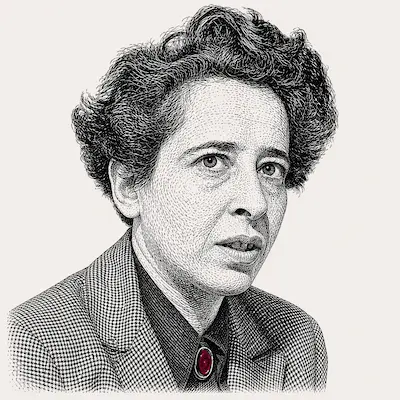
Hannah Arendt
Will argue: That misinformation campaigns systematically destroy the public realm by making citizens unable to distinguish fact from opinion, creating the atomized conditions that totalitarian movements exploit.
Her framework on the distinction between power (arising from people acting in concert) and violence (destroying the power it seeks to control) directly applies to how misinformation atomizes democratic deliberation and undermines the shared reality required for legitimate collective action.
John Stuart Mill
Will argue: That the solution is more speech, not less, countering false ideas with better arguments rather than censorship, while acknowledging that democratic institutions require educated citizens capable of rational deliberation.
His harm principle and marketplace of ideas theory in On Liberty provide the foundational liberal framework for balancing free expression against democratic harm, directly relevant to content moderation debates.
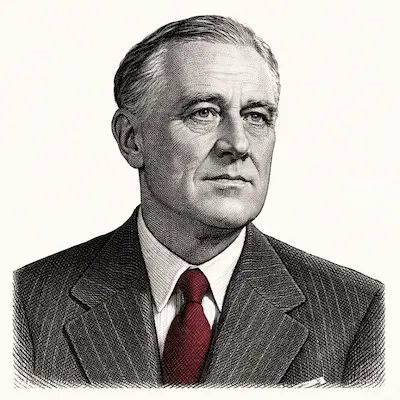
Franklin D. Roosevelt
Will argue: That democratic leaders must actively engage with new media platforms to provide authoritative information, while maintaining democratic accountability through press conferences and institutional oversight.
His mastery of new media (fireside chats) to communicate directly with citizens while managing information during wartime crises provides documented experience of how democratic leaders can use media technology to maintain legitimacy during periods of information warfare.
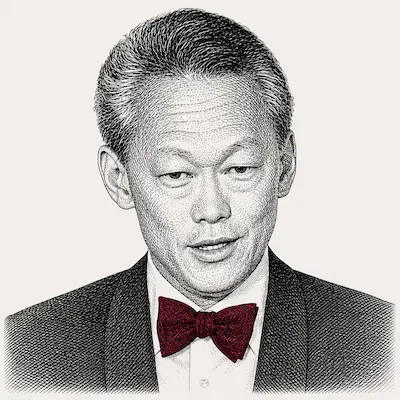
Lee Kuan Yew
Will argue: That democratic stability requires preventing the spread of destabilizing misinformation, even at the cost of some restrictions on speech, because societies that cannot distinguish truth from falsehood cannot govern themselves effectively.
His systematic use of information control, media regulation, and legal constraints on political discourse in Singapore provides the most documented case study of how states can maintain stability through information management.
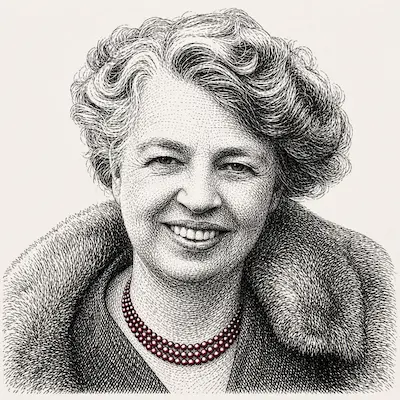
Eleanor Roosevelt
Will argue: That free expression is fundamental but not absolute, it must be balanced against the protection of democratic institutions and the rights of others to participate in informed democratic deliberation.
Her work on the Universal Declaration of Human Rights established freedom of expression as a fundamental right while also recognizing the state's obligation to protect democratic institutions from systematic attack.
Considered but not selected
Margaret Thatcher: Her documented positions on press freedom and media ownership are relevant but primarily concern traditional media rather than social media platforms' algorithmic amplification - Confucius, His framework on "rectification of names" (calling things what they are) is philosophically relevant but lacks documented application to democratic information systems - Sun Tzu, While his work on deception and information warfare is relevant, his framework is designed for adversarial rather than cooperative democratic contexts