Built from documented writings, speeches, decisions and historical records. Council members argue from documented positions, applied to today's question.
Current social media governance fails democratic accountability — platforms govern billions without electoral mandate while remaining vulnerable to foreign manipulation. The question is whether EU regulation strengthens or weakens democratic discourse.
Thatcher warns that Brussels regulation recreates the sovereignty pooling she fought, preferring market competition to discipline platforms. Roosevelt counters that unaccountable corporate governance is worse than democratic regulation, while Ostrom advocates for polycentric governance structures matching the complexity of global platforms. Arendt identifies a deeper threat — that platforms systematically destroy the public spaces where democratic judgment becomes possible, while Sun Tzu frames unregulated platforms as strategic weapons that adversaries already exploit against democratic societies.
The core tension cannot be resolved through institutional design alone: whether prioritizing democratic accountability, national sovereignty, strategic defense, or preserving authentic political community.
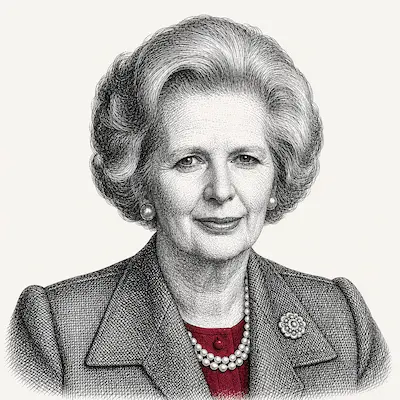
EU social media regulation represents the same dangerous pooling of sovereignty I fought in Bruges.
My opposition to comprehensive EU regulation of social media platforms rests on the same principle I articulated in my September 1988 Bruges Speech: "We have not successfully rolled back the frontiers of the state in Britain only to see them re-imposed at a European level with a European superstate exercising a new dominance from Brussels." The fundamental question is not whether social media platforms need better governance — they do. The question is who governs them and under what authority. When I signed the Single European Act in 1986, I made what I later called my greatest mistake: I failed to understand how qualified majority voting would transfer decision-making from national parliaments to European bureaucrats who are accountable to no electorate.
Social media regulation by Brussels creates precisely this accountability gap on an even larger scale. These platforms operate globally, but EU bureaucrats would be making content decisions affecting British, American, and indeed global users based on European legal frameworks that reflect European political preferences. The market solution — allowing platforms to compete, with users choosing the governance standards they prefer — preserves both consumer choice and national sovereignty. Bad platforms lose users; good governance attracts them. This is precisely how competitive markets discipline corporate behaviour better than regulatory capture.
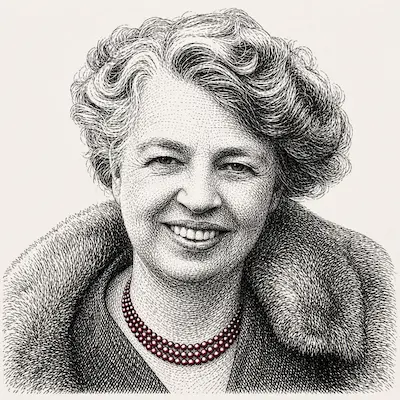
Rights enforcement requires institutions with legitimacy — and the EU has stronger democratic foundations than individual platforms.
I must disagree with Prime Minister Thatcher's market solution, though I understand her sovereignty concerns from my own battles with those who viewed the Universal Declaration as Western imperialism. When we drafted the UDHR in 1946–48, we faced the same challenge: how to protect universal rights while respecting diverse political traditions. The answer was not to leave rights protection to individual choice or market competition, but to build institutions with sufficient legitimacy to enforce standards across borders. My experience with 27 years of "My Day" columns taught me that platforms shape public discourse profoundly — and that without enforceable standards, the loudest voices drown out deliberative democracy.
The EU, whatever its flaws, has democratic foundations that social media platforms lack entirely. Its regulations must pass through the European Parliament, face judicial review, and can be amended through political processes. Facebook's Oversight Board, by contrast, is appointed by Mark Zuckerberg and governs two billion users with no electoral accountability whatsoever. The choice is not between sovereignty and regulation — it is between democratic regulation and corporate autocracy. When I resigned from my UN position in 1953, it was because the Eisenhower administration refused to ratify binding human rights covenants. I learned that moral authority without enforcement mechanisms protects no one when powerful actors choose to ignore it.

Social media governance requires polycentric approaches, not the false choice between Brussels bureaucracy and Silicon Valley autocracy.
Both previous speakers frame this as a binary choice — either EU regulation or market freedom. My forty years studying commons governance suggests this is the "panacea" problem: applying one-size-fits-all solutions regardless of context. The European Commission designing content rules for platforms serving billions of users across different legal traditions faces the same scaling problem that destroyed many World Bank irrigation projects I studied — external authorities imposing uniform rules on diverse communities with different needs and knowledge. But Mrs. Roosevelt is right that corporate platforms govern users without their consent.
The solution is polycentric governance: multiple overlapping institutions at different scales rather than single hierarchical control. We need national regulators setting baseline rights protections, regional bodies like the EU coordinating cross-border enforcement, platform-level community standards that users can help design, and user associations that can negotiate collectively with platforms. My Nobel lecture applied this framework to climate change because no single global authority can govern the atmosphere effectively. Social media presents the same structural challenge: governance institutions must match the scale and complexity of the system they govern, and no single regulatory level — whether Brussels, Washington, or corporate headquarters — has sufficient knowledge or legitimacy to govern global digital discourse alone.

The danger is not regulatory overreach but the systematic destruction of the public realm where democratic judgment becomes possible.
Ms. Ostrom raises the essential point, though I approach it differently. The crisis is not that social media platforms lack proper governance — it is that they represent a fundamental assault on the conditions under which political life becomes possible at all. When I wrote The Origins of Totalitarianism, I identified the destruction of the public realm as a precondition for totalitarian domination: when citizens are isolated from one another, reduced to private consumption and opinion rather than public action and judgment, they become raw material for ideological manipulation. Social media platforms accomplish this isolation more efficiently than any 20th-century regime by creating what appears to be public discourse but is actually millions of private interactions with algorithmic intermediation.
The deeper problem is that these platforms transform political questions — which require collective deliberation and judgment — into technical questions of content moderation and algorithmic design. This substitution depoliticizes citizens by treating them as consumers of content rather than actors capable of political judgment. Neither Mrs. Thatcher's market competition nor Mrs. Roosevelt's institutional framework addresses this structural problem. Regulation that focuses on content rules rather than preserving spaces for genuine political action may legitimize the platforms' destruction of political community while making it more efficient.
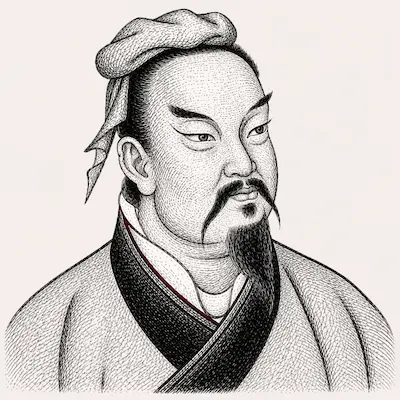
Unregulated platforms are strategic weapons that adversaries will use to destabilize democratic societies — defense requires institutional response.
The previous speakers analyze this as a governance problem, but it is fundamentally a strategic one. Social media platforms are information warfare instruments that hostile powers have already weaponized against democratic societies. My framework teaches that supreme excellence is defeating the adversary without fighting — and these platforms allow precisely that. Through coordinated disinformation campaigns, election interference, and the systematic manipulation of public opinion, adversaries can destabilize democratic institutions without deploying military force.
The European Union faces coordinated information attacks from state actors who understand that fragmented, unregulated platforms create strategic vulnerabilities. My principle that "all warfare is based on deception" applies directly: adversaries use platforms to make democratic societies appear weak when they are strong, divided when they share interests, and confused when clarity is essential for decision-making. The United States learned during its 2016 election that unregulated platforms become instruments of foreign political warfare whether or not that was their intended design.
A state that cannot defend its information environment cannot defend its political institutions. The choice is not between regulation and freedom — it is between defensive regulation by democratic governments and offensive manipulation by authoritarian adversaries. The strategically wise approach is to establish defensive frameworks before the attack succeeds, not to debate sovereignty while information warfare destroys the political community that sovereignty is meant to protect.
The convergence note
Where the council converges All members agree that current social media governance is inadequate and that platforms wield power over democratic discourse without sufficient accountability to the people they govern.
Where it divides They cannot agree whether the primary threat comes from regulatory overreach by democratic institutions (Thatcher), from leaving governance to unaccountable corporate actors (Roosevelt), from failing to create genuinely polycentric governance structures (Ostrom), from platforms systematically undermining political community itself (Arendt), or from adversaries exploiting undefended information infrastructure (Sun Tzu). Each diagnosis implies different institutional solutions that may be mutually incompatible.
For a policymaker to decide on The fundamental tension between preserving democratic discourse and preventing its weaponization cannot be resolved through argument alone — it requires political judgment about which risks European democracy can and cannot afford to bear.