Should the US government refuse green cards to people who have criticized Israel and support the Palestinian cause?
Built from documented writings, speeches, decisions and historical records. Council members argue from documented positions, applied to today's question.
The government should not exclude green card applicants based on their criticism of Israel or support for the Palestinian cause. Such political tests for basic membership rights exceed legitimate governmental authority and undermine the pluralist foundation that democratic societies require to function.
Mandela argues that political exclusion destroys the legitimacy needed for sustainable governance, drawing on South Africa's experience that states built on excluding opponents cannot govern effectively. Roosevelt grounds this in universal human rights, noting that freedom of political opinion becomes meaningless when governments can exclude people for their beliefs. Locke frames it as governmental overreach beyond the consent-based social compact, while Arendt warns that sorting people by political worthiness leads to the atomized society that hollows out democratic institutions from within.
The council divides on whether this principle should extend to other forms of ideological testing and how to balance democratic pluralism against security concerns.
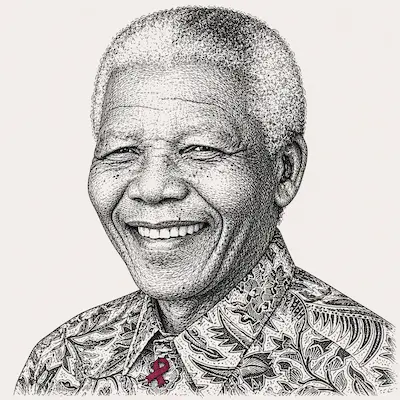
Political exclusion based on ideology destroys the legitimacy needed for sustainable governance.
When we excluded people from citizenship based on their race, we destroyed our own legitimacy and created the resistance that eventually brought us down. In 1990, I chose to negotiate with the apartheid government rather than demand their complete capitulation because I understood that a state built on the exclusion of its opponents cannot govern sustainably. The moment you begin using political tests for citizenship — whether racial or ideological — you create a category of people whose loyalty you have already rejected. They have no stake in your success.
My experience taught me that the strength of democratic institutions comes not from ideological purity but from their capacity to include diverse viewpoints under the same constitutional framework. When we designed post-apartheid South Africa, we deliberately included our former oppressors in the Government of National Unity. Not because we agreed with them, but because excluding them would have created a permanent source of instability. Political criticism — even of allied nations — is precisely the kind of speech democratic societies must protect if they want their own citizens to remain free.
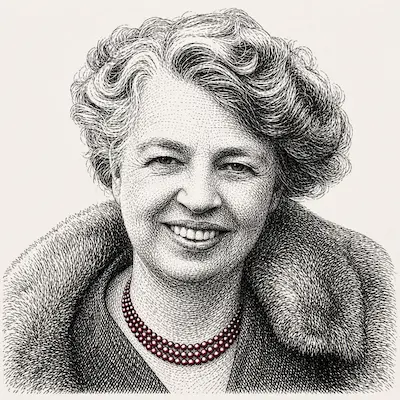
Freedom of political opinion is a foundational human right that cannot be surrendered as a condition of residence or citizenship.
Mandela is correct that exclusion undermines legitimacy, but the deeper principle is that political freedom itself becomes meaningless when governments can exclude people for their beliefs. During our drafting of the Universal Declaration, we faced this exact question from multiple delegations who wanted exceptions for communists or fascists or religious minorities. We rejected these exceptions because we understood that the moment you create political tests for basic rights, you have destroyed the universality that makes rights enforceable. Article 19 establishes that everyone has the right to freedom of opinion and expression — not just citizens, not just people whose opinions the government approves.
The United States' own history demonstrates the danger Mandela identifies. When we excluded people for their political associations — during the Red Scares, the internment of Japanese Americans — we damaged not just those excluded but the democratic fabric itself. My work with displaced persons after 1945 showed me that people fleeing persecution need protection from exactly this logic: the idea that political opinions can disqualify someone from the basic right to seek safety and build a life. A green card is not just an administrative convenience — it is acknowledgment of someone's fundamental dignity and right to membership in the human community.
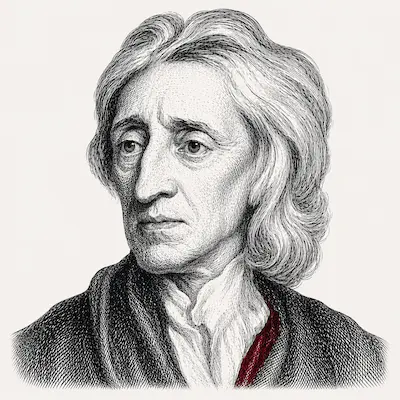
A government that punishes political opinions exceeds its legitimate authority and violates the consent-based foundation of political obligation.
Roosevelt correctly identifies this as a rights question, but the deeper issue is the source and limits of governmental authority. In my Second Treatise, I argued that legitimate government derives its authority from the consent of the governed — but that consent must be meaningful, not coerced. When a government excludes people based on their political beliefs, it is not governing through consent but through the selection of a compliant population. This transforms the social compact from a mutual agreement into a loyalty oath, which violates the fundamental principle that makes government legitimate rather than merely powerful.
The exclusion policy Roosevelt and Mandela oppose represents exactly the kind of governmental overreach that dissolves the obligation of citizens to obey. Government exists to protect natural rights — life, liberty, and property — not to police the realm of conscience and political judgment. When I wrote the Letter Concerning Toleration, I argued that civil government has no authority over matters of belief because belief cannot be compelled by force. The same principle applies here: political opinions about foreign conflicts are precisely the kinds of judgments that lie beyond legitimate governmental authority. A state that makes support for particular foreign policy positions a test of membership has exceeded the bounds of its social compact.
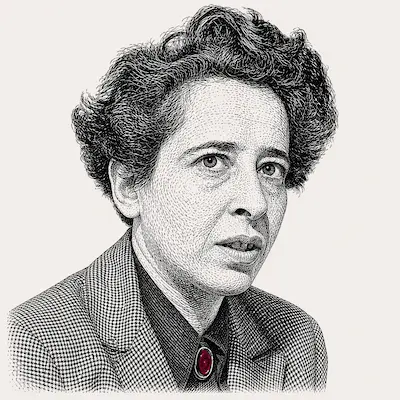
Using political beliefs as grounds for excluding people from citizenship rights destroys the pluralist foundation that makes democratic societies possible.
Locke identifies the crucial point about governmental overreach, but my concern runs deeper: this policy represents exactly the kind of thinking that leads to totalitarian logic. When I wrote about the "right to have rights," I was documenting what happens when political communities begin sorting people into categories of the worthy and unworthy based on their opinions. The moment you accept that certain political positions disqualify someone from membership, you have abandoned the principle of plurality — the capacity of different people to hold different views — that is the foundation of political freedom itself.
My eighteen years of statelessness taught me that rights without political membership are meaningless, but political membership based on ideological conformity is not membership at all — it is conditional inclusion that can be revoked when opinions change. The danger is not just to those excluded but to the political community that does the excluding. When you systematically remove people whose views challenge your own, you create what I called in The Origins of Totalitarianism the atomised society — a collection of individuals who share the same opinions not because they have deliberated together but because dissenting voices have been eliminated. This is precisely how democratic institutions hollow out from within, even while maintaining their formal structures.
The convergence note
Where the council converges All members agree that governments cannot legitimately exclude people from basic membership rights based on their political opinions about foreign conflicts, and that such exclusion undermines democratic legitimacy by creating a system of conditional rather than universal citizenship.
Where it divides The members disagree on the source of this limitation — whether it derives from human rights universalism, constitutional constraints on government authority, or the structural requirements of democratic legitimacy — and consequently on how broadly the principle should be applied to other forms of ideological testing.
For a policymaker to decide on Whether the current security architecture requires exceptions to this principle, and if so, how to design such exceptions narrowly enough to preserve the democratic pluralism all members consider essential while addressing legitimate national security concerns.