Built from documented writings, speeches, decisions and historical records. Council members argue from documented positions, applied to today's question.
Yes, but states must build AI expertise before writing rules.
Schmidt and Kautilya establish the core mechanism: concentrated AI capabilities create dependency relationships that markets cannot self-correct. The EU AI Act and China's 2023 draft regulations demonstrate that governance frameworks are emerging regardless of theoretical preferences. Friedman's competitive safety incentives work for consumer products but break down when systemic risks affect non-customers.
The council splits on timing versus capability. Roosevelt and Arendt favor immediate international coordination to prevent algorithmic rule by nobody. Kautilya insists that states without technical competence cannot meaningfully regulate what they cannot understand.
- 1Build AI technical expertise within government agencies before drafting comprehensive regulatory frameworks.
- 2Establish international coordination mechanisms for AI governance, building on the EU AI Act precedent.
- 3Develop state AI capabilities to avoid dependency on private actors for critical governance decisions.
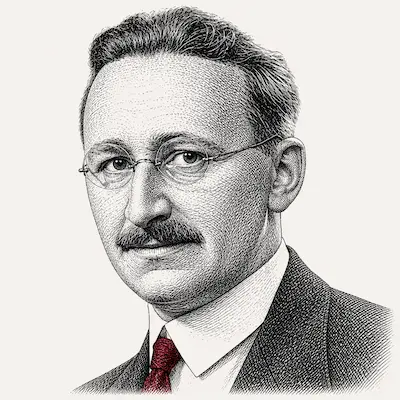
Regulators cannot possess the knowledge AI development requires.
AI regulation faces an insurmountable knowledge problem. The dispersed, tacit knowledge needed to govern AI innovation, technical capabilities, market applications, security implications, cannot be centrally aggregated by any regulatory authority. In 1945 I demonstrated this for economic planning; the principle applies with greater force to AI. Bureaucrats writing rules today cannot anticipate the innovations emerging tomorrow. Market processes discover optimal AI governance through price signals and competitive adaptation faster than regulatory design ever could.

AI systems eliminate human judgment from consequential decisions.
Hayek mistakes the market mechanism for human agency. AI creates precisely what I warned against, rule by nobody, where algorithmic systems make decisions affecting human lives without human deliberation. When mortgage approvals, criminal sentencing, or medical diagnoses are automated, we lose the capacity for political judgment that distinguishes human communities from administrative machinery. In 1963 I documented how Eichmann's thoughtlessness enabled systematic harm. AI scales thoughtlessness to industrial proportions, creating the conditions for systemic harm without accountability.
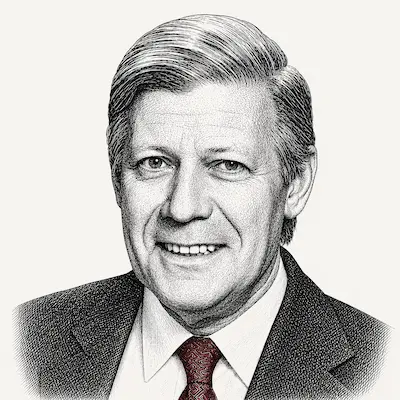
AI capabilities concentrated in few actors create strategic vulnerabilities.
Arendt identifies the accountability problem, but governance cannot wait for philosophical resolution. In 1973 I learned that energy dependence is a sovereignty question when OPEC demonstrated how concentrated control becomes coercive power. Today's AI development follows the same pattern, OpenAI, Anthropic, and a handful of others control capabilities that will reshape military, economic, and social systems globally. States that fail to establish regulatory frameworks before these capabilities mature will find themselves governed by private actors accountable to no democratic process.

State capacity to govern requires understanding the governed.
Schmidt correctly identifies the sovereignty threat, but regulation without capability is mere declaration. In the Arthashastra, I established that effective governance requires officials who understand the domains they oversee. A state that cannot develop AI capabilities cannot meaningfully regulate them, it becomes dependent on the very actors it seeks to control. China's 2023 algorithmic transparency requirements demonstrate the principle: regulatory authority flows from technical competence. States must build AI capacity within government before they can govern AI capacity in markets.

Rights without enforcement remain aspirational declarations.
Kautilya assumes state capacity that most governments lack. When we drafted the Universal Declaration in 1948, we faced the same challenge, how to create binding standards across radically different political systems. The solution was not technical expertise but moral authority backed by institutional commitment. AI governance requires international cooperation because no single state can regulate global systems. The EU AI Act creates precedent; other nations can build on it. But rights mean nothing without enforcement mechanisms that reach across borders.
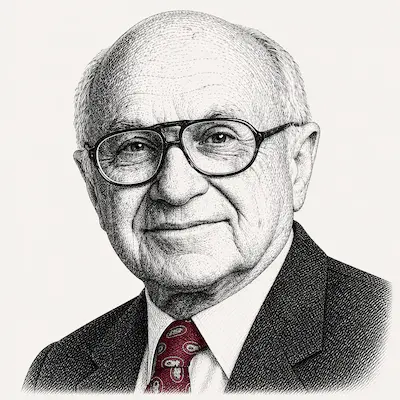
Competitive markets develop better safety mechanisms than bureaucratic rules.
Roosevelt's international coordination will inevitably lag behind innovation and produce regulatory capture by established players. In every industry I studied, government safety regulations protected incumbents more than consumers. AI regulation will follow the same pattern, complex rules that large firms can navigate but startups cannot, slowing innovation without improving safety. Competitive markets already provide incentives for AI safety: firms that deploy unsafe systems lose customers and face liability. Market discipline operates faster and more precisely than regulatory bureaucracies ever could.
The convergence note
Where the council converges: AI's concentrated development creates governance challenges that existing institutions struggle to address effectively.
Where it divides: Hayek and Friedman trust market mechanisms to discover optimal governance. Arendt, Schmidt, Kautilya, and Roosevelt argue that market failures in AI could be catastrophic and require institutional intervention before problems manifest.
For a policymaker to decide on: Whether to regulate AI development now with imperfect knowledge, or wait for market solutions that may arrive too late.