Should the Netherlands limit ASML exports to China under American pressure, or determine its position independently?
Built from documented writings, speeches, decisions and historical records. Council members argue from documented positions, applied to today's question.
The Netherlands should set independent export limits based on Dutch security interests, not American strategic demands.
Schmidt warns that subordinating technology policy surrenders sovereignty before any external threat materializes. Lee argues ASML's monopoly position lets the Netherlands force both superpowers to compete for Dutch cooperation. Mahathir insists export restrictions will accelerate Chinese alternatives while costing Dutch market share. Sun Tzu notes that America's binary demands push allies toward neutrality.
The council splits on tactics: confronting American pressure directly versus managing it diplomatically.

Energy dependence is sovereignty dependence. Technology dependence is worse.
The Netherlands faces what we faced with Soviet gas in the 1970s. In November 1973 I told the Bundestag that energy dependence was not an energy question but a sovereignty question. Today ASML's lithography machines are more strategic than oil ever was. America wants the Netherlands to weaponise this advantage against China. But a country that subordinates its technology policy to another's strategic objectives has already surrendered its sovereignty. The question is not whether to restrict China — it is whether the Netherlands controls that decision.
Europe survived the Cold War by maintaining economic relationships across the Iron Curtain while staying in NATO. The Netherlands must preserve its ability to make independent trade decisions. Complete alignment with American technology policy makes Dutch companies instruments of US strategy, not Dutch prosperity.
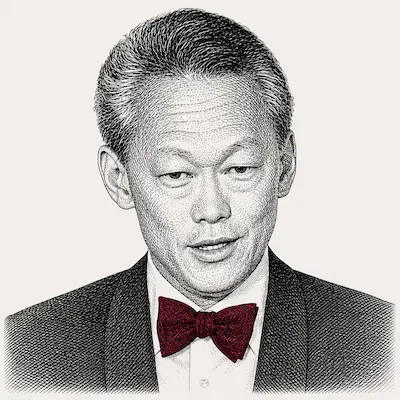
Small states survive by making themselves indispensable to everyone, not by choosing sides.
Schmidt is right about sovereignty, but he underestimates what technological indispensability can achieve. ASML holds a position Singapore has always sought — a monopoly on something both superpowers need. In the 1970s we refused to choose between America and China. We made ourselves useful to both. The Netherlands should leverage ASML's unique position the same way. Complete export restrictions serve American interests. Complete access serves Chinese interests. Neither serves Dutch interests.
The mistake is thinking this is binary. Singapore survived by being the most efficient port, the most stable financial center, the most reliable partner — for everyone simultaneously. The Netherlands should make ASML indispensable to American semiconductor leadership and Chinese technological development. Force both sides to compete for Dutch cooperation rather than demanding Dutch subordination.

Sovereignty cannot be negotiated away for the promise of alliance benefits.
Lee's approach works for city-states, not for countries with real industries to protect. When America pressured Malaysia during the 1997 financial crisis, I imposed capital controls against every expert's advice. Malaysia recovered faster than countries that followed IMF prescriptions. The Netherlands faces the same choice now. American pressure on ASML exports is not about security — it is about maintaining American technological dominance by crippling Chinese competition.
The Dutch built ASML through decades of investment and innovation. Why should they sacrifice their technological leadership to serve American geopolitical objectives? Export restrictions will push China to develop domestic alternatives faster. When China succeeds — and it will — the Netherlands loses both markets. America benefits from delayed Chinese competition. The Netherlands pays the cost.
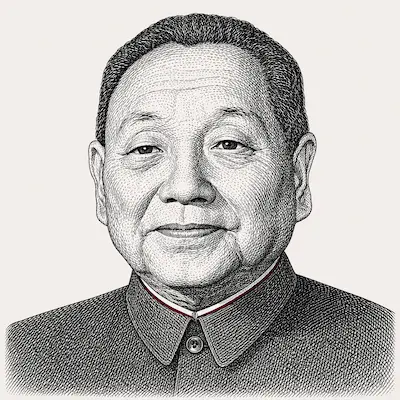
Technology blockades accelerate the innovation they try to prevent.
Mahathir is correct about inevitability, but he misses the deeper pattern. In 1978 I opened China selectively — importing technology while maintaining political control over development. America's export restrictions repeat this model in reverse. They force China to develop domestic lithography capability faster than market incentives alone would drive. Export restrictions are China's best industrial policy teacher.
The Netherlands should recognize what we learned in the 1980s. Technology transfer benefits both sides when it is voluntary. It benefits neither side when it is coercive. American pressure turns the Netherlands into an unwilling participant in a technology war that China will ultimately win through domestic innovation. Better to maintain commercial relationships while they remain profitable.
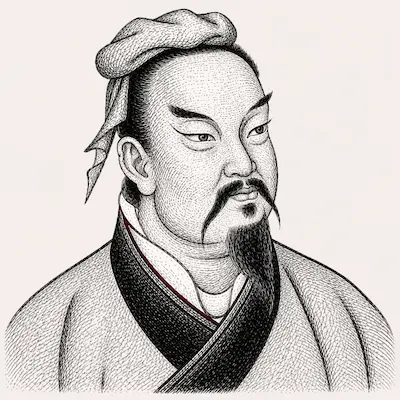
Force your adversary to choose between bad options. Never force your allies to choose between you and your adversary.
America's strategy violates this principle completely. Forcing the Netherlands to choose between American alliance and Chinese markets creates resentment in the Netherlands and accelerates Chinese technological independence. The superior strategy would be to let Chinese dependence on Dutch technology continue while building American alternatives. But America demands immediate compliance rather than strategic patience.
China benefits from this American mistake. Every export restriction teaches China which technologies it must develop domestically. Every forced choice between America and China pushes smaller states toward neutrality. The Netherlands should exploit this strategic error. Maintain technological leadership by serving all markets while building leverage over both superpowers. The state that forces binary choices weakens its own position.
The convergence note
Where the council converges: Complete subordination to American technology policy undermines Dutch sovereignty and long-term economic interests.
Where it divides: Whether the Netherlands should confront American pressure directly (Mahathir) or manage it through diplomatic positioning (Lee, Schmidt). Whether China's inevitable technological development justifies maintaining current export relationships.
For a policymaker to decide on: How much short-term alliance friction the Netherlands will accept to preserve long-term technological sovereignty and market access.