The Long Council
Who was selected, and why
What conditions would make a Ukraine ceasefire durable and acceptable?
The central tension
Whether durable ceasefires require territorial settlements acceptable to all parties versus whether strategic constraints and international guarantees can create stability despite unresolved territorial disputes.
Selected members
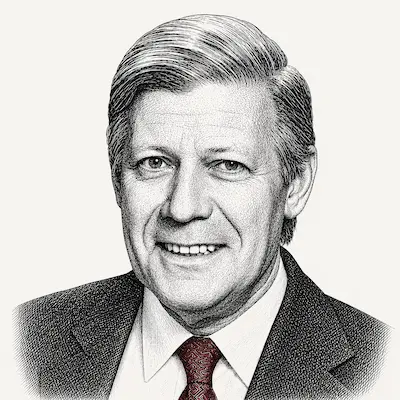
Helmut Schmidt
Will argue: Focus on strategic stability mechanisms rather than territorial resolution; ceasefire durability depends on both sides having credible deterrence and economic incentives to maintain peace.
Architect of détente-era European security arrangements, experienced in managing East-West tensions with territorial divisions unresolved (German partition).
Henry Kissinger
Will argue: Ceasefire must reflect underlying balance of power; durability requires both sides to see continued conflict as more costly than accepting current positions with face-saving mechanisms.
Master practitioner of balance-of-power diplomacy and ceasefire design, including Vietnam Paris Peace Accords and Middle East shuttle diplomacy.
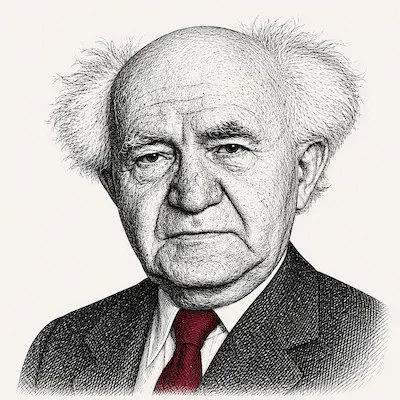
David Ben-Gurion
Will argue: Ceasefire durability requires the threatened party to build independent deterrent capacity; international guarantees must be backed by credible commitment mechanisms, not just declarations.
Managed multiple ceasefires and armistice agreements while building state capacity under continued external threat.
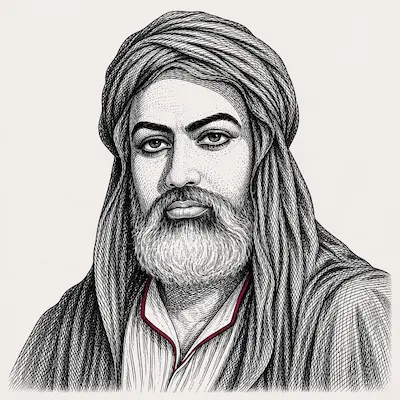
Ibn Khaldun
Will argue: Ceasefire will only endure if it strengthens rather than weakens the cohesion of the primary parties; external pressure can consolidate or fragment depending on internal solidarity.
Theoretical framework for why political settlements endure or collapse based on underlying group solidarity (asabiyya) and external pressure dynamics.
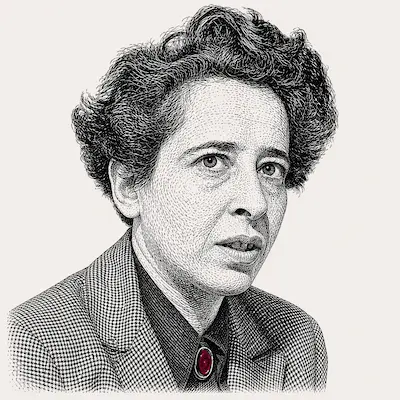
Hannah Arendt
Will argue: Any ceasefire that relies primarily on external coercion rather than internal acceptance will be unstable; durability requires that all parties retain sufficient political agency to choose continued compliance.
Analyst of legitimacy, power versus violence, and the conditions under which political authority endures.
Considered but not selected
Sun Tzu: Excellent on strategic positioning but ceasefire design requires cooperative as well as competitive elements; his adversarial framework is incomplete for this question. - Franklin D. Roosevelt: Strong on alliance management but limited documented experience with territorial ceasefires; his framework addresses wartime coalition management rather than post-conflict stability. - Nelson Mandela: Master of negotiated transitions but his framework assumes both sides accept democratic legitimacy as the ultimate framework; not applicable where fundamental legitimacy questions remain unresolved.