The Long Council
Who was selected, and why
Should companies have obligations beyond maximizing shareholder value?
The central tension
Should companies exist primarily to make money for owners, or do they owe something to workers, communities, and society too?
Where they stand
Shareholder primacy
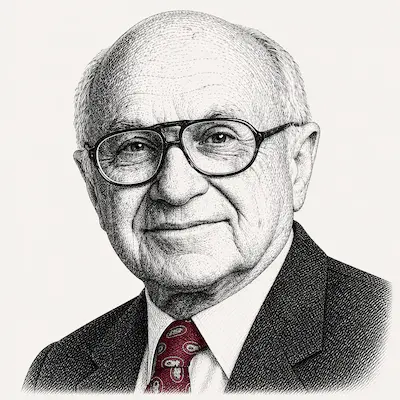 Milton Friedman
Stakeholder obligations
 John Rawls
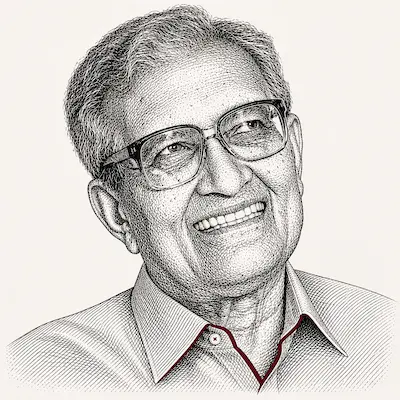 Amartya Sen
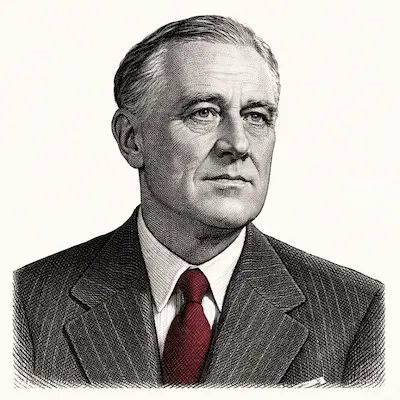 Franklin D. Roosevelt
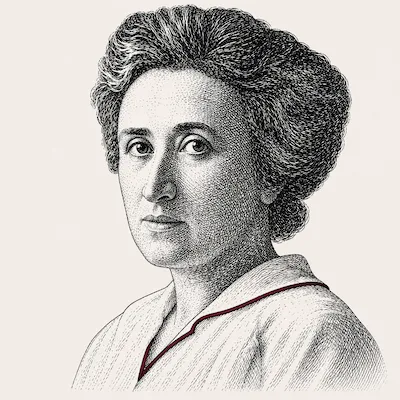 Rosa Luxemburg
Imbalance note
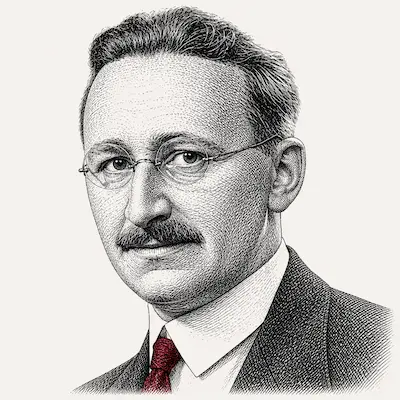 Friedrich Hayek
Shareholder primacy
Milton FriedmanFriedrich HayekStakeholder obligations
John RawlsAmartya SenFranklin D. RooseveltRosa LuxemburgResidual imbalance (4
Milton FriedmanJohn RawlsAmartya SenFranklin D. RooseveltRosa LuxemburgSelected members
Milton Friedman
Will argue: Executives who spend shareholders' money on social goals are committing a form of taxation without consent, undermining both property rights and democratic accountability.
His 1970 New York Times essay is the single most documented direct statement of shareholder primacy as a normative doctrine.
Friedrich Hayek
Will argue: No regulator or stakeholder board can possess the dispersed knowledge that prices aggregate; mandating social obligations replaces the market's information mechanism with the pretence of knowledge, producing unintended harm.
His knowledge-problem and spontaneous-order arguments provide a structurally distinct case against mandating corporate social obligations from outside the price system.
John Rawls
Will argue: Corporations are part of the basic structure of society and must be organised so that inequalities they generate benefit the least advantaged; shareholder primacy fails this test because it systematically concentrates gains at the top.
His difference principle directly governs whether economic inequalities in corporate governance are justified, and his basic-structure argument makes corporations a primary subject of justice.
Amartya Sen
Will argue: Measuring corporate performance only through shareholder returns ignores the real freedoms and capabilities of workers and communities that corporations enlarge or diminish, making shareholder primacy an inadequate and ethically incomplete framework.
His capability approach reframes the question: the test of corporate arrangements is not profit generated but capabilities expanded or destroyed in workers, communities, and affected populations.
Franklin D. Roosevelt
Will argue: When corporations externalise costs onto workers, communities, and the public, democratic government has both the right and the obligation to impose obligations that markets will not generate spontaneously, not to destroy capitalism but to make it durable.
His New Deal framework is the most consequential documented exercise in redefining corporate obligations through democratic politics, with documented rationale that saving capitalism required constraining it.
Rosa Luxemburg
Will argue: Stakeholder obligations and corporate social responsibility are real improvements but do not address the underlying mechanism by which capital appropriates labour and externalises costs onto communities; the question should be who owns and governs productive assets, not what obligations owners voluntarily accept.
She provides the structurally sharpest challenge to both poles, arguing that the shareholder-versus-stakeholder debate accepts the capitalist firm as the unit of analysis when the problem is the system of accumulation that produces it.
Considered but not selected
Elinor Ostrom: The commons framework is genuinely relevant to corporate externalities (pollution, resource extraction), but the specific question is about corporate governance obligations, not common-pool resource management. Her framework would add more at a session on environmental liability or commons governance than on the normative foundations of corporate purpose.
Eleanor Roosevelt: The UDHR's economic rights articles (22, 27) are relevant to whether corporations must respect workers' rights. However, her framework addresses the state's obligation to guarantee rights, not corporations' direct obligations; the application to corporate governance is rather than, and Sen covers the capability dimension more directly.
Kautilya: His documented framework on merchants in political roles, market regulation, and the obligation of commercial actors to the state's welfare purposes is relevant, but his unit of analysis is the ruler-state relationship, not the firm-society relationship; the extrapolation to modern corporate governance would need to be flagged throughout, reducing its analytical value at this table.