Should Taiwan aggressively strengthen their military capabilities in order to fend off China?
Built from documented writings, speeches, decisions and historical records. Council members argue from documented positions, applied to today's question.
Taiwan must build military strength but through strategic ambiguity that raises occupation costs without revealing defensive plans.
Deng establishes that weak states invite attack while Sun Tzu shows that visible preparations help attackers plan. Schmidt proves alliance credibility matters more than individual capability while Lee demonstrates survival through indispensability. All agree military strength is necessary but pure capability cannot substitute for strategic positioning.
The split centers on transparency versus ambiguity in military development and whether alliance dependence or technological leverage provides better protection.
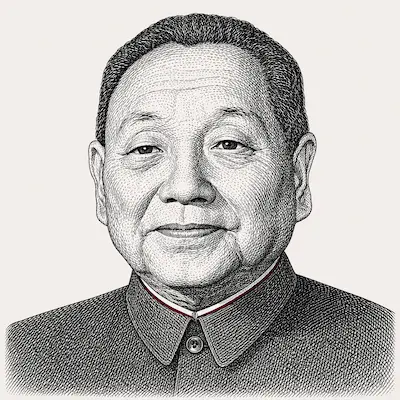
Military deterrence requires economic capacity — weak states invite predation.
When I ordered the Four Modernizations in 1978, I documented the central truth: national defense is impossible without industrial, agricultural, and technological foundations. Taiwan faces the same strategic reality we faced — you cannot defend territory without the comprehensive national power to make aggression costly. My experience across three decades demonstrates that economic weakness invites precisely the military pressure Taiwan now confronts. The island's semiconductor capabilities provide temporary strategic value, but defensive posture alone cannot indefinitely deter a continental power.
The essential decision is not whether to strengthen military capabilities — that is inevitable — but how to sequence development to maximize deterrent effect while minimizing provocation. We achieved nuclear capability in 1964 while maintaining that our weapons were defensive. We built missile forces while emphasizing peaceful development. Strategic ambiguity about capabilities, combined with clear demonstration of resolve, proved more effective than either pure transparency or pure secrecy.
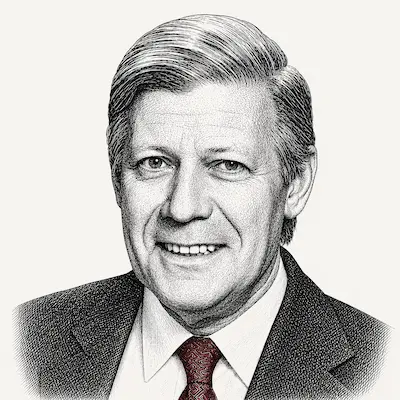
Unilateral deterrence by a small state against a superpower is inherently unstable.
Deng makes the classic authoritarian error — confusing individual capability with collective security. My experience managing the NATO Double-Track Decision from 1979 demonstrates that credible deterrence requires alliance embedding, not national military buildup. Taiwan's strategic situation parallels West Germany's during the Cold War: a divided territory facing an overwhelming continental neighbor. Our survival depended not on matching Soviet power directly but on making any attack trigger broader consequences the adversary could not control.
The Pershing II deployment I drove through German political opposition was effective precisely because it was multilateral — the missiles were German-based but alliance-operated, creating automatic escalation that deterred Soviet pressure. Taiwan's challenge is identical: individual military capability, however advanced, cannot substitute for alliance credibility. The United States must believe Taiwan's defense serves American interests; Taiwan's military investments must reinforce that alliance commitment rather than substituting for it.
Military buildup without alliance framework risks the classic deterrence failure — appearing threatening enough to justify preemptive action while remaining too weak to prevent it.
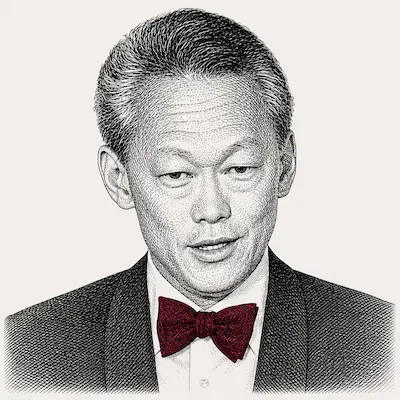
Small states survive by making themselves indispensable, not by asserting rights.
Schmidt misses the deeper strategic logic I documented across fifty years of navigating great power competition. Military capability is necessary but insufficient — Taiwan's survival depends on becoming so valuable to multiple powers that none can afford its destruction. Singapore faced a similar challenge: Chinese-majority population, Malay neighbors who expelled us, economic dependency that could have meant political subordination. We survived through careful positioning that made us useful to Americans, Chinese, Malaysians, and Europeans simultaneously.
Taiwan possesses what Singapore never had: technological capabilities that both superpowers require. The semiconductor industry is not just economic leverage — it is strategic infrastructure that makes Taiwan's protection a Chinese as well as American interest. The challenge is managing this dual indispensability without triggering the kind of alliance commitment that forces binary choices.
Military strengthening should focus on raising the costs of occupation, not the prevention of attack. The goal is making Taiwan difficult to digest, not impossible to swallow. I maintained Singapore's military capability throughout Chinese normalization and American alliance partnership — defensive deterrence that reassured everyone while threatening no one.
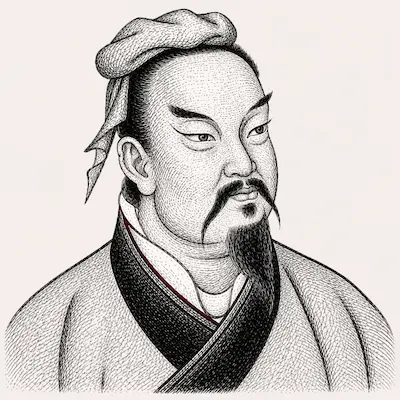
The highest strategy breaks the adversary's resolve without direct confrontation.
Lee correctly identifies the strategic principle but misapplies the method. All warfare is based on deception — appearing strong when weak, weak when strong. Taiwan's current approach violates this fundamental precept by clearly signaling both capability and limitation simultaneously. Military demonstrations that reveal precise defensive preparations provide the intelligence necessary for effective attack planning.
The superior strategy combines three elements I documented in the Wu campaigns: first, intelligence superiority that knows the adversary's intentions before they crystallize into action; second, diplomatic positioning that divides potential adversaries rather than unifying them; and third, defensive preparations that remain ambiguous until tested. Taiwan's technological capabilities provide the first element. The American alliance provides the second. Military modernization must achieve the third — credible deterrence through uncertainty about defensive capabilities and costs.
The deepest principle applies here: know yourself and know the enemy. Taiwan knows its limitations; the question is whether it accurately understands Beijing's constraints. Economic interdependence, domestic political pressures, and international isolation costs all affect adversary calculations. The side that better assesses these invisible factors — not the side with superior visible military capability — achieves strategic advantage.
The convergence note
Where the council converges All members agree that Taiwan must strengthen defensive capabilities — pure diplomatic solutions without military backing lack credibility against determined adversaries.
Where it divides The council splits on sequencing and alliance dependence: Deng and Sun Tzu favor strategic ambiguity with independent capability; Schmidt argues for alliance embedding; Lee advocates technological indispensability over military confrontation.
For a policymaker to decide on The fundamental question of risk tolerance: whether to prioritize maximum deterrent effect (which may be provocative) or minimum provocation (which may appear weak) — a judgment that depends on adversary intentions that cannot be known with certainty.