Built from documented writings, speeches, decisions and historical records. Council members argue from those positions, applied to today's question.
- 1Oxfam says the richest 0.1%, about 8 million people, emit more carbon than the poorest 3.5 billion combined.
- 2Oxfam's report says the disaster preparedness and recovery market is projected to grow from $70bn to $92bn a year by 2029.
- 3Oxfam says 217 corporations in its index made an average $1.8bn profit and paid $1bn in dividends last year.
- 4Oxfam says annual emissions of the richest 1% will cause 1.9m excess deaths from heat, mostly in low- and middle-income countries.
The council treats these as reported facts, not settled truth. The members supply the reasoning; the asker supplied the sources.
The richest 0.1%, roughly 8 million people, caused this crisis and now profit from fixing it. They should fund recovery through levies tied to emissions, paid directly to the communities harmed.
Sen traces 1.9 million heat deaths to a seized entitlement: the atmosphere's capacity was claimed by the few, leaving the poor nothing to survive on. Luxemburg sharpens this into mechanism: the $92bn disaster recovery market and $1bn in dividends from 217 corporations show capital rebuilding what it destroyed, at a profit. Maathai warns that money without local control just repeats the extraction, this time under a green label. Keynes answers with design: graduated levies on emitters, pooled through an institution with affected states at the table, not guilt but a mechanism that pays out.
Hayek and Ostrom both reject letting one authority price the damage and distribute the fund. Hayek wants a guaranteed floor for victims without a committee-calculated reparations schedule; Ostrom wants the levy raised centrally but distributed through local institutions the affected communities actually control.
- 1Levy the 217 corporations and the richest 0.1% identified by Oxfam, tied directly to their emissions share, to fund recovery.
- 2Disburse recovery funds through local institutions that affected communities control, not through corporations or donor intermediaries.
- 3Set a guaranteed floor payment for disaster victims without assigning a committee the power to calculate a full reparations schedule.
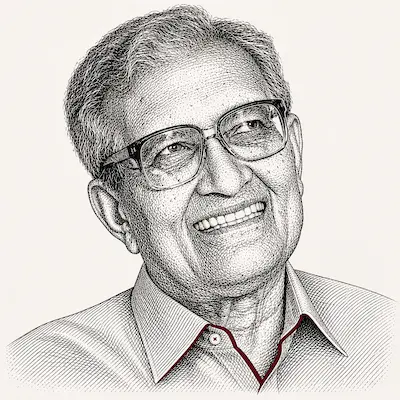
Climate deaths are entitlement failures, and emitters owe correction.
Oxfam's 1.9 million excess heat deaths are not a natural disaster statistic. They repeat the structure I found in the 1943 Bengal famine: food existed, exports continued, but the poor had no entitlement to claim it. Today the atmosphere's absorptive capacity has been claimed by the richest 0.1%, leaving the poor no entitlement to a stable climate. The polluter did not merely fail to help. The polluter extinguished the very entitlement the victim needed to survive.
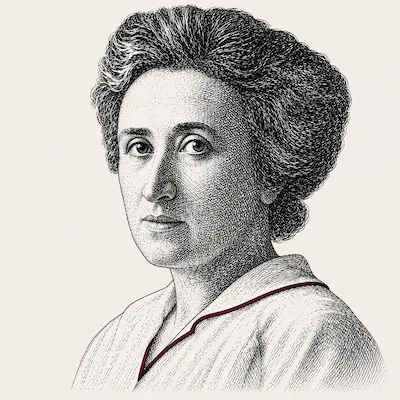
Disaster recovery markets prove capital profits from its own wreckage.
Sen names the failure correctly but stops at distribution. I call it by its mechanism. In 1913 I argued capitalism cannot reproduce itself on a closed base; it must expand into what it has not yet destroyed, then profit from rebuilding what it destroys. Oxfam's $92bn recovery market by 2029 is exactly this logic: the 217 corporations paying $1bn in dividends are not an aberration from capitalism, they are capitalism completing its circuit. No tax on the rich repairs a system built to monetise its own wreckage.
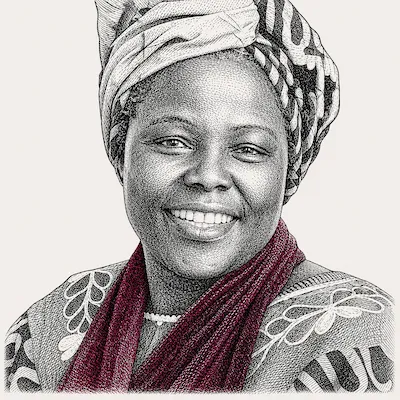
Recovery money must answer to the people who suffer, not donors.
Luxemburg is right that the system profits from its wreckage, but I watched what happens when outside money arrives without local accountability. In 1989 I fought the Times Media Complex because public resources were being signed away by men who never consulted the people who depended on that land. The same pattern threatens climate recovery financing: billions flow through corporations and governments while the rural women who lose water and soil have no seat at the table. Payment without democratic control becomes extraction wearing a green label.
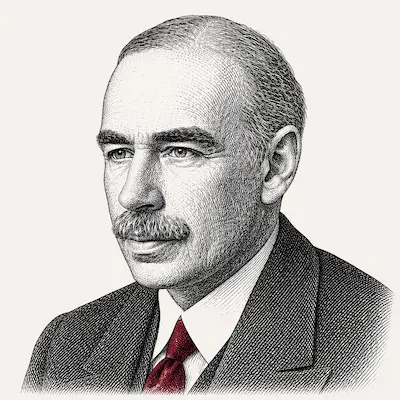
Pool the risk internationally; don't moralise it into paralysis.
Maathai asks a fair question, and the answer is institutional design, not sentiment. In 1944 at Bretton Woods I proposed an International Clearing Union with symmetric obligations, because I knew a system that lets surplus accumulate without responsibility will eventually require someone to pay for the mess. Oxfam's 217 corporations are the modern surplus-holders. A climate recovery fund financed by graduated levies on emitters, governed with affected states at the table, insures against the worst case. Guilt does not rebuild a flooded village. Institutions do.
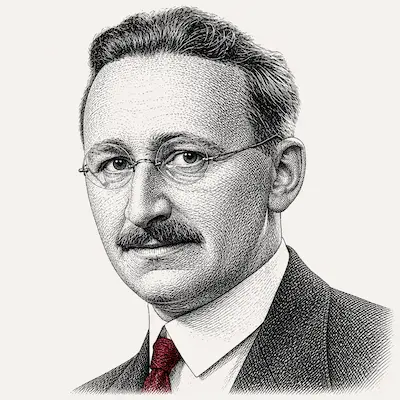
A floor for victims, yes; a global blame-tax, no.
Keynes wants a designed levy set by some international authority, and I have spent my life warning against exactly that confidence. In 1945 I argued no planner can possess the dispersed knowledge needed to price carbon damage across millions of local conditions correctly. A guaranteed floor for disaster victims is defensible, I have supported a minimum income myself. But a reparations schedule calculated by committee, targeting Oxfam's 0.1%, will misprice harm, distort investment, and hand enormous discretionary power to whoever administers it.
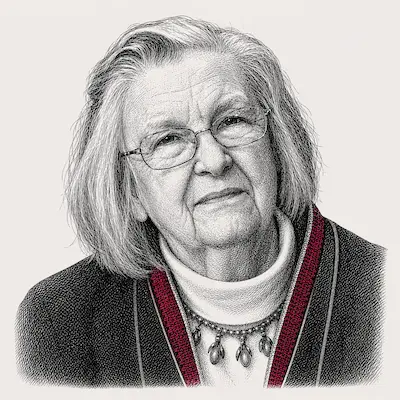
No single payer works; nested institutions must share the bill.
Hayek is right that no central authority can price this correctly, and Keynes is right that someone must still pay. Both miss the third option I spent forty years documenting in fisheries and irrigation systems: durable governance nested across scales, with the people who bear the cost holding real rule-making power. Oxfam's data shows emissions concentrated at the top and deaths concentrated at the bottom; a single global wealth tax or a single clearing union cannot encode that asymmetry locally. Funding must be layered, with affected communities co-designing the rules, not merely receiving transfers.
The convergence note
Where the council converges: All six accept Oxfam's core finding: the wealthy who caused the crisis are capturing the recovery economy too. Each insists payment must reach affected communities, not vanish into unaccountable institutions.
Where it divides: Sen and Luxemburg want the emitters' obligation named and enforced; Hayek resists any centrally calculated reparations schedule. Keynes and Ostrom split on whether one global institution or many local ones should hold the money.
For a policymaker to decide on: Fund recovery through graduated emitter levies, but choose between a centralised clearing mechanism (Keynes) and nested, community-governed funds (Ostrom) as the disbursement architecture.