Who should pay for the added cost of sustainable kerosene in Europe?
Built from documented writings, speeches, decisions and historical records. Council members argue from documented positions, applied to today's question.
Airlines should charge passengers for sustainable fuel costs, but with progressive pricing that protects low-income access.
Schmidt and Thatcher agree that hiding SAF costs through subsidies destroys price signals needed for innovation. Keynes frames climate policy as insurance against catastrophic uncertainty that requires collective payment. Ostrom shows how polycentric governance lets airlines, states, and passengers each adapt within EU frameworks.
Sen exposes the fatal flaw: flat surcharges make aviation a luxury good. Progressive pricing preserves market signals while protecting capabilities.
- 1Implement progressive SAF surcharges that scale with ticket price or cabin class rather than flat fees per passenger.
- 2Maintain airline responsibility for SAF cost pass-through to preserve price signals that drive fuel efficiency innovation.
- 3Establish EU coordination mechanisms allowing member states to adapt SAF pricing implementation while preserving single market competition.
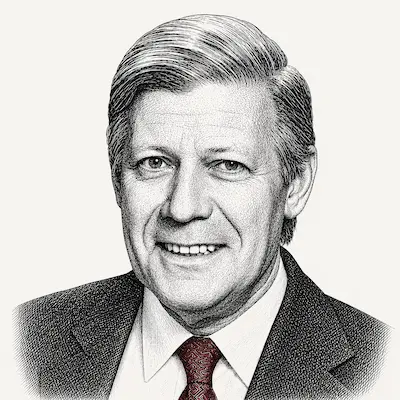
Airlines pay, passengers choose, markets clear.
The ReFuelEU mandate creates the energy dependency we fought to escape in the 1970s. When OPEC embargoed oil in 1973, I learned that energy transitions imposed by external forces destroy sovereignty. Airlines passing SAF costs to passengers through surcharges is the correct mechanism. It preserves choice, maintains market signals, and avoids the fiscal illusion of government subsidies. In 1978 I diversified Germany's energy mix not through state funding but through price signals that made alternatives profitable. Let fuel costs reflect fuel reality.
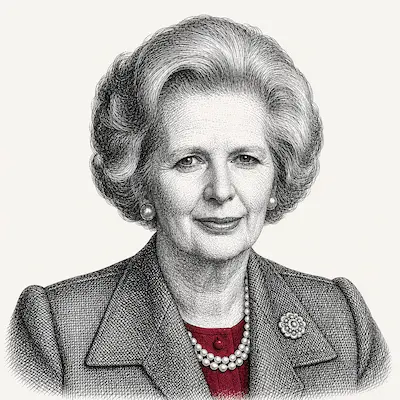
Government mandates require market pricing, not market distortion.
Schmidt is right that passengers should pay, but the ReFuelEU mandate itself distorts the price discovery mechanism. When I privatised British Gas in 1986, I insisted that environmental costs be internalised through pricing, not subsidised through regulation. The €1-24 surcharge preserves the market signal that sustainable fuel costs more. Government subsidies would hide the true cost and delay innovation. Airlines compete on total ticket price; passengers choose based on real costs. This drives efficiency faster than any subsidy programme.
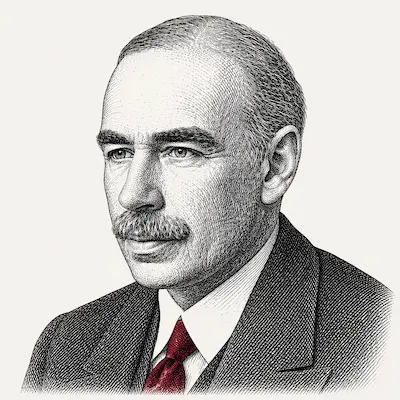
Climate policy is insurance against catastrophic uncertainty.
Thatcher misses the insurance principle. We cannot assign probabilities to climate breakdown, so we cannot optimise for expected outcomes. In 1940 I designed compulsory savings to finance the war without inflation because survival required collective action that individual choice alone could not deliver. The SAF mandate represents the same logic: paying costs now to avoid scenarios where commercial aviation becomes impossible. Passenger surcharges spread the insurance premium across those who benefit from aviation. The alternative is systemic collapse.
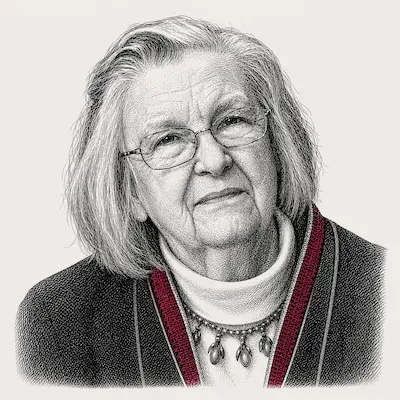
Aviation fuel is a global commons requiring polycentric governance.
Keynes understands the collective action problem, but the EU mandate alone cannot solve it. In my climate research, I found that polycentric governance works better than single authorities for complex transitions. Airlines, airports, fuel producers, and passengers each control different pieces of the aviation system. The EU sets the framework; member states adapt implementation; airlines choose surcharge levels; passengers respond through booking decisions. This creates redundancy and experimentation across multiple scales rather than betting everything on one regulatory approach.
Regressive pricing undermines the capabilities green transition should protect.
Ostrom's polycentric approach works, but the surcharge mechanism fails on distributional grounds. Fixed surcharges of €1-24 per ticket are regressive taxes that reduce lower-income travelers' capability to maintain family connections, access education, or pursue economic opportunities. In my work on entitlements, I found that policies designed without attention to who bears the costs often destroy the freedoms they aim to protect. Green transition should expand human capabilities, not concentrate aviation access among the wealthy while making climate protection a luxury good.
The convergence note
Where the council converges: The transition to sustainable aviation fuel is necessary and the costs must be allocated somewhere.
Where it divides: Schmidt and Thatcher favour passenger payment through market mechanisms. Keynes supports collective insurance funding. Ostrom emphasises institutional coordination. Sen warns against regressive distribution.
For a policymaker to decide on: Whether to maintain passenger surcharges, shift costs to general taxation, or design progressive pricing that protects access.