How can Australia resolve the issue of indigenous poverty and elevate indigenous culture as a proud emblem of Australian identity?
Built from documented writings, speeches, decisions and historical records. Council members argue from documented positions, applied to today's question.
Indigenous advancement requires simultaneous material redistribution and cultural elevation, with genuine power-sharing in decision-making over land, resources, and governance rather than consultation alone.
Sirleaf's post-conflict experience emphasizes sequencing basic services with symbolic transformation to maintain legitimacy, while Mandela argues that non-indigenous Australians must see indigenous advancement as enhancing rather than threatening national prosperity. Sen demonstrates that targeted intervention addressing both individual capabilities and collective empowerment can overcome systematic institutional disadvantage that appears neutral but produces unequal outcomes.
Fanon fundamentally challenges whether colonial structures can be reformed rather than replaced, arguing that cultural recognition without economic decolonization merely stabilizes extraction while creating split consciousness among indigenous populations.

Post-conflict reconstruction requires sequencing material progress with symbolic transformation.
My experience rebuilding Liberia from complete state collapse taught me that indigenous advancement cannot wait for perfect conditions or complete consensus. When I took office in 2006, Liberia had no functioning institutions, no electricity grid, no credible courts — yet we had to demonstrate immediate progress to maintain legitimacy. We sequenced carefully: first, basic services and economic opportunity; then, accountability mechanisms like the Truth and Reconciliation Commission; finally, cultural and educational investments that rebuilt pride alongside capacity.
Australia faces a parallel challenge. Indigenous poverty is not merely an economic problem but a legitimacy crisis for the Australian state. The approach that worked in post-conflict Africa applies here: material advancement and cultural recognition must proceed together, not sequentially. Universal basic services, land rights, and genuine power-sharing in resource extraction create the foundation. But symbols matter as much as substance — indigenous culture elevated in education, public ceremonies, and national representation signals that this is not charity but restitution. External frameworks like the UN Declaration on Indigenous Rights provide accountability, but success requires Australian-designed solutions adapted to Australian conditions.
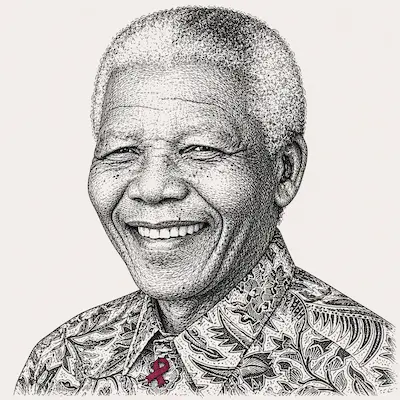
Reconciliation requires that former enemies can envision a shared future, not just coexistence.
Ellen, you raise the hardest question about transformation — resistance from those who must surrender unearned advantage. In South Africa, I learned that reconciliation cannot be imposed; it must be chosen, and choice requires that each group sees its survival and prosperity as compatible with justice for the other. The Springbok jersey moment worked not because it was symbolic but because it was strategic — white South Africans needed to see that the new South Africa was theirs too, not just a transfer of power.
Australia's challenge is more complex than mine was. Apartheid was a legal system that could be changed with new laws. Indigenous dispossession is structural — embedded in property relations, resource extraction, and cultural institutions that have operated for two centuries. But the same principle applies: the non-indigenous majority must see indigenous advancement as enhancing, not threatening, Australian prosperity and identity. This means demonstrating that indigenous knowledge systems, sustainable land management, and cultural diversity make Australia stronger globally, not just more just domestically. Reconciliation succeeds when it is aspirational rather than punitive — building the country everyone wants to live in.
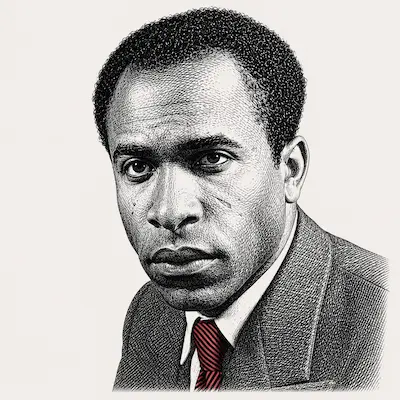
Cultural recognition without economic decolonization transfers symbolic power while maintaining material extraction.
Nelson, your reconciliation model addresses the symptoms while leaving the colonial structure intact. In Algeria, I observed that the colonial system's genius was its ability to adapt — offering cultural recognition and political representation while preserving the economic relationships that matter. Australia's indigenous poverty is not accidental; it is the necessary outcome of a settler economy built on land appropriation and resource extraction that continues today.
The psychological dimension is decisive. Indigenous Australians internalize a split consciousness — valuing their own culture while operating within institutions that systematically devalue it. This produces the educated indigenous elite who can navigate white Australian structures but cannot transform them, alongside the majority who remain excluded entirely. Cultural celebration without structural change — acknowledgments of country, indigenous art in museums, token representation — actually stabilizes the system by providing the appearance of inclusion while maintaining extraction.
True advancement requires dismantling the colonial economic relationship: indigenous control over traditional lands, resource revenue sharing that reflects actual contribution, and governance structures where indigenous communities are not consultants but decision-makers. The resistance Ellen identifies is rational — the current arrangement benefits the settler majority materially. They will not surrender this through moral persuasion alone.
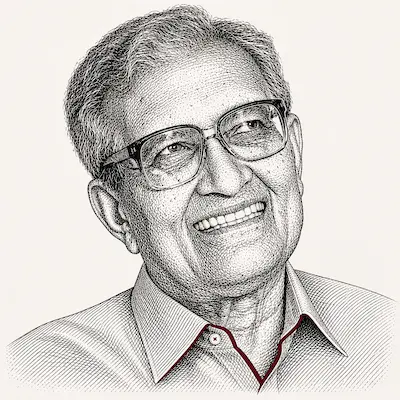
Indigenous advancement requires expanding capabilities while strengthening group solidarity, not choosing between them.
Frantz raises the essential structural question, but I would argue that individual capabilities and collective empowerment are complementary, not contradictory. The capability approach asks: what are people actually able to do and be? For indigenous Australians, systematic disadvantage in health, education, economic opportunity, and political participation represents capability deprivation — but so does the inability to practice culture, speak language, and maintain connection to country.
My research demonstrates that group disadvantage requires targeted intervention, not just universal policies. The "missing women" phenomenon showed how gender discrimination operates through seemingly neutral institutions — markets, families, education systems — that systematically undervalue women's contributions. Indigenous disadvantage follows the same pattern: institutions that appear neutral systematically produce unequal outcomes because they embed assumptions about what kinds of knowledge, land use, and social organization are valuable.
The solution is expanding capabilities at both individual and collective levels. Indigenous Australians need access to mainstream health, education, and economic systems that deliver actual outcomes, not just symbolic inclusion. But they also need the capability to maintain and develop their own cultural institutions — land management systems, educational traditions, economic relationships — that operate alongside, not subordinate to, mainstream structures. This requires resource transfers and governance arrangements that strengthen indigenous communities' capacity for self-determination while ensuring individual members can participate fully in Australian society if they choose.
The convergence note
Where the council converges All members accept that indigenous advancement requires both material redistribution and cultural elevation, proceeding simultaneously rather than sequentially, with genuine power-sharing in decision-making rather than consultation alone.
Where it divides The council splits on whether existing Australian institutions can be reformed to deliver justice (Sirleaf, Mandela, Sen) or whether colonial structures require fundamental replacement (Fanon). This reflects the deeper question of whether reconciliation and transformation are compatible or contradictory strategies.
For a policymaker to decide on How far to push institutional change before triggering backlash that destroys the political coalition necessary for any change at all — the strategic judgment that determines whether transformation advances through reform or stalemates in resistance.