Built from documented writings, speeches, decisions and historical records. Council members argue from documented positions, applied to today's question.
Promote civic belonging; stop before the state decides which culture counts as real.
Atatürk and Lee Kuan Yew both built functional states from populations with no shared political floor. Lee's own regret is instructive: Mandarin promotion worked; erasing Hokkien and Teochew was irreversible collateral. Confucius draws the operational line, noting that law-enforced identity produces a population that wears the costume but feels no commitment. Sen traces where costume-wearing ends: in 2006 he showed how reducing a person to one identity, Hindu or Muslim, Bengali or Bihari, made communal violence logical rather than aberrant.
The split is not over whether civic identity matters. It is over who draws the boundary between a shared language and a banned one.
- 1Teach a shared civic language in public schools; prohibit state bans on minority languages spoken at home.
- 2Publish explicit criteria distinguishing civic promotion from cultural prohibition, requiring legislative approval for each instrument used.
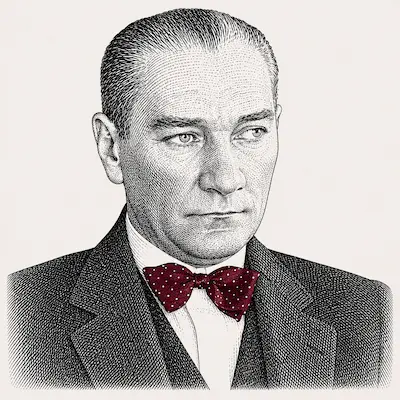
Without a shared identity, a new state has no floor to stand on.
In October 1923 I inherited the ruins of an empire whose populations had no common political identity, only a shared religion that had just lost its institutional head. I did not ask whether to promote Turkish identity. I asked how fast. The alphabet, the civil code, the dress reforms were not cultural preferences. They were the architecture of a people who would govern themselves. A state that leaves identity to chance leaves itself to chance.
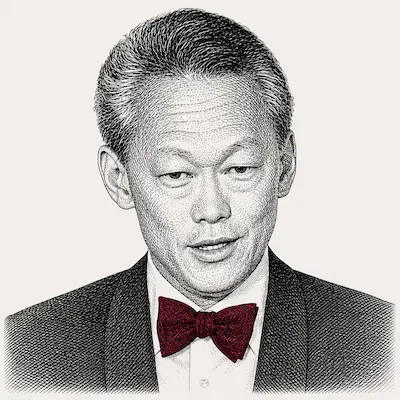
Engineered identity saved Singapore; it also destroyed things I cannot restore.
Atatürk is right that a state without cohesion is a state on borrowed time. In August 1965 I stood before cameras weeping, because Singapore had been expelled from Malaysia with no army, no water supply, no hinterland, and no shared sense of what a Singaporean even was. I built that identity deliberately: English as the common medium, national service for every young man, HDB housing that put Chinese, Malay, and Tamil families on the same floors. It held. But when I imposed Mandarin on Chinese Singaporeans in 1979, I erased Hokkien and Teochew in a single generation. I did not intend that. The method works. The precision does not.
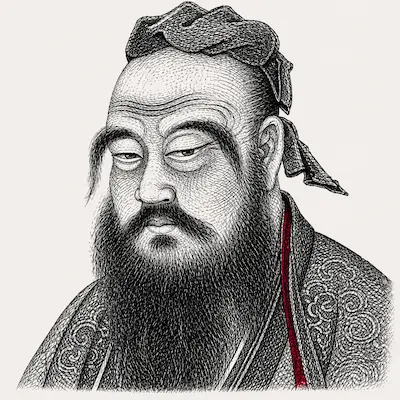
States that command identity produce obedience; states that cultivate it produce citizens.
Lee Kuan Yew names the exact failure I warned against. When I served as Minister of Justice in Lu and then resigned, I left because a ruler who neglects governance for three days of entertainment has already told his people that ritual is performance, not commitment. In the Analects I recorded the difference plainly: govern by law and punishment, and the people avoid shame but feel none; govern by virtue and ritual, and the people develop internalised standards. The state that promotes identity through decree gets a population that wears the costume. The state that cultivates it through education and example gets a people who believe it.
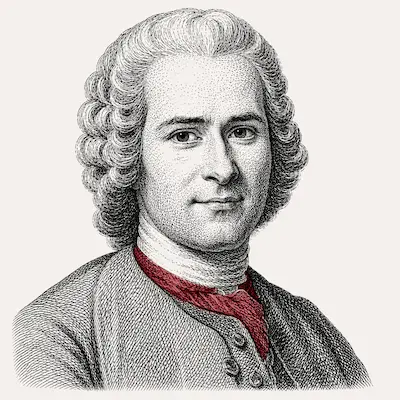
A state that names the people's will for them has already stolen it.
Confucius asks who discovers the general will before education shapes the people toward it. The question contains the trap. The state that says "we will educate you into your true identity" has already decided what that identity is. That is not discovery; it is imposition wearing the clothes of cultivation. I watched what happened when my ideas about popular sovereignty were taken by men who claimed to know what the people truly willed: the guillotine followed. The general will must emerge from genuine civic participation, not be handed down by a government that has confused its own preferences with the common good.
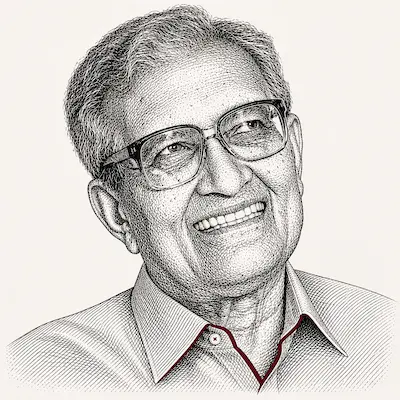
Singular state-promoted identity is not a unifier; it is a precursor to exclusion.
Rousseau identifies the mechanism of capture. I can name where it leads. When states promote a single national identity through language, religion, or civilisational narrative, they do not describe their citizens. They select among them. In 2006 I traced how the political reduction of a person to one identity, Hindu or Muslim, Bengali or Bihari, made violence not just possible but logical. Every person holds multiple identities simultaneously: profession, language, region, faith, family. A government that insists on one overrides the others by force. Civic belonging is legitimate. Cultural singularisation is something else entirely.
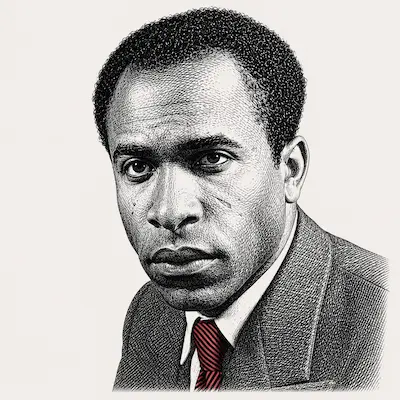
State-promoted identity in post-colonial societies reproduces the colonial order it claims to replace.
Sen asks whether the post-colonial state corrupts identity. It does not corrupt it by accident. It corrupts it by structure. When I resigned from Blida-Joinville Hospital in 1956, I had spent two years watching a psychiatric system built on the assumption that Arab patients were categorically different from European ones. Independence transferred the flag. It did not transfer the assumption. The national bourgeoisie that inherits the colonial state uses cultural promotion the same way the coloniser did: to name which citizens are real and which are problems. Genuine national consciousness is not delivered by a ministry. It is built through collective struggle, and it belongs to the people who built it.
The convergence note
Where the council converges: Some form of civic belonging is necessary. A state with no shared foundation cannot govern or hold together.
Where it divides: Atatürk and Lee Kuan Yew say top-down identity construction is sometimes the only viable path. Rousseau, Sen, and Fanon say the state that constructs identity from above systematically misrepresents or suppresses the people it claims to unify. Confucius sits between them: promotion is legitimate, but imposition produces only the appearance of commitment, and the state cannot tell the difference until it is too late.
For a policymaker to decide on: Which instruments are civic and which are coercive: teaching a shared language in schools differs from banning minority languages at home. Draw that line precisely, or the policy will cross it without noticing.