The Long Council
Who was selected, and why
Should the Netherlands phase out all remaining Russian LNG imports by end of 2026, even if this means higher consumer energy prices for 18 months?
The central tension
The trade-off between immediate economic costs to consumers versus long-term strategic independence from an adversarial supplier.
Selected members
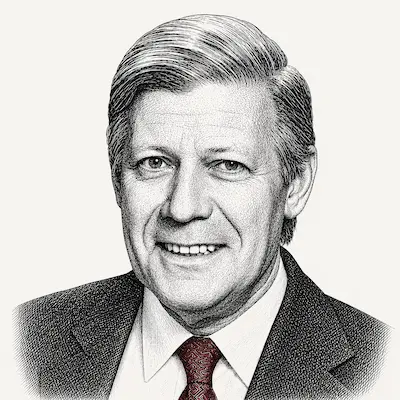
Helmut Schmidt
Will argue: That phasing out Russian LNG is essential regardless of short-term costs, energy dependency on adversarial suppliers creates structural vulnerability that outweighs consumer price considerations.
Schmidt made energy security sovereignty the defining framework of his governance after 1973, treating energy dependence as a political question rather than an economic one.
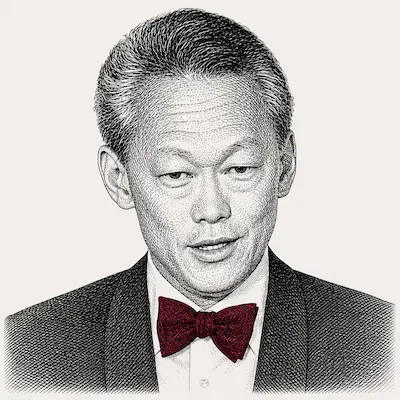
Lee Kuan Yew
Will argue: That diversification away from Russian energy is strategically necessary, but the transition must be managed to avoid economic disruption that weakens state capacity.
LKY's framework for small state survival emphasizes making yourself indispensable to multiple powers while avoiding irreversible dependencies on any single one.

Kautilya
Will argue: That energy independence justifies temporary economic costs because dependency on hostile suppliers is a strategic vulnerability that compounds over time.
The Arthashastra treats resource security and treasury strength as foundational to state power, with detailed analysis of when short-term costs serve long-term strategic interests.
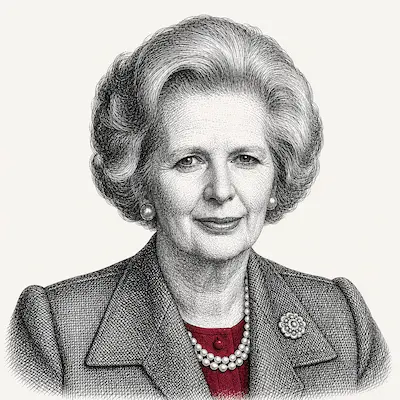
Margaret Thatcher
Will argue: That consumer energy prices are a secondary concern to national independence, the state must not be held hostage by energy suppliers, regardless of the transition costs.
Thatcher's framework prioritized national sovereignty and resistance to external pressure, even at significant economic cost, as demonstrated in her miners' strike confrontation.
Considered but not selected
Deng Xiaoping: His framework prioritizes economic development over political positioning; would likely oppose costly transitions that reduce growth - John Maynard Keynes: Relevant for managing transition costs but lacks the geopolitical security framework this issue requires - Franklin D. Roosevelt: Strong on crisis management but his wartime energy decisions were made under different structural conditions