The Long Council
Who was selected, and why
Should the Dutch government reopen the Groningen gas field to secure energy supplies, and how should it compensate affected residents?
The central tension
The trade-off between energy security/sovereignty and protection of affected citizens, complicated by the irreversibility of geological damage and the legitimacy of government decisions that impose concentrated costs for diffuse benefits.
Selected members
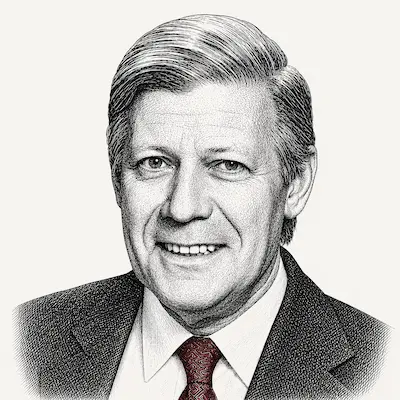
Helmut Schmidt
Will argue: Energy security justifies difficult decisions, but government must take full responsibility for citizens who bear the costs of national security choices.
Energy security was his defining governance challenge; established energy dependency as a sovereignty question requiring long-term strategic planning.
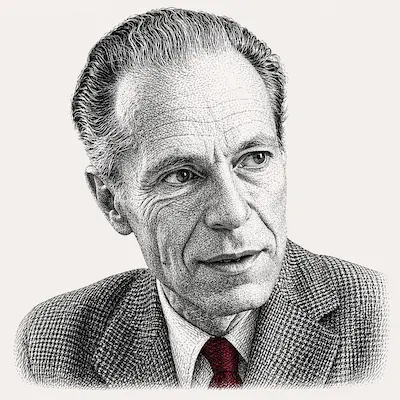
Albert O. Hirschman
Will argue: Irreversible decisions like geological damage require qualitatively higher burden of proof than reversible energy alternatives.
The irreversibility threshold principle directly applies; once geological damage is done through extraction, it cannot be undone, requiring higher justification standards.

Elinor Ostrom
Will argue: Legitimate resource extraction requires meaningful participation by affected communities in decision-making and benefit-sharing arrangements.
Common pool resource governance under conditions where local costs (earthquakes) serve broader benefits (national energy), with documented design principles for legitimate resource management.

Eleanor Roosevelt
Will argue: Citizens have rights to safety and property that government cannot override for collective benefit without due process and just compensation.
International human rights framework provides standards for government obligations to protect citizens from harm, even when pursuing legitimate state interests.
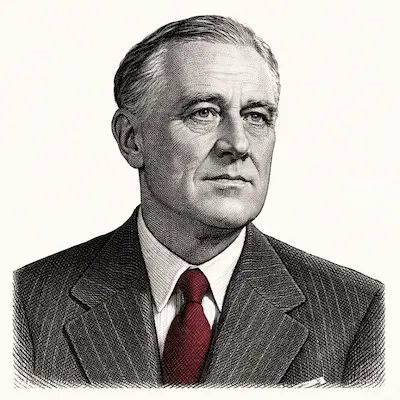
Franklin D. Roosevelt
Will argue: Government can make hard choices for national interest but must build public consent through transparent process and generous compensation for those bearing costs.
Master of coalition-building across incompatible interests and managing trade-offs between immediate security needs and citizen welfare during crisis.
Considered but not selected
Wangari Maathai: Environmental framework relevant but limited documented engagement with extractive industries in developed country contexts - Margaret Thatcher: North Sea oil experience relevant but her framework subordinates compensation to market mechanisms in ways that don't address this case's specific dynamics - Kautilya: Taxation theory applicable but ancient framework requires too much extrapolation for modern geological and democratic contexts