The Long Council
Who was selected, and why
Is the rise of the AfD a threat to German democracy, or a sign that it functions?
The central tension
Is a democracy healthier when it absorbs extremist parties into competition, or when it contains them through legal and institutional limits?
The two poles
Democracy absorbs and corrects
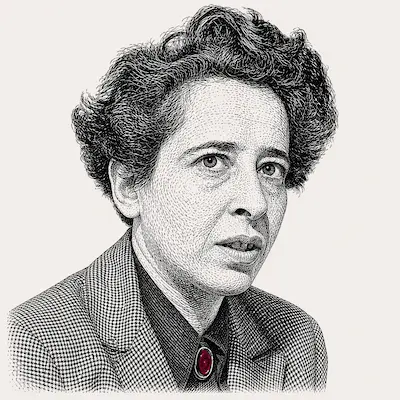 Hannah Arendt
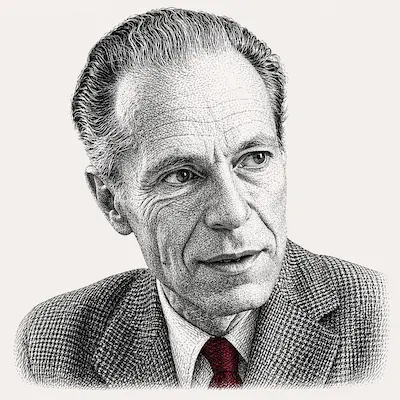 Albert O. Hirschman
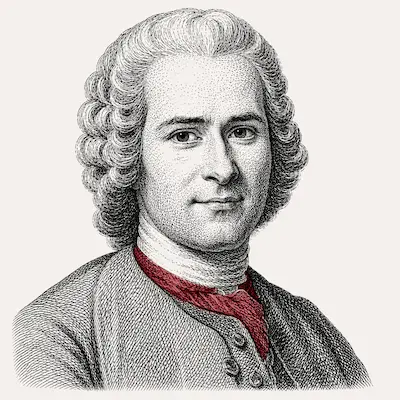 Jean-Jacques Rousseau
Institutions must contain and resist
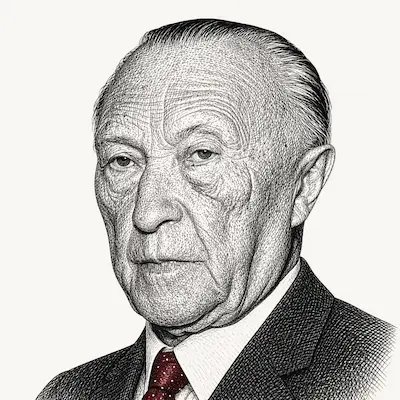 Konrad Adenauer
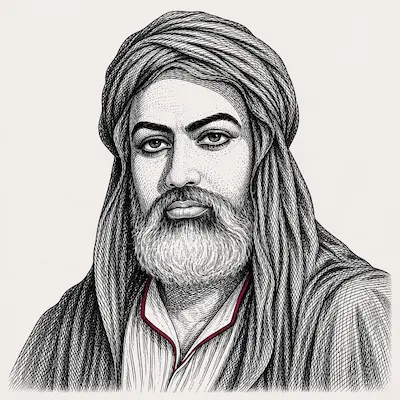 Ibn Khaldun
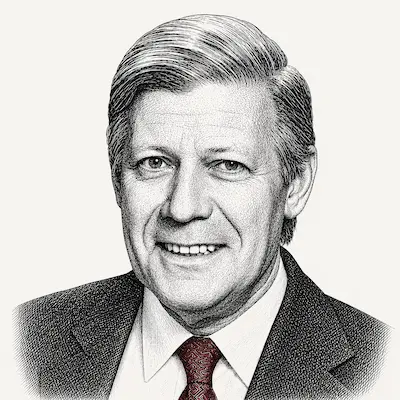 Helmut Schmidt
Selected members
Hannah Arendt
Will argue: The AfD's rise is alarming not because it wins votes but because atomised, politically disengaged citizens are the structural raw material totalitarianism requires, and electoral success can mask that deeper erosion.
Her documented framework identifies the specific preconditions for democratic collapse, placing the AfD question in the only theoretical tradition built on firsthand experience of what German democracy's failure actually looks like.
Albert O. Hirschman
Will argue: AfD growth reflects a voice mechanism working imperfectly, the people most capable of reforming mainstream parties have exited to a protest party instead of fighting from within, which is a sign of institutional dysfunction, not democratic health.
His exit/voice/loyalty framework is the most precise analytical tool available for the specific question of whether AfD voters are exercising democratic voice or signalling exit from the democratic community itself.
Jean-Jacques Rousseau
Will argue: The AfD's rise reflects inequality that the German state failed to address through genuine solidarity; but the claim to represent the general will against liberal institutions is the move his own framework identifies as democracy's most dangerous pathology.
His documented framework linking economic inequality to the collapse of the general will is the most direct theoretical account of how a democracy produces anti-democratic movements from within itself.
Konrad Adenauer
Will argue: Germany's Basic Law was designed for exactly this moment, its militant democracy provisions are not a failure of tolerance but a documented constitutional commitment that extremist parties threatening the free democratic basic order can and should be contained by institutional means, not merely competed with.
As the designer of West Germany's postwar democratic architecture, including the Basic Law's explicit anti-totalitarian provisions, Adenauer is the practitioner who most directly anticipated this precise scenario and built institutional responses to it.
Ibn Khaldun
Will argue: The AfD is not a democratic anomaly but a symptom of the CDU/SPD coalition's internal asabiyya collapse, a ruling group that has lost the solidarity that made it dominant will always be vulnerable to a new group with stronger internal cohesion, regardless of institutional design.
His documented asabiyya framework provides the most structurally precise diagnosis of what the AfD actually represents, a new group solidarity forming at the margins of a ruling coalition that has lost its own cohesion, which the electoral success reading misses entirely.
Helmut Schmidt
Will argue: The AfD's growth is a documented consequence of mainstream parties abandoning the political centre on questions of identity and belonging, it is a sign of mainstream democratic failure, not democratic success, and the correct response is to recover the political ground ceded rather than suppress the party that occupied it.
His documented tenure as Chancellor, including the documented 2010 interview on multicultural society that was subsequently used by the far right, makes him the most precise practitioner voice on the specific political failure that created AfD's electoral opportunity.
Considered but not selected
Arendt was almost paired with Luxemburg: Luxemburg's framework on how capitalist structural displacement produces political radicalisation is analytically relevant to eastern Germany's deindustrialised communities. She was excluded because her framework addresses the conditions that produce movements, not the democratic question of whether electoral success of such movements is a sign of health or pathology, which is the live axis here. Arendt covers the structural precondition question more directly.
Lee Kuan Yew: was considered for his documented position that competitive elections without institutional quality produce unstable outcomes. Excluded because his framework is for small, multi-ethnic city-states under existential threat, the structural assumptions are too far from the German case to produce more than generic commentary, and his authoritarian development model is not a serious option within the German constitutional context.
Rousseau's general will flag was the decisive reason for his inclusion over Locke: Locke's consent theory would have produced a straightforward "AfD voters are exercising legitimate dissent" argument, which is adequately covered by Hirschman's voice mechanism. Rousseau adds the specific danger that the general will rhetoric itself is the democratic pathology to diagnose, which Locke cannot see.