The Long Council
Who was selected, and why
Is democracy possible without a strong cultural and artistic sphere?
The central tension
Does democracy actually need a thriving arts and culture scene to survive, or can it get by on laws and elections alone?
Where they stand
Culture keeps democracy alive
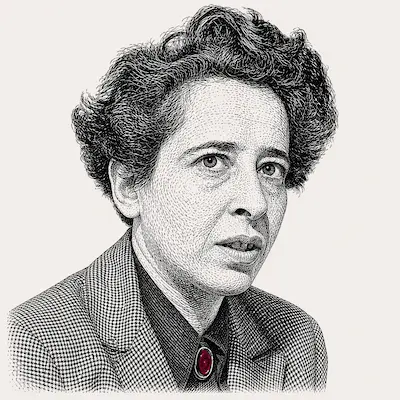 Hannah Arendt
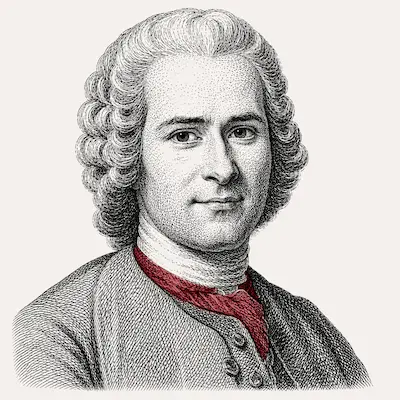 Jean-Jacques Rousseau
Institutions come first, culture is a bonus
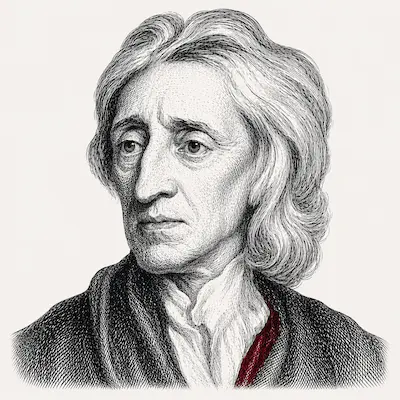 John Locke
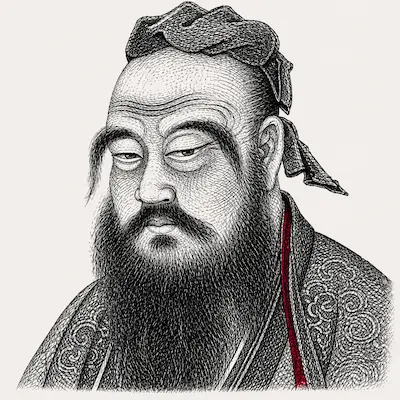 Confucius
Look at what culture does in practice
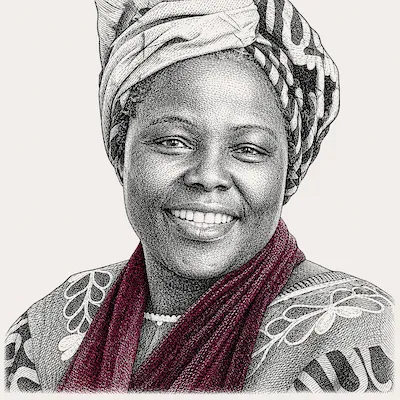 Wangari Maathai
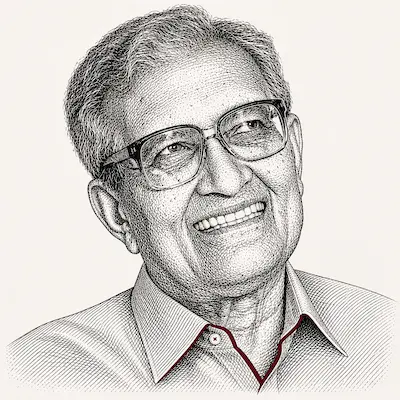 Amartya Sen
Selected members
Hannah Arendt
Will argue: Without a shared cultural world, citizens lose the ability to judge freely and democracy quietly collapses from within.
She argued more rigorously than anyone that art and culture are the actual medium of democratic public life.
Jean-Jacques Rousseau
Will argue: Elite art and culture historically made citizens worse, not better, so democracy needs civic solidarity, not galleries and theatres.
His 1750 argument that the arts corrupt public virtue is the sharpest challenge to the idea that culture helps democracy.
John Locke
Will argue: Democracy is built on consent and protected rights, and a government that funds culture to shape citizens is already overstepping.
His model of limited government leaves no role for state-directed culture, representing everyone who thinks institutions matter more than art.
Confucius
Will argue: Shared rituals and cultural forms are how people actually absorb the values that hold a political community together.
He made the clearest non-Western case that culture is not decoration for governance but its working substance.
Amartya Sen
Will argue: If citizens cannot afford to access cultural life, that is a real deprivation that weakens their ability to participate in democracy.
His work on capabilities and identity shows concretely how cultural poverty makes citizens easier to manipulate and divide.
Wangari Maathai
Will argue: In Kenya it was recovering indigenous cultural practice, not Western high culture, that gave ordinary people the tools to fight for democracy.
Her Green Belt Movement is a real documented case of civic culture building democratic resistance under an authoritarian government.
Considered but not selected
Eleanor Roosevelt: Considered because of her documented argument that rights "begin in small places, close to home" and her work on the UDHR's inclusion of cultural rights (Article 27). Excluded because her framework addresses culture primarily as a right rather than as a condition of democracy, she would largely agree with Sen's capability framing and does not add a distinct analytical tradition. Her position would be absorbed by Sen's coverage without adding a new register.
Ibn Khaldun: Considered because his asabiyya concept directly addresses the cultural cohesion question, group solidarity as the engine of political community. Excluded because his framework applies most powerfully to dynastic cycle analysis and state fragility under external pressure; his concept of asabiyya would need substantial flagging to apply to democratic cultural institutions specifically, and Confucius covers the cultural-solidarity-as-governance-foundation argument with stronger textual grounding for this specific question.
Frantz Fanon: Considered because his documented argument in The Wretched of the Earth that national culture must be built through the liberation struggle, not recovered from before it, is directly relevant to Maathai's tradition and would add a more radical critique of "culture" as a category that can be mobilised by elites against popular democratic agency. Excluded narrowly because Maathai's framework covers the post-colonial cultural-democracy nexus through documented practice rather than theory, and adding Fanon would create two voices making structurally similar arguments (colonial inheritance of culture corrupts democratic possibility) from slightly different angles, Maathai's practitioner register is more analytically distinct from the other five members.