The Long Council
Who was selected, and why
Should governments require an IQ threshold for voting eligibility?
The central tension
Should the right to vote depend on demonstrated intellectual capacity, or does every adult citizen hold it unconditionally?
The two poles
Conditional suffrage (competence as a requirement)
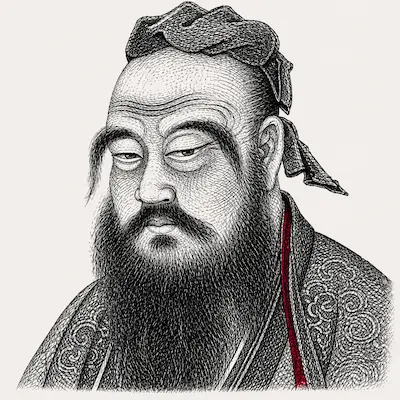 Confucius
Universal suffrage (the right is unconditional)
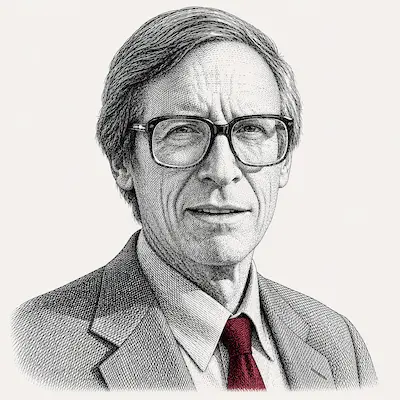 John Rawls
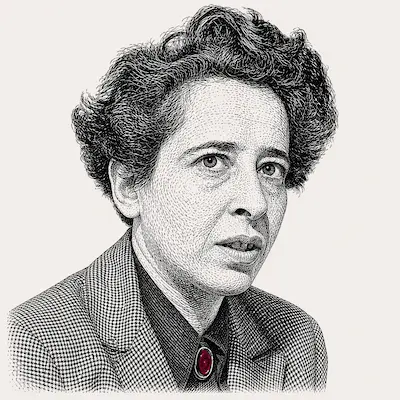 Hannah Arendt
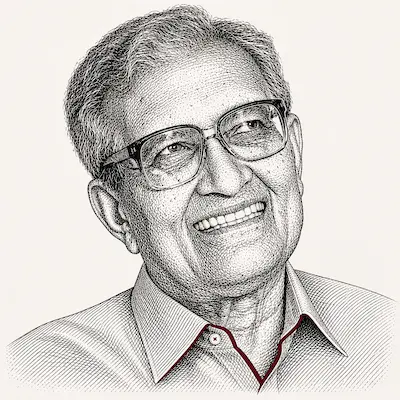 Amartya Sen
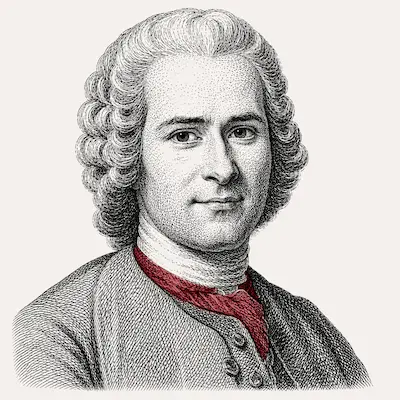 Jean-Jacques Rousseau
Selected members
John Rawls
Will argue: No threshold survives the original position because no one behind the veil would accept losing their vote if they turned out to score below the cutoff.
His veil-of-ignorance framework asks directly whether rational persons designing a just society would accept intelligence-gated voting.
Hannah Arendt
Will argue: Removing the vote on cognitive grounds does not improve governance but destroys the political community by reducing citizens to subjects whose standing is conditional on state-certified merit.
Her theory of political power as arising from collective action, and her analysis of statelessness as the loss of the right to have rights, bear directly on who counts as a political member.
Amartya Sen
Will argue: An IQ threshold misidentifies the problem, the value of every vote lies not in the voter's cognitive score but in the collective information that diverse participation generates for governance.
His capability approach measures development by what people can actually do and be, and his documented claim that no democracy has experienced a famine ties political voice directly to welfare outcomes for the least advantaged.
Jean-Jacques Rousseau
Will argue: Any system that certifies some citizens as unworthy of political voice is not a republic but an oligarchy of the certified, and its laws carry no general will and therefore no legitimate authority.
His general will doctrine holds that political legitimacy derives from the participation of all members of the political community, not from the superior wisdom of a certified subset.
Confucius
Will argue: Governance quality depends on the quality of those who govern, and a citizenry that selects leaders without cultivation or judgment weakens the state, but his framework applies this logic to official appointment, not to the restriction of common subjects' political standing, and the extrapolation to IQ-gated voting outruns his documented text.
His meritocratic governance principle, that authority should rest with the most virtuous and capable, is the closest documented position to the proposal's underlying logic.
Considered but not selected
1. John Locke: His consent theory is directly relevant to political legitimacy, but Rawls covers the same ground with greater precision on the specific question of who counts as a rights-holder, and Locke's documented exclusions of Catholics and atheists from toleration would complicate rather than clarify his position here.
2. Lee Kuan Yew: His documented scepticism of one-man-one-vote and his preference for governance by capable elites makes him a candidate for the conditional pole, but his documented framework concerns the design of electoral systems and the quality of elected representatives, not IQ thresholds for voter eligibility; the extrapolation would be too large to be useful and he is not a documented defender of cognitive suffrage restrictions.
3. Ibn Khaldun: His asabiyya framework concerns group cohesion and the cyclical rise and fall of states; it has no documented application to individual voting eligibility and selection here would be forced.