The Long Council
Who was selected, and why
During wartime, should a nation's political discourse give greater prominence to protecting cultural and democratic institutions alongside military defense, rather than letting military priorities dominate the conversation?
The central tension
Does fighting a war mean democracy and culture must wait, or are they exactly what the fighting is for?
The two poles
Military survival first
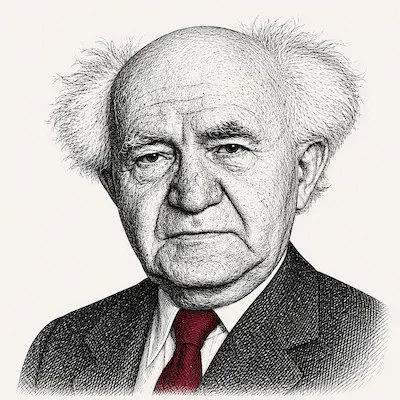 David Ben-Gurion
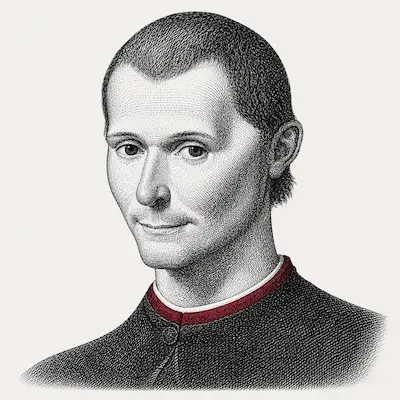 Niccolò Machiavelli
Keep democracy alive now
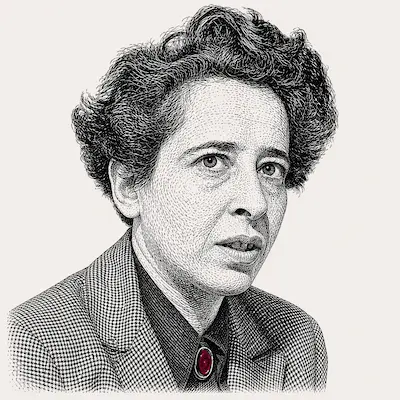 Hannah Arendt
Selected members
Hannah Arendt
Will argue: Silencing democratic life to defend democracy is already losing what you are fighting for.
She argued that destroying public participation is precisely what tyranny does and what war must not repeat.
David Ben-Gurion
Will argue: A nation that loses the war loses everything, so survival must come before all other priorities.
He built a democracy while fighting for survival and his decisions show both the logic and the costs of that choice.
Niccolò Machiavelli
Will argue: Military force must dominate when survival is genuinely at stake, but a republic that guts itself to fight has already lost.
He wrote the sharpest case for necessity overriding other concerns, and also the sharpest case against it.
Hannah Arendt [already selected — see above]
Will argue: The Four Freedoms were not prizes for after the war but the definition of what the war was about.
He governed a democracy through total war while committing failures that prove exactly what happens when security overrides rights.
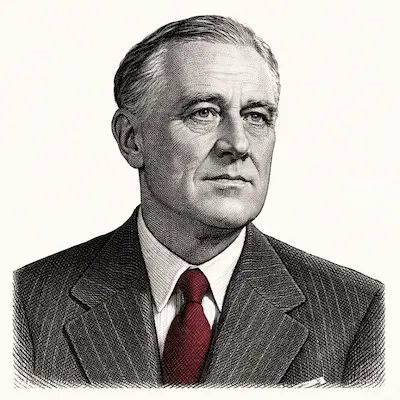
Franklin D. Roosevelt
Will argue: The Four Freedoms were not prizes for after the war but the definition of what the war was about.
He governed a democracy through total war while committing failures that prove exactly what happens when security overrides rights.
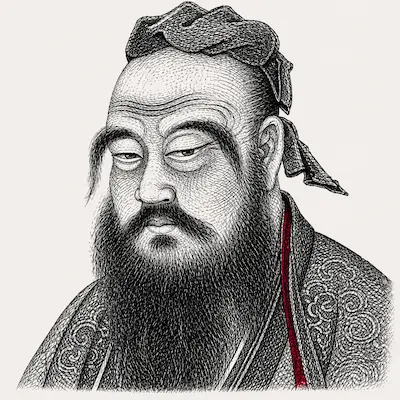
Confucius
Will argue: A state that abandons its culture and institutions to defend them has already shown its people what it really values.
His framework holds that a ruler's legitimacy rests on sustaining cultural and civic life continuously, not deferring it to peacetime.
Considered but not selected
Indira Gandhi: Highly relevant as the practitioner of emergency powers within a democracy, but her 1975 Emergency was not a wartime decision; the selection rules require genuine wartime context, and her documented record on the specific question of wartime discourse priorities is thin relative to Ben-Gurion, who provides the practitioner security-primacy argument with more direct documentation.
Albert O. Hirschman: His exit/voice framework is directly applicable to the suppression of critical voices in wartime (when exit from the civic sphere becomes impossible, voice must be structurally protected). However, his framework on irreversibility, that permanent decisions require a qualitatively higher burden of justification, is already well-represented through Arendt's more systematic treatment of what wartime institutional erosion does to political power. Hirschman would add, but the table is analytically covered.
Amartya Sen: His democracy-as-epistemological-instrument argument (no democracy has experienced a famine; democratic discourse generates the information governments need to correct failures) is directly applicable, a democracy that suppresses non-military discourse loses the error-correction mechanism that military planning itself requires. Excluded for space rather than relevance; his position is partly represented through Roosevelt's Four Freedoms logic, and adding Sen would create a 4:2 imbalance on the institutional-continuity side that cannot be corrected without a stronger security-primacy voice than the roster currently provides.