The Long Council
Who was selected, and why
Should the US create a sovereign wealth fund from tech and AI company profits?
The central tension
Should new national wealth from tech and AI flow into a collective public fund or stay in private hands? ---
The two poles
Public capture of tech wealth → collective fund
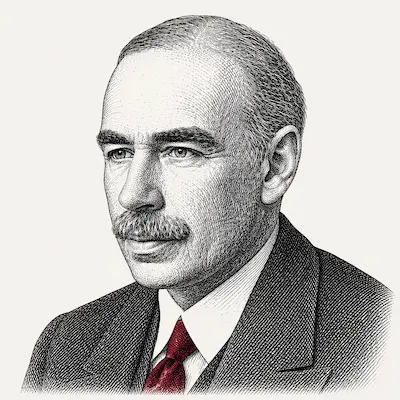 John Maynard Keynes
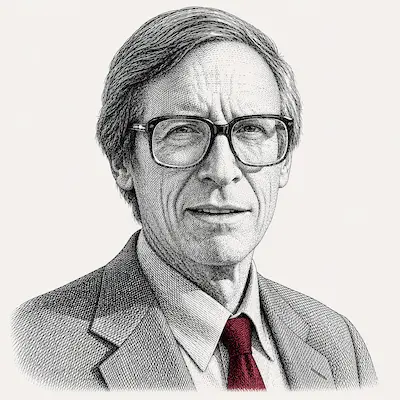 John Rawls
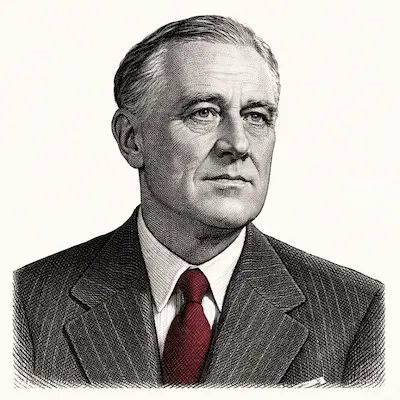 Franklin D. Roosevelt
Private markets and state restraint → no fund or minimal role
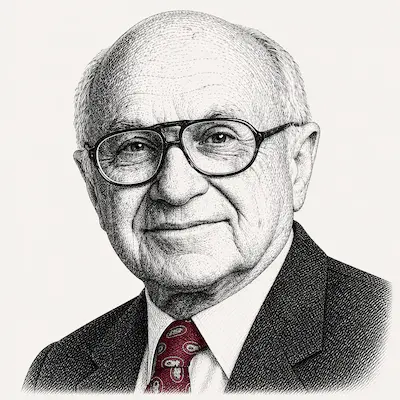 Milton Friedman
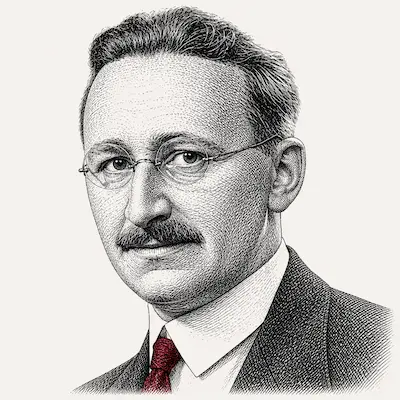 Friedrich Hayek
Selected members
John Maynard Keynes
Will argue: A sovereign wealth fund is a legitimate instrument for capturing and deploying concentrated technological wealth in ways private markets will not, but its design must account for genuine uncertainty about AI's trajectory, and the fund's governance must insulate it from short-term political pressure.
His framework for public investment under uncertainty and the risk of under-deployment of national savings is directly applicable to a state fund targeting a volatile technology sector.
John Rawls
Will argue: The difference principle requires asking not merely whether a fund transfers income downward but whether it restructures the ownership of productive AI assets, a distributional transfer without ownership change may be insufficient by his own standard.
His difference principle directly addresses whether concentrations of wealth from AI and tech are just unless they benefit the least advantaged, which is precisely what a sovereign wealth fund claims to do.
Franklin D. Roosevelt
Will argue: A sovereign wealth fund is viable only if structured so that its beneficiaries feel they have earned a stake in it, a purely redistributive framing will be politically destroyed; the fund must be designed to build a broad constituency, not just serve as a transfer mechanism.
He designed the only comparable American experiment in capturing concentrated private wealth for public purposes, and did so under conditions of democratic legitimacy and coalition politics analogous to today.
Milton Friedman
Will argue: Taxing or redirecting AI company profits into a state fund will reduce investment in the sector that generates the wealth, introduce political distortion into capital allocation, and produce a fund that serves incumbent political interests rather than national welfare, the mechanism destroys what it claims to capture.
His documented critique of government intervention as systematically counterproductive, and his specific analysis of corporate profit taxation as destroying the allocative signals that drive innovation, applies directly to using tech profits as the seed for a state fund.
Friedrich Hayek
Will argue: No sovereign wealth fund manager can possess the dispersed, local, tacit knowledge that AI markets aggregate through prices; but, and this is his documented heterodox position, a flat cash transfer to all citizens from tech revenues is less distorting than a managed investment fund, because it preserves individual choice rather than substituting state judgment for market allocation.
His knowledge problem and spontaneous order arguments apply directly to whether a state fund can allocate technology-derived wealth more effectively than the dispersed decisions of markets, and his documented support for a basic income floor provides a heterodox angle that separates him from pure Friedman.
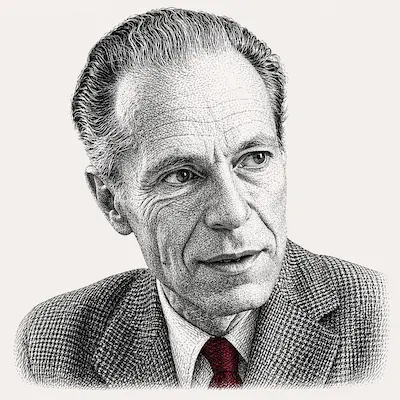
Albert O. Hirschman
Will argue: The US faces an irreversibility problem, creating a sovereign wealth fund from a deficit position without a dedicated revenue stream is "cementing an exit," and the burden of justification for this structural commitment has not been met; but he will equally apply his rhetoric-of-reaction framework to dismiss lazy perversity and futility arguments against the fund that are rhetorical rather than analytical.
His irreversibility threshold principle directly applies to a permanent institutional commitment seeded by a deficit-running state, and his rhetoric-of-reaction framework allows him to scrutinize the quality of both pro- and anti-fund arguments.
Considered but not selected
Margaret Thatcher: Her documented North Sea oil decision (no sovereign wealth fund; revenues used for tax cuts) is directly relevant to Anchor 3, and her privatisation record is the inverse of the fund logic. Excluded because Friedman and Hayek cover her pole with greater theoretical depth and distinct frameworks; adding Thatcher would create a three-voice echo on the anti-fund side without adding a new line of reasoning.
Amartya Sen: His capability approach raises genuine questions about whether a sovereign wealth fund expands real freedoms or merely transfers income. Excluded because his framework does not engage the specific design question (how to seed and govern the fund) and his pole is already represented by Rawls with more institutional precision on the distribution question.
Elinor Ostrom: A collective investment fund managing national tech wealth has a superficial resemblance to commons governance. Excluded per the selection rules: this is a macro-fiscal and political question about state investment architecture, not a common-pool resource or collective-action problem among resource users. Her design principles would be misapplied here.