The Long Council
Who was selected, and why
How do we strengthen democracy?
The central tension
Whether democracy is best strengthened through institutional reform (constitutions, electoral systems, checks and balances) or through deeper social and economic conditions that enable genuine democratic participation.
Selected members
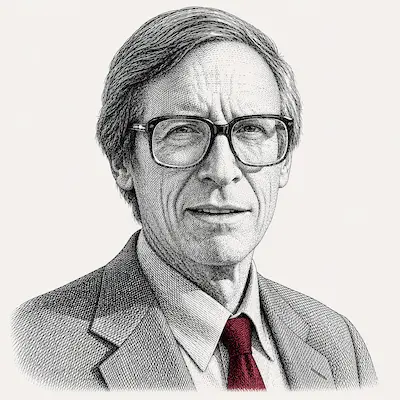
John Rawls
Will argue: Democracy requires institutions designed behind a veil of ignorance and justified through overlapping consensus among citizens with different comprehensive views.
His theory of justice provides the foundational framework for legitimate democratic institutions, what makes political authority acceptable to free and equal citizens.
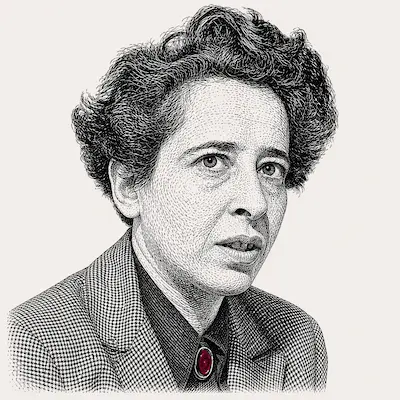
Hannah Arendt
Will argue: Democracy requires active political participation and public spaces where citizens can act together, it cannot survive as merely representative institutions without civic engagement.
Her analysis of totalitarianism and democratic erosion offers the most rigorous framework for understanding how democracies collapse and what conditions preserve political freedom.
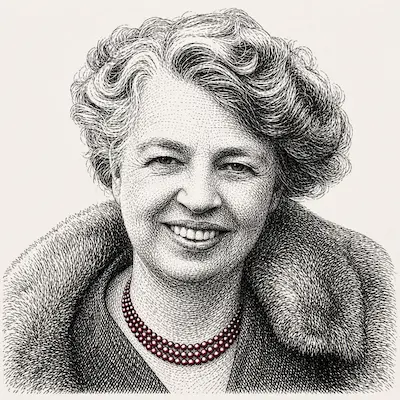
Eleanor Roosevelt
Will argue: Democratic strengthening requires enforceable individual rights that protect minorities from majority tyranny while enabling meaningful political participation.
As architect of international human rights law, she provides the framework for rights-based democracy and the institutional mechanisms for protecting minority rights within majoritarian systems.
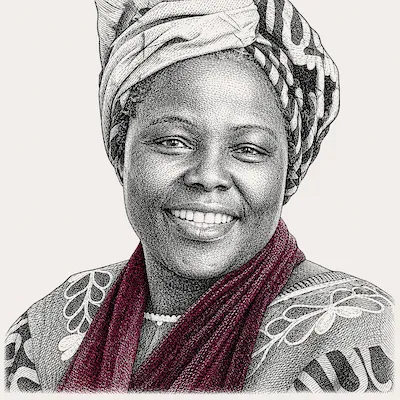
Wangari Maathai
Will argue: Democracy is strengthened through grassroots organisation that gives people real control over resources and decisions affecting their lives, formal institutions alone are insufficient.
Her experience building grassroots democratic movements under authoritarian pressure provides practical insight into how civic mobilisation can strengthen democratic accountability from below.
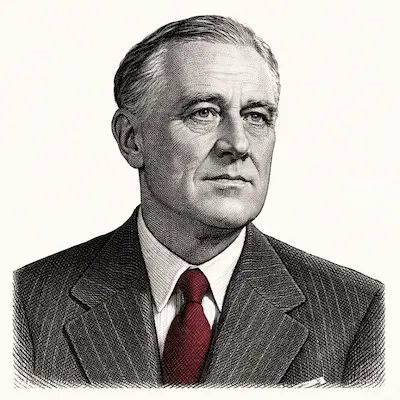
Franklin D. Roosevelt
Will argue: Democracy is strengthened by delivering tangible improvements in citizens' lives, political legitimacy requires that democratic institutions solve real problems people face.
His leadership during economic crisis demonstrates how democratic institutions can be preserved and legitimacy maintained when facing existential challenges that tempt authoritarian solutions.
Considered but not selected
Confucius: Excluded because his framework is explicitly non-democratic, merit-based hierarchy rather than popular sovereignty - Lee Kuan Yew: Excluded because his governance model explicitly prioritises effectiveness over democratic participation, he's the counterargument, not the advocate - Tocqueville: Not in the roster but would be ideal, his analysis of American democracy's social foundations would complement this selection perfectly